

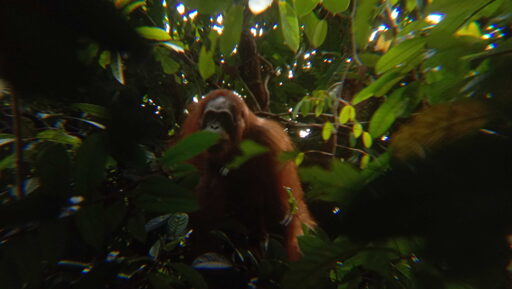
Founder’s Briefs: An occasional series where Mongabay founder Rhett Ayers Butler shares analysis, perspectives and story summaries. Stop telling people to protect wildlife. Start paying them instead. That’s the idea in a new experiment in Kapuas Hulu district, in Indonesia’s West Kalimantan province, which is testing whether conservation can be made to work with local incentives rather than against them. The initiative, known as KehatiKu, asks residents to record wildlife sightings in exchange for modest payments. In its first year, the program has generated a large volume of data while drawing hundreds of participants into regular contact with the forests around them, reports contributor Linnea Hoover for Mongabay. The premise is straightforward. Participants download an app and use it to submit photos, audio or video of animals they encounter. Payments vary by species, from a few thousand rupiah for common birds, to more substantial sums for rarer animals such as orangutans. Observations are verified before payments are distributed at month’s end. The process is simple enough to fit into daily routines, yet structured enough to produce usable data. The scale is notable. More than 800 observers across nine villages have recorded roughly 300 to 400 sightings a day. That has produced a data set covering species from hornbills to gibbons. The cost, by the standards of conservation programs, is low. Biologist Erik Meijaard, managing director of Borneo Futures, the scientific consultancy that organizes the project, estimates spending of less than $1 per hectare (40 U.S. cents per acre) annually across…This article was originally published on Mongabay
From Conservation news via This RSS Feed.