

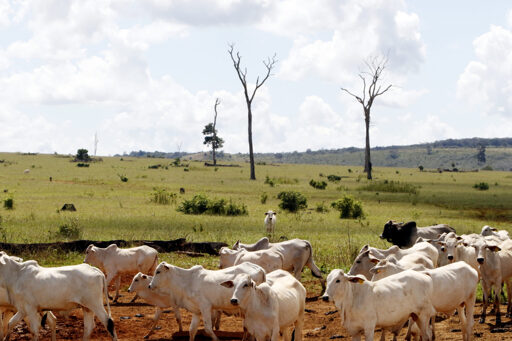
Meat and dairy production are significant drivers of deforestation and greenhouse gas emissions. Many companies claim to be tackling this, but nearly all these claims, 98%, could be considered greenwashing, a recent study found. Researchers logged more than 1,200 environmental commitments made by 33 of the sector’s largest companies between 2021 and 2024. They found a pattern of “deceptive” information about environment strategies, goals and actions that “can create the illusion of progress,” lead author Maya Bach, an environmental science and policy researcher at the University of Miami in the U.S., said in a statement. At least 16.5% of human-generated greenhouse gas emissions, including from deforestation, come from meat and dairy production. More than one-third of all environmental claims, 467 in total, include vague climate goals such as emissions reduction and net-zero targets. Yet these promises were found to lack plans for implementation and were rarely evaluated for practicality, the study’s authors wrote. They categorized each commitment by the type of greenwashing, including selective disclosure, vagueness, empty claims, and no proof. They quoted the companies’ own sustainability claims and analyzed them for greenwashing. For example, in 2023, commodity-trading giant Cargill wrote in its sustainability report that it would “eliminate deforestation and land conversion from direct and indirect supply chain of key row crops in Brazil, Argentina, and Uruguay by 2025.” In 2024, Mongabay reported that Cargill had pushed its baseline year for evaluating deforestation ahead by 12 years. Its original cutoff year, 2008, aligned with Brazil’s soy moratorium. However, its…This article was originally published on Mongabay
From Conservation news via This RSS Feed.