

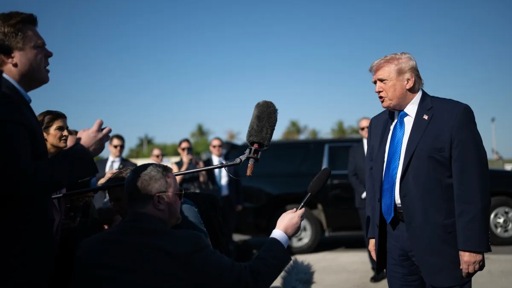
Within hours after its submission on Sunday, May 10, US President Donald Trump rejected Iran’s fresh proposal for peace in the Middle East, calling it “totally unacceptable.”
The news of Trump’s rejection dashed hopes for peace in the region and intensified global economic concerns as oil prices rose further after the markets opened on Monday.
Trump’s rejection of the Iranian plan also shattered the chances of normalizing movement through the Strait of Hormuz, disrupted since the beginning of the US-Israeli war on Iran.
“I have just read the response from Iran’s so-called ‘Representatives.’ I don’t like it-Totally Unacceptable!” Trump said in a brief message on his social media post, on Sunday, May 10.
According to reports in Iranian media, the latest Iranian peace proposal to end the US-Israeli war of aggression included most of the original demands made since the beginning of the ceasefire in April.
The Iranian demands include war reparations, recognition of its sovereignty over the Strait of Hormuz, the end of all US sanctions, and the release of Iranian assets frozen by the US.
Iran’s proposals were in response to US proposals submitted to it last week through Pakistani mediators.
The US proposals had included demands such as the suspension of Iran’s nuclear enrichment and the simultaneous lifting of all restrictions on movement through the Persian Gulf, in return for lifting all US sanctions and unfreezing Iranian assets.
Responding to Trump’s rejection of his country’s proposals, Iranian President Masoud Pezeshkian said in a post on X that “dialogue or negotiations” does not mean surrender or retreat and Iran will continue to uphold its rights and defend its interests.
Concerns for wider impact
The Iranian proposal also included the end of Israeli aggression in Lebanon and sought a guarantee that there will be no attacks on the country in the future.
Esmail Baghaei, official spokesperson of Iran’s Ministry of Foreign Affairs questioned Trump’s response to his country’s proposals on Monday, claiming there was nothing unreasonable in it, Press TV reported.
“Everything we proposed in the plan was reasonable and generous, and it is for the good of the region and the world,” Baghaei said, addressing a weekly press briefing in Tehran.
It is regrettable, Baghaei said, that the US continues to put maximalist demands under the influence of the “Israeli regime” and refuses to engage with Iran’s proposals in “good faith”.
Hours after Trump rejected the Iranian proposal, global oil prices once again crossed 100 US dollars per barrel.
The prices, which were much higher before the ceasefire was announced in the first week of April, had remained below 100 US dollars for weeks amid anticipation of a negotiated settlement.
Meanwhile, Saudi Aramco, one of the world’s largest energy companies, claimed on Sunday that the world has lost around one billion barrels of oil since the US-Israeli war on Iran began on February 28.
Its CEO Amin Nasir warned that it will still take months for the global energy prices to normalize if the war ends now.
Impact on global economy
The continued closure of the Strait of Hormuz, through which almost a quarter of global energy supplies pass, has created an energy crisis across the world, with countries in South and South-East Asia impacted the most.
On Sunday, Indian Prime Minister Narendra Modi asked the citizens of India to reduce their consumption of oil and imported items, citing the prolonged crisis in West Asia.
India imports more than 85% of its energy needs, mostly from countries in the Persian Gulf. The closure of the Hormuz and rise in prices have significantly impacted those supplies.
India has adopted measures such as restricting the supply of gas to industries and commercial establishments to protect the domestic supply, apart from raising the prices.
Similar measures have been adopted across the region in Pakistan, Sri Lanka, and Nepal, the Philippines, Vietnam, and other countries in South East Asia.
The 48th summit of the Association of South-East Asian Nations (ASEAN), which concluded on Friday, May 8, in Cebu, the Philippines decided to explore the possibility of a regional fuel stockpile and a standby mechanism for food security in the context of the ongoing crisis in West Asia.
The closure of the Strait of Hormuz has, apart from affecting the supply of energy products, also impacted the supply of fertilizers crucial for agriculture in the region and there is a fear that it may impact the overall production of food grains.
ASEAN countries import over 50% of their oil, 17% of their gas, and around 11% of their fertilizer needs from the Persian Gulf countries.
The post Trump rejects Iran’s latest proposal to end the war, oil prices spike appeared first on Peoples Dispatch.
From Peoples Dispatch via This RSS Feed.