

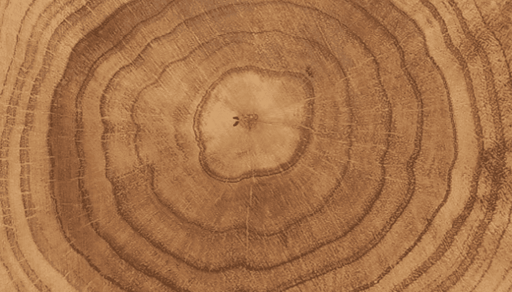
In 2024, the Amazon region felt the effects of one of the worst droughts in its recorded history — if not the worst. At the port of Manaus, the largest city along the course of the Amazon River, the water level reached 12.68 meters (41.60 feet), the lowest level since measurements began there in 1902. It was even worse than in 2023, when high temperatures in Lake Tefé, upstream of Manaus, killed river dolphins. Successive years of record heat and drought have left scientists asking whether the whole Amazon Basin drying up as a result of more intense cycles of El Niño and La Niña, which alter ocean surface temperatures and interfere with atmospheric circulation, compounded by persistent deforestation. With little data available on the region, scientists from the universities in the U.K. and from Brazil’s National Institute for Amazonian Research (INPA) sought answers that could be provided by the very trees in the Amazon Rainforest. They focused on the chronology of growth rings formed annually in tree trunks, using a method known as dendrochronology. In addition to determining the age of a tree, it can reconstruct past climate conditions, and in this case it revealed an even more complex problem. Their findings highlighted the extreme variations in rainfall seasonality over the last four decades, with the hydrological cycle disrupted by increasingly rainy wet seasons and increasingly severe dry seasons. A researcher takes a sample of a courbaril tree (Hymenaea courbaril) in the southern Amazon for study. Image courtesy of…This article was originally published on Mongabay
From Conservation news via This RSS Feed.