

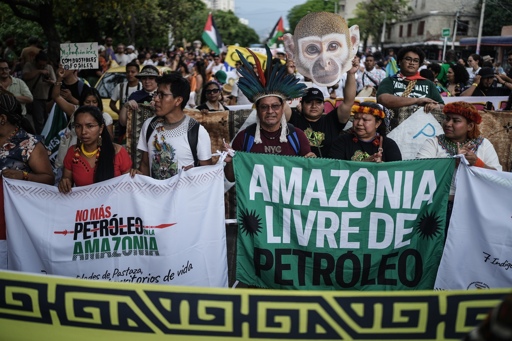
The First Conference on Transitioning Away from Fossil Fuels in Santa Marta, Colombia, was viewed by many as a historic achievement and a momentous step toward ending fossil fuel dependency. After more than 30 years of U.N. Climate Change Conferences, or COPs, where the topic has been repeatedly blocked by states and lobbyists resistant to any kind of phaseout, and many have struggled to get a seat on the table, such as Indigenous and Afro-descendent peoples, the Santa Marta conference has been hailed a success. “The conference was 100% positive,” Juan Carlos Jintiach, executive secretary of the Global Alliance of Territorial Communities (GATC), a coalition of Indigenous advocacy groups, told Mongabay over WhatsApp voice message. “These new proposals coming from the territories are being heard. It’s a responsible agenda regarding the paradigm shift of the transition, and it’s an opportunity.” During the first days of the conference, which ran from April 24-29, the International Institute for Sustainable Development (IISD) released a new report that revealed the vast financial support fossil fuels continue to receive. According to its analysis, in 2024, fossil fuels globally received $1.2 trillion in subsidies and other forms of support, compared with $254 billion for clean energy. Florencia Ortúzar Greene, director of the climate program at the Inter-American Association for Environmental Defense (AIDA), told Mongabay over WhatsApp voice message that the conference’s free-flowing format, with ministers and stakeholders given equal opportunities to contribute, was a great relief. Attendees were unable to open their computers, meaning they could…This article was originally published on Mongabay
From Conservation news via This RSS Feed.