

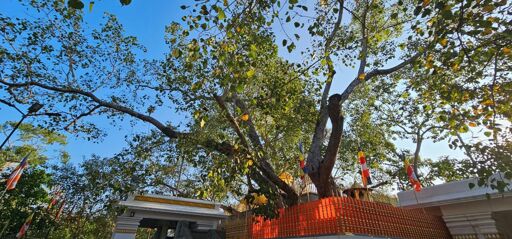
ANURADHAPURA, Sri Lanka – Buddhist monks associated with the “Walk for Peace” initiative have carried a sapling of the sacred pipal or “bodhi” tree to the United States, more than 2000 years since the Indian Emperor Ashoka’s daughter, Sanghamitta, a Buddhist nun, carried a sapling of that same lineage from India to Sri Lanka. . In both narratives, the pipal tree became more than a plant but a living bridge across cultures and faith, rooting itself in new lands while carrying the same timeless message of compassion and mind’s awakening. Over 2,500 years ago (around 528 BCE), in the tranquil groves of Bodh Gaya in India, prince Siddhartha Gautama attained enlightenment beneath the shade of a pipal tree (Ficus religiosa) and became known as the Buddha. In the days that followed his awakening, he is said to have observed a week-long meditative silence as an expression of gratitude for the tree that provided him shelter until he attained enlightenment. From that moment onward, the pipal tree ceased to be treated as an ordinary organism, but as a living witness to enlightenment or a symbol of spiritual reverence across the Buddhist world, and the tree became known as the ‘Jaya Sri Maha Bodhi’ – the great bodhi tree. The tree’s historical journey to Sri Lanka is deeply rooted in devotion and early ecological consciousness. In the third century BCE (around 288 BCE), the sapling was ceremonially planted in the royal gardens in Anuradhapura, in North Central Sri Lanka. Since then, the…This article was originally published on Mongabay
From Conservation news via This RSS Feed.