

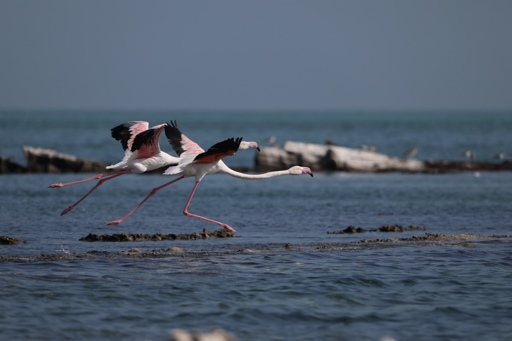
At this time of year, the waters of the Arabian Gulf support one of the most significant gatherings of marine life anywhere in the world. Thousands of dugongs congregate in shallow coastal areas, including mother-and-calf pairs, dependent on the 3,000 square kilometers (well over 1,000 square miles) of seagrass meadows in Abu Dhabi waters. Along the same coastline, sea turtles return to nest, seabirds enter their breeding season, and migratory birds pass through wetlands that connect continents. Mangroves and coral reefs line these coasts. These ecosystems exist alongside the same coastal zones that support cities, energy and industrial infrastructure. They also underpin human life across the region. Tens of millions of people depend on desalination, drawing seawater from these same environments. Their survival, like ours, depends on clean water, intact habitats and stable environmental conditions. I have had the rare privilege, through my work, to witness these systems up close. Their richness is extraordinary, but so too is their fragility. The danger is that war turns that fragility into lasting damage. Indian Ocean humpback dolphin in Mangrove Marine National Park, Abu Dhabi, UAE. Image courtesy of Maitha Bughanoom. An airstrike on an oil tanker, or a collision, fire or loss of control by one of these vessels would release oil or other pollutants into shallow waters, where they spread rapidly across seagrass beds and coastal habitats. Water quality declines, oxygen levels fall, nesting sites are lost, and breeding cycles are disrupted. Local populations can collapse, and recovery becomes uncertain. The…This article was originally published on Mongabay
From Conservation news via This RSS Feed.