

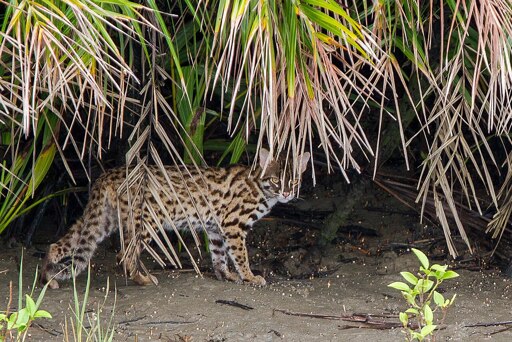
There’s good news about Asia’s mainland leopard cat: Prionailurus bengalensis is thought to be one of the world’s most abundant, widely distributed wildcats. With a conservation assessment of “least concern” on the IUCN Red List, sightings are reported from India to the Russian Far East. That’s partly because mainland leopard cats are highly successful generalists. With two recognized subspecies — P. b. bengalensis and P. b. euptilurus — this small cat is adaptable to multiple habitats, ranging from forest to shrublands to grasslands, and including areas altered by humans. But this good news comes with a caution: Surprisingly little is known about this felid, say experts, and it may be less plentiful and more at risk than sightings alone indicate. Leopard cats have been understudied, a trend common among small cat species, which garner less public interest than big cats, and a reality that translates into less funding for research and conservation. As a result, P. bengalensis population surveys have only been conducted at a handful of sites, leaving lots of blank spots on range maps. Despite perceived abundance, researchers note that this felid also still faces conservation challenges and could benefit from more attention from funders and the public, as the species plays an important, if underappreciated, role in controlling rodent populations. A leopard cat in the Russian Far East, where it lives alongside leopards and tigers but receives relatively little attention compared with its larger, dynamic cousins. Image courtesy of Yuriy Smityuk. Of ‘least concern’ but at risk…This article was originally published on Mongabay
From Conservation news via This RSS Feed.