

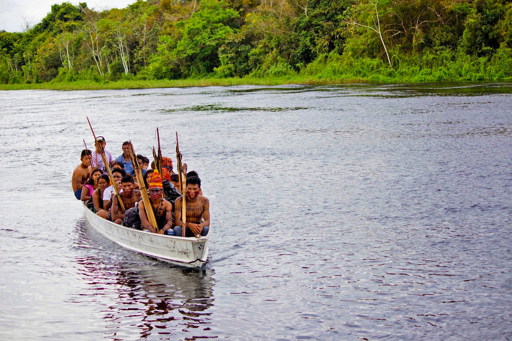
A report by advocacy group Amazon Watch highlights how deeply criminal activity and the militarized state responses that they’ve triggered have impacted Indigenous communities across much of the Amazon Rainforest. “The Amazon Under Siege: How Crime and Militarization Threaten Indigenous Peoples” looks at seven case studies in five countries: Colombia, Ecuador, Peru, Brazil and Venezuela. It describes how illicit activities and state repression are transforming the ways of life and cultural habits of Indigenous peoples, as well as undermining their self-determination and collective rights. “Across the Amazon, activities such as illicit gold mining, drug trafficking, illegal logging, wildlife trafficking, fuel smuggling, and human trafficking increasingly operate as interconnected systems,” says the report, published in April. “These economies share routes, infrastructure, financing, and armed protection mechanisms, allowing criminal organizations to diversify income streams, reduce risks, and adapt rapidly to market fluctuations and government pressure.” Illegal mining destroys forests and affects Indigenous communities in the Amazon. Image courtesy of Amazon Watch. As a result of this spiral of violence, at least 296 environmental defenders have been killed in the Amazon since 2012, with Colombia and Brazil being the most dangerous nations for those who defend nature. The report says criminal networks already affect 67% of Amazonian municipalities and have subjected 32% of Indigenous territories to dispute among armed groups. The report also says that military-oriented state strategies and actions in response to organized crime have repeatedly failed. “The state’s response often makes things worse,” said co-author Raphael Hoetmer, director of the Western…This article was originally published on Mongabay
From Conservation news via This RSS Feed.