

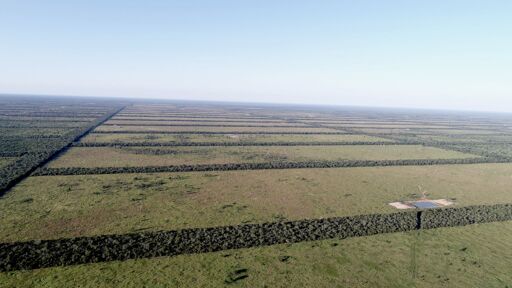
More than a decade ago, officials in Paraguay expanded a biosphere reserve in the Gran Chaco, hoping to protect more of the world’s largest tropical dry forest and the Indigenous communities who live there. But a lack of enforcement has left the reserve vulnerable to deforestation caused by agribusiness and cattle ranching, observers say. Approximately 2.78 million hectares (6.87 million acres) were added to Paraguay’s Chaco Biosphere Reserve in 2011, yet the area continues to be one of the country’s worst hit by forest loss, according to satellite imagery analyzed by Mongabay. Indigenous groups say regulations are selectively upheld, allowing landowners to clear the forest. “In practice, the biosphere reserve hasn’t gone beyond being just a designation, a protection category, without actually advancing to a stage of regulation or stronger control over human activity,” said Miguel Ángel Alarcón, general coordinator of Iniciativa Amotocodie, a nonprofit that helps the Indigenous Ayoreo defend their forests in the Gran Chaco. The biome has some of the highest deforestation rates in the world, with around 5.2 million hectares (12.8 million acres) lost between 2000 and 2020. As the forest shrinks, Indigenous Ayoreo-Totobiegosode have struggled to maintain customs dependent on their voluntary isolation. They rely on the forest for food, shelter and medicine, and don’t have immunity to many outside diseases. “They live running from one place to another because they’re frightened of the loud noises of the machinery,” said Guei Basui Picanerai, secretary of the Guidai and Ducodegosode Ayoreo Association of Paraguay, which represents…This article was originally published on Mongabay
From Conservation news via This RSS Feed.