

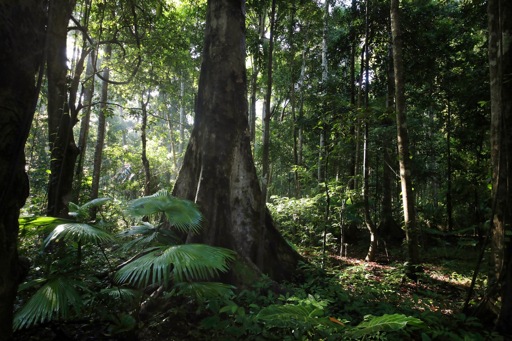
According to new data from the World Resources Institute’s Global Forest Watch platform, losses of global tropical primary forest loss slowed by 36% in 2025. For scientists, policymakers and environmental groups who track deforestation, this assessment is a welcome note of optimism. “It’s a better year, but it’s just one year,” said Elizabeth Goldman, co-director of GFW. Despite the drop, more than 4.3 million hectares (10.6 million acres) of tropical primary forest — an area larger than Switzerland — vanished in 2025 alone, she said. And the improvement is fragile: “If 2025 had been another bad fire year like 2024, we’d be telling a very different story.” For Goldman, the data are less a cause for celebration than an opportunity for reflection: a chance to understand what worked, why, and how those conditions might be replicated elsewhere. In an interview with Mongabay, she shared her anxiety over 2026, which has begun under the shadow of a new El Niño cycle likely to bring hotter and drier conditions across the tropics. “That’s going to be the real test,” she said. “We could see the same kind of fire-driven loss we saw in 2024 if the right measures aren’t in place.” Aerial view of Salonga National Park in the Democratic Republic of Congo. Primary forest loss in the DRC declined by 5% between 2024 and 2025. Along with Brazil and Indonesia, the DRC is one of the top three countries for total remaining tropical forest cover. Image by Rhett A. Butler/Mongabay. Mongabay: Let’s start with…This article was originally published on Mongabay
From Conservation news via This RSS Feed.