

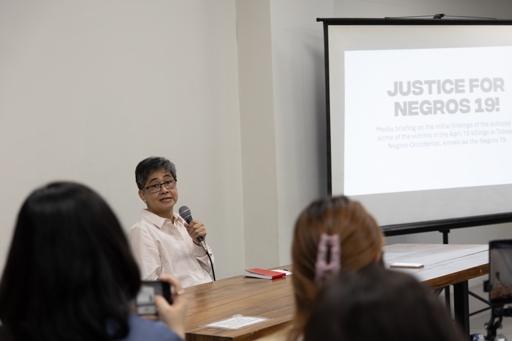
“Why were some of the gunshot wounds at the back if this was supposedly a confrontation?”
MANILA – Initial findings on the autopsy of five of the bodies retrieved from Toboso, Negros Occidental raised more questions on what transpired on April 19 where 19 people were killed in a single military operation.
According to forensic pathologist expert Dr. Raquel Fortun, at least three of the five bodies suffered gunshot wounds in the head, the back and extremities.
If what happened on April 19 was indeed a gunfight, Fortun said, “Maybe we can speculate. Why were some of the gunshot wounds at the back if this was supposedly a confrontation? That’s my question.”
She added, “The other thing is that they often post pictures of the scene showing the body wearing some kind of military gear, a bag, and so on. I’m still studying that. For example, one question I had about the body found in the water was that it appeared to have an ammunition belt, but it was empty.”
She added that reconstructing the sequence of events and the positions of the victims during the shooting would require access to more evidence, including clothing and materials recovered from the scene.
“That is the whole purpose of doing an investigation. But again, I’m limited by what I get,” Fortun said.
The bullets that were recovered from the bodies were also consistent with the weapons classified generally as high-velocity rifles, Fortun said. She noted that ballistic evidence could potentially identify the firearm and shooter if properly preserved and examined.
Fortun also said that one body had sustained multiple gunshot wounds. Three of the bullets recovered were not immediately fatal. But a gunshot wound to the leg that severed blood vessels caused fatal bleeding, she explained.
“I asked the lawyers, isn’t that a war crime? She was injured therefore she should be attended to,” Fortun said in Filipino, during a media briefing on Thursday, May 7, 2026.
Another victim, she said, aspirated blood because the airway was hit in the throat area here. “And we found blood in the mouth, blood here, and so on,” she said.
Limitations on evidence gathered
Fortun said that most of the bodies examined were already in “moderate to advanced decomposition,” limiting the ability to fully reconstruct what truly transpired on the day of what the Philippine military claimed a gunfight against the members of the New People’s Army.
Clothing, she said, can help identify bullet trajectories and determine whether injuries occurred before death, were incomplete or mislabeled.
“Clothes help a lot. When you get shot, the clothes will have holes,” the pathologist said. She added that she only received two clothes, the other was mislabeled and another was unlabeled.
Fortun questioned how the bodies were identified and documented in Negros Occidental, pointing to what appeared to be a lack of systematic evidence handling.
“What happened? Where are the clothes?” she asked.
One body was falsely identified. The family of Errol Wendel, staff and researcher of Unyon ng mga Manggagawa sa Agrikultura (UMA), found out that they were given the wrong body.
“There are differences in the height and the appearance. The clothes alone indicated that he was not Errol according to a relative,” Fortun said.
Fortun said Errol’s relatives were not able to see his body in Toboso. “[But] some said they were never shown the face. They were never told the basis for the identification. They were simply told that the body belonged to their missing relative,” Fortun said.
She also raised concerns over the paraffin testing allegedly conducted on one of the victims whose body had been submerged in water. She said gunshot residue testing would have been unreliable because the hands were not protected from contamination.
Fortun also noted finding candle wax on one bag of clothing, suggesting the remains may have undergone paraffin testing, which she said is unreliable.
‘They are people’
Fortun meanwhile appealed to respect the dead. This is in connection to people who are labelling those who were killed in Toboso as “corned beef.”
“They don’t look anything like corned beef. You know what they look like? People. People with injuries, people who were killed. And that could be you, that could be anybody you know. So respect the dead,” she said.
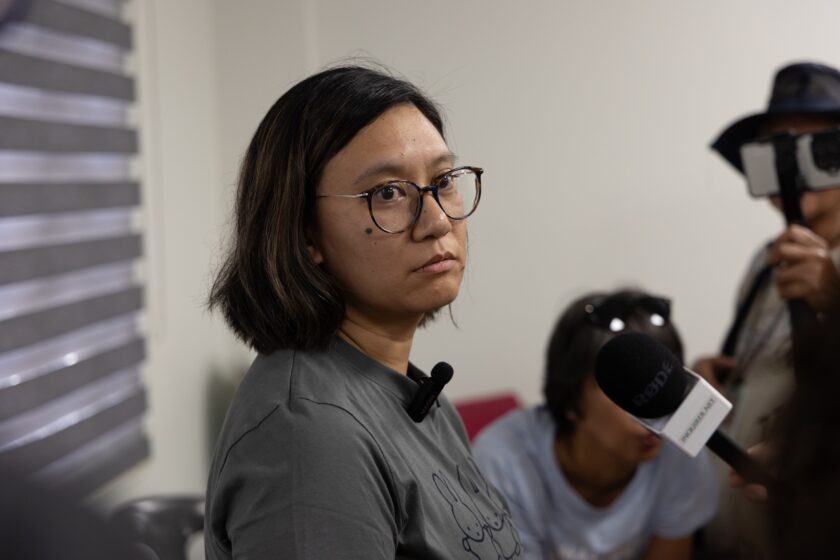
Marienne, wife of Lyle Prijoles. (Photo by Carlo Manalansan/Bulatlat)
Fortun said that in the past 30 years she has been questioning deaths in cases like the Toboso 19 to hold to account those who are responsible for these killings.
“If we don’t ask, the killings will not end. This is pure impunity,” she said.
She also appealed for help in searching for Errol’s.
“I appeal to the relatives who were able to retrieve bodies and have already disposed of them. Please help us. It is painful for the family that received the wrong body,” Fortun said.
Meanwhile, Marienne, wife of Lyle Prijoles, expressed rage at the initial findings of Fortun. “A lot of anger, a lot of questions on why it happened and how the investigation has been put together and not put together,” she said. (RVO)
The post Forensic expert raises questions on Toboso killings appeared first on Bulatlat.
From Bulatlat via This RSS Feed.
You must log in or # to comment.