

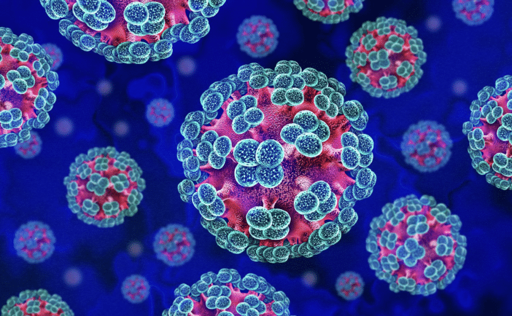

The latest case of the hantavirus — which describes a cluster of viruses — is by no means the first.
Craig Dalton, Conjoint Associate Professor at the University of Newcastle — who investigated the 1993 US hantavirus outbreak — told the Conversation that the first person infected by the MV Hondius on the cruise ship was likely exposed before boarding in Argentina. With eight cases now reported, and three deaths, Dalton explains that person-to-person transmission is a “leading hypothesis” that must be tested.
He notes that most hantaviruses do not spread between people. However, the South American Andes virus has done so occasionally, and the ship departed from Argentina, where the Andes virus has been detected. Andes virus is a strain of hantavirus found primarily in South America, particularly Argentina and Chile. Unlike other hantaviruses, the Andes virus has on rare occasions it has been documented spreading from person to person.
Dalton says that genetic sequencing testing would help confirm whether human-to-human transmission had occurred.
Climate change as a contributor
Scientists have warned that climate change may be contributing the spread of hantavirus in Argentina by boosting rodent populations. And the absence of a vaccine, the outbreak is stoking fear and panic in South America.
Argentina is facing renewed concern over hantavirus as scientists warn climate change may be increasing the spread of the deadly disease by boosting rodent populations, while experts say there is still no effective vaccine.
Al Jazeera’s @TeresaBo reports. pic.twitter.com/pEJlt2aMdx
— Al Jazeera English (@AJEnglish) May 8, 2026
The Canary has previously reported on research linking the spread of pathogens and infectious diseases to climate change, deforestation, and agricultural expansion in the Amazon. These include dengue, malaria, the Zika virus, and hantavirus.
The #Amazon warning call: a potential epicentre for the next pandemic is emerging & we’re the architects of our own demise. In-depth analysis from Canary writer @MAPICC2021 with comment from Joel Henrique Ellwanger & study from @ASOAntibiotics. Read more:https://t.co/bJvVpxV7h7
— Canary (@TheCanaryUK) February 12, 2024
Cross-continent spread
The MV Hondius cruise ship had passengers from twelve countries, including British nationals.
Hantavirus predicted in 2022? Post on Covid, new outbreak viral after cruise ship fiasco
Read: https://t.co/b8Q9FCqeqo@DasShuvrajit
More in today’s epaper
https://t.co/8DaFapiIh0 pic.twitter.com/OsvMhyviT1
— Hindustan Times (@htTweets) May 8, 2026

Bloomberg reported on Thursday that almost 150 passengers and crew remained isolated on board as the ship sailed toward the Canary Islands, where authorities are preparing to screen them and determine when they can disembark. They are expected to arrive in Tenerife on Sunday.
Cape Verde had refused to let it dock.
The BBC shared updated information on the status of the UK nationals who had been on the cruise ship, saying:
- Three Britons are confirmed or suspected to have contracted hantavirus
- One of them is being treated in the Netherlands, another man is being treated in South Africa, and a third is on the remote Atlantic island of Trista da Cunha
- Seven Britons disembarked the MV Hondius in St Helena on 24 April before the first confirmed case of hantavirus was reported on 4 May, with four remaining there
- Two of the Britonswho disembarked on 24 April have already returned to the UK and are self-isolating voluntarily but do not have symptoms
- The seventh person has not yet been traced, the UKHSA has said
Dalton, who investigated the 1993 US hantavirus outbreak, says person-to-person spread is now a leading hypothesis investigators must test.
Featured image via UK Health Security Agency
By The Canary
From Canary via This RSS Feed.