

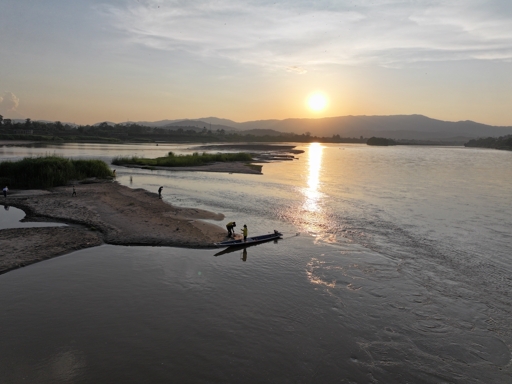
BANGKOK — Thai authorities have found what they described as dangerous levels of arsenic contamination in sediment from the Mekong River and three of its tributaries in the northern provinces of Chiang Mai and Chiang Rai. Heavy metal pollution has been reported from key tributaries of the Mekong for more than a year now, but the tests conducted in March by Thailand’s Pollution Control Department mark the first time that arsenic contamination has been detected on the mainstream of the Mekong, a vital transboundary river that supports thousands of plant and wildlife species and the livelihoods of millions of people. The test results published in mid-April show that sediment taken from three separate monitoring stations along the Mekong mainstream contained arsenic concentrations of between 73 and 296 milligrams per kilogram of sediment. According to the Pollution Control Department, concentrations of less than 10 mg/kg are considered broadly safe for aquatic life; levels higher than 33 mg/kg are deemed dangerous. Arsenic levels in sediment taken from various points along the Kok, Sai and Ruak rivers, key tributaries of the Mekong, all ranged from below the 33 mg/kg safe limit up to 57 mg/kg, the Pollution Control Department said via its official Facebook page, noting the contamination appears to be spreading through the river system. Thailand’s Pollution Control Department posted results of the sediment tests to their official Facebook page on April 10, 2026. Image sourced from the Pollution Control Department’s Facebook. Heavy metal pollution in the Mekong Basin has been widely…This article was originally published on Mongabay
From Conservation news via This RSS Feed.