

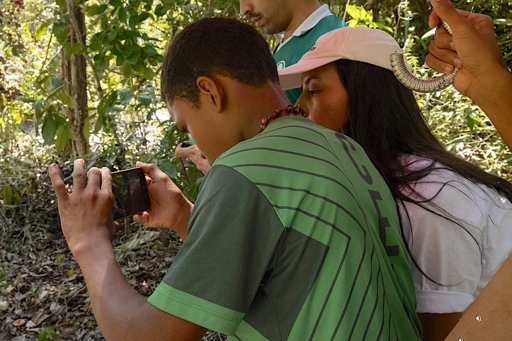
A machete is typically an instrument for clearing dense brush or, in a certain kind of movie, for fending off a terrifying monster. Yet, deep in the Atlantic Forest of Brazil’s Bahia state, I learned that a machete is also used for a much friendlier purpose: slicing green mangoes to eat with salt. That simple, unexpected twist — where anticipated horror dissolves into communal joy — captures exactly what happened when we asked the students in the Indigenous Tupinambá villages of Serra do Padeiro and Tukum what kind of movies they liked. The room immediately buzzed with a rapid-fire list: K-dramas, slapstick comedies, high-speed action, or blood-chilling horror. Before anyone had even picked up a camera, the space was already overflowing with a multiplicity of cinematic worlds and different ideas about what a story could be. I had traveled to southern Bahia in March 2026 with Indigenous filmmaker Olinda Tupinambá and a group of creatives. As a researcher at the University of London’s School of Advanced Study, I am co-developing our project titled “Environmental Education and Film in the Atlantic Forest: Eco-Activism Through Indigenous Perspectives” with support from the British Academy. Our goal was simple: to demystify filmmaking by using everyday smartphones as creative tools, and to challenge what audiences often assume about Indigenous cinema. Students, project leads, and facilitators during the workshop in the Serra do Padeiro village, Tupinambá de Olivença Territory (Bahia, Brazil), part of the British Academy–funded Environmental Education and Film in the Atlantic Forest: Eco-Activism Through…This article was originally published on Mongabay
From Conservation news via This RSS Feed.