

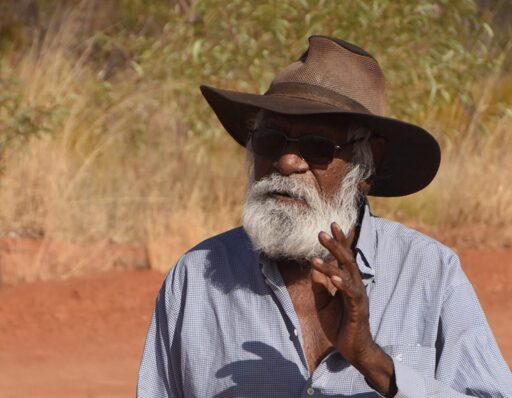
LAJAMANU, Australia — A group of Warlpiri men and women gathered along one of the most remote tracks in Australia and stared intently at the ground. Here in the Tanami Desert, along the dirt back road between Lajamanu and Tennant Creek, they all agreed that the tracks they could see told a story: A dingo, a black-headed python and a hopping mouse had all passed this way. They argued over the finer points — when exactly the animals had left these signs, whether the python was pursuing the mouse or whether it was an adult or juvenile dingo. But from these seemingly random marks in the sand, they were able to piece together a picture of what had occurred, in what order or when. These were the Warlpiri’s kuyu pungu (expert trackers), capable of reading the deserts of Australia in precise detail. Everyone here was born, and has lived, in the desert for most of their lives. They learned the essential skills of a self-sufficient desert life as their ancestors had, by observing their elders out in the desert. They have a profound connection with the land, and from that flows an intimate understanding of their world, one that encompasses everything from ecology to spirituality. Footprints in the sand along a sandy track outside Lajamanu. Image by Anthony Ham. And yet, often for a younger generation of Warlpiri, many of whom lived in towns with only irregular excursions into the countryside, such opportunities are rare. Which is why the Warlpiri…This article was originally published on Mongabay
From Conservation news via This RSS Feed.