

This article by Manuel Cosme originally appeared in the May 6, 2026 edition of El Sol de México.
The Congress of Mexico City today unanimously approved the reform to articles 3 and 9 of the local Constitution , in order to recognize in the first of these precepts the social and economic value of care as a right.
The modification to the second of those articles is so that the human right to care encompasses the right to care , to be cared for and to self-care, and that it is indispensable for exercising other rights and the sustainability of the lives of people and society.
The joint committees on Constitutional Points and Citizen Initiatives and on Inclusion, Social Welfare and Enforceability of Social Rights prepared the opinion based on the initiatives presented by Clara Brugada, head of Government of Mexico City, and the PRI deputy, Tania Larios.
The reform stipulates that care work, including unpaid domestic work, is essential for social reproduction, generating economic and social value, prosperity, and individual and collective well-being.
Another addition to Article 9 of the local Magna Carta is to stipulate that care work should be distributed equally between genders and shared equally between individuals, government, the private and social sectors. The report states that the Mexico City Care System will have among its purposes the recognition, distribution and reduction of caregiving tasks.
“This system also has as one of its objectives to eradicate the sexual division of labor because it is a mechanism that fosters inequality between genders,” states the bill approved by Mexico City Congress.
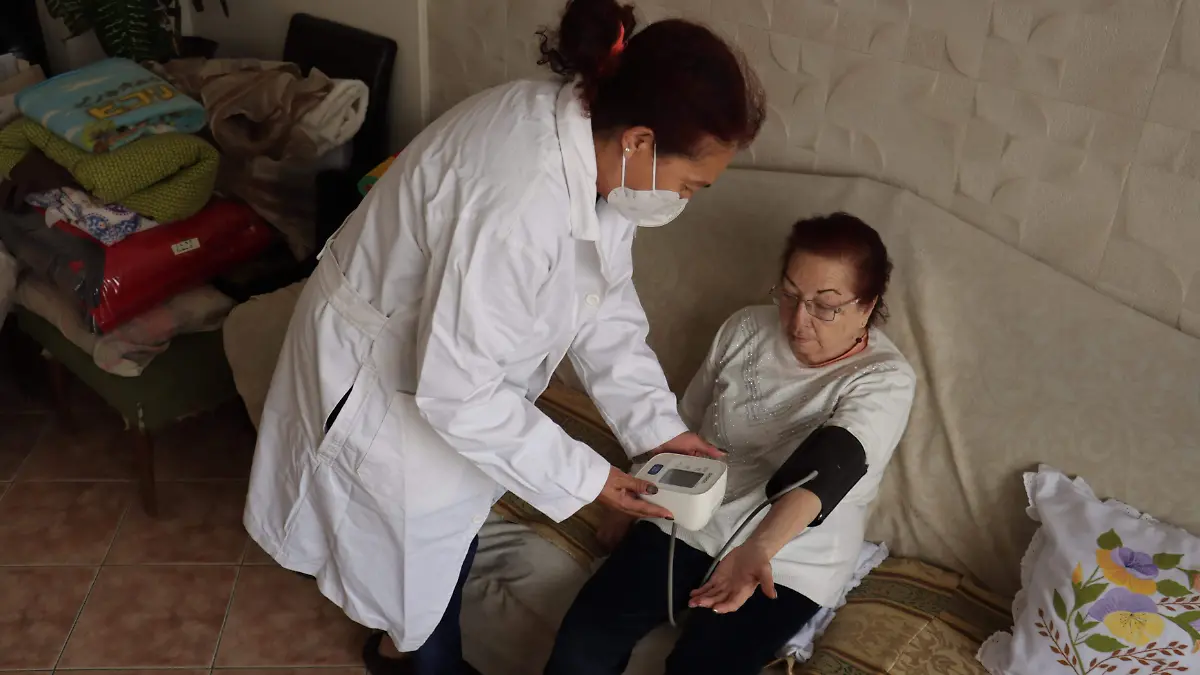
Mexico City Congress has established that caregiving responsibilities must be distributed equitably. Photo: Adrián Vázquez, El Sol de México
Once this constitutional reform is approved, the discussion and eventual approval of the secondary legislation to create the care system in the capital will follow. This legislation is currently undergoing consultation with the borough governments.
PAN Deputy Daniela Álvarez, president of the Committee on Constitutional Matters and Citizen Initiatives, presented the rationale for the ruling and requested a vote in favour, arguing that this constitutional recognition is a fundamental step toward building a more equitable, supportive, and inclusive society in which care is assumed as a shared social responsibility.
“Historically, care work has been distributed unequally between men and women, with the burden falling primarily on women. This creates structural gender gaps and a phenomenon of time poverty, which limits women’s effective access to education, formal employment with decent wages, and their participation in public life,” argued the opposition legislator.
The PRD deputy, Pablo Trejo, said that the creation of this system would benefit 45,000 caregivers in the capital. He noted that 90 percent of them are women who work more than 40 hours a week without pay.
Speaking on the floor of the capital’s legislative building, the legislator announced a planned investment of 12 billion pesos to be implemented between 2026 and 2030. This investment will fund the construction of 100 early childhood centers and 200 “3Rs of Care” centers, designed to recognize, reduce, and redistribute care work, among other facilities.
Xóchitl Bravo, parliamentary coordinator for Morena, pointed out that the constitutional reform enshrines the right to care, but also recognizes that this activity should be shared equitably with peers and men.
From the same party, Representative Juana María Juárez asked for a vote in favor of the bill because the reform to Articles Three and Nine of the Constitution of Mexico City is not a minor act, but rather a reality to strengthen the social pact that unites the city’s residents, in order to reaffirm that the capital is governed by the principles of justice, equality, and inclusion.
Royfid Torres, parliamentary coordinator of Movimiento Ciudadano, recalled that the right to care was recognized nine years ago without anything happening, and proposed that the secondary law on the matter should have a progressive budget, infrastructure and policies that make that right enforceable.
“The challenge is to recognize that care is work and must be counted as such in statistics, budgets, and rights; and it must be universally guaranteed with public responsibility; that care is also infrastructure that requires sustained investment and not just isolated services; that it is a shared responsibility between households, the State, the market, and the community,” the legislator concluded.
-

US Doesn’t Give a Shit About Drug Traffic
May 7, 2026May 7, 2026
US drug policy in Latin America is just a means to an end: dominance and control, an extension of their imperialist foreign policy, writes José Luis Granados Ceja.
-

Unpaid Work in Mexico is Equivalent to Cost of 30 World Cups
May 7, 2026May 7, 2026
More than 72 percent of unpaid domestic and care tasks are performed by women; a core part of the daily functioning of the economy that remains outside of remuneration schemes.
-

Restore Campesino Rights, Reject the USMCA
May 7, 2026May 7, 2026
José Jacobo Femat of the Central of Peasant & Popular Organizations, rejects the USMCA entirely, saying free trade agreements have effectively turned Mexico into a colony of US multinationals.
The post Mexico City Approves Right to Care in City Constitution appeared first on Mexico Solidarity Media.
From Mexico Solidarity Media via This RSS Feed.