

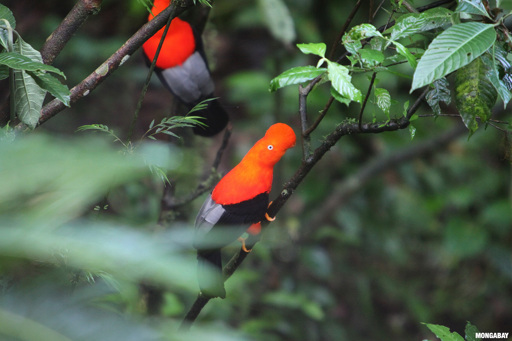
Up in the misty mountains, teems a kaleidoscope of life: trees drip with epiphytes, hummingbirds sip from bright blossoms, and rare creatures occupy every nook in the cloud forests, which scientists have likened to terrestrial coral reefs. But a new study warns that climate change could strip away the conditions that make cloud forests possible, and in the worst case, erase nearly all of them within 50 years. The research, published in the Journal for Nature Conservation, used machine learning and modeling to project how cloud forest distribution in South America could shift under two different climate scenarios by 2070. The study reports that under a high-emissions pathway, up to 91% of cloud forest area could be lost. Even under the most optimistic scenario, researchers calculate a 12% reduction, roughly 21,000 square kilometers (8,100 square miles), an area the size of El Salvador. Cloud forests occupy a narrow band of land, typically between 1,000 and 3,000 meters (about 3,300-10,000 feet) above sea level, and are defined by persistent fog, cool temperatures and high humidity. That humidity shapes everything, from the mosses and orchids draped across surfaces, to the birds and amphibians found nowhere else on Earth. Epiphytes in the cloud forest of Peru’s Kosñipata valley. Image credit: Rhett A. Butler The study notes these ecosystems harbor some 1,946 restricted-range species, representing roughly 8% of the world’s mammals, birds, amphibians and tree ferns. Among the species endemic to South American cloud forests are the flamboyant Andean cock-of-the-rock (Rupicola peruvianus), whose brilliant…This article was originally published on Mongabay
From Conservation news via This RSS Feed.