


Listen to this article
0:00
/1006.587506
1×
Greetings friends,
I’m writing from a difficult place today, but I have a lot to share: some reflections on bad dreams and altered capacities, updates on ICE, my favorite May Day photos, and a new batch of must-reads.
Repetition is not the Commitment
I’ve been having a lot of nightmares lately. The state of the world is enough to inspire such dreamwork, but in my case, it’s also a side effect of a sadly necessary medication. I usually don’t remember my dreams unless I make a point of concentrating on them after I wake up. If I write them down, talk about them, or really think about what I just saw, I will remember. So, I try not to linger. Before the images can settle, I tell myself, “Don’t think about it. Think about something else.” Usually, that tactic works, and the ugliness falls away. I know this is how some people approach the unpleasant visions of waking life: painful news stories, grotesque imagery, frightening political and economic trajectories, all brushed aside and forgotten, like the dangling mental artifacts of an unwanted dream.
I am constantly encouraging people to nurture the tender parts of themselves, because our willingness to experience empathy, to feel other people’s pain, and to remain aware of tragedies and perils that so many others ignore, can become scabbed and scarred over. I have watched many people who were wholly devoted to a cause or a fight for justice retreat into smaller, more isolated concerns, due to burnout, overwhelm, hopelessness, or, at times, feelings of betrayal.
I’ve often spoken to people who care deeply about a cause, or who feel personally immersed in the consequences of an injustice, who cannot fathom how anyone could look away. To them, it’s all so clear. There is no living apart from the issue. It is morally, and perhaps materially, inescapable. But people often manage to ignore or simply accept many things that are inescapable. People can resign themselves to conditions they have previously deemed intolerable, because resignation is easier. To live in struggle is taxing, by definition. People become weary. People give up. People go numb.
People who aren’t cared for, and who do not care for themselves, may find that cynicism begins to creep in. They may begin to judge their own actions as ineffectual or inconsequential. They may judge their co-strugglers harshly, and decide that none of the work being done is up to their standards, or worthy of risk and labor. Rather than recalibrating their approach, working to improve their group’s strategy, or making an altogether new plan, they may bundle all of their potential efforts, and perhaps all human potential, into the same weighted sack, and toss it into the river. Then, they go home. Whether they disqualify the movement or disqualify themselves from the movement, the result is often the same: a retreat into private life.
During the last century, people who retreated into private life under totalitarianism were called “internal emigres.” The temptation to retreat into private pleasures and private struggles, and leave the larger societal mess for someone else to clean up, can be real, especially when we are heartbroken and burnt out. But there is no safety in retreat, and if we hide, the fascists will continue to find ways to kick our doors down.
Under fascism, mass retreat is a form of participation. Fascists rely on their most feverish adherents, who will cheer every act of violence and rationalize every injustice, but they are no less dependent upon those who will simply wash their hands of the whole affair, mind their own business, and refuse to defend others. Passive acceptance is a crucial part of the formula they rely on.
That said, I know we are all struggling with very real limitations. In recent months, I’ve found my own movements somewhat restricted. This year, I was diagnosed with a mast cell disorder. My body is reacting too much, too often. I am inflamed and exhausted. My system is unpredictably thrown into chaos by food, fluctuations in sleep, medication, environmental exposures, and stress. My brain is fogged. I am more easily frustrated. Some days, it’s very hard to get out of bed or off my couch.
I am forever resisting the false binary that says we are either all-in or absent, either useful or useless. Fascism thrives on abandonment, but burnout also produces abandonment. So does untreated pain. So does loneliness. So does the shame of believing that if we cannot do what we once did, we have nothing left to offer.
There is a difference between abandoning the world and finding a way to remain part of it.
That is true for people, and it is true for movements. Sometimes the way we have learned to move no longer matches the moment. A tactic, a protocol, or a rhythm may have carried us through one phase of struggle, only to become less suited to the next. That does not mean our existing practices are wrong, or that we should discard them. It means we have to stay nimble and recognize when conditions have changed. Commitment often manifests itself in repetition, but repetition is not the commitment. To survive, we and our movements must adapt.
I have had to renegotiate my capacity before. I know what it’s like to have plans interrupted by an uncooperative body. I am well acquainted with the strange discipline of believing in sacrifice while refusing disposability. But each new downturn still has to be dealt with on its own terms. This one has been frightening, frustrating, and disruptive. I do not want to slow down, but my pace has changed. I can either try to steer through that change intentionally, or simply lose control.
I do not want to treat productivity as proof of political seriousness.
I also do not want to let my limits become a fog I disappear into.
I am still asking what can be done from here, with this body, under these conditions.
For now, that means moving more slowly than I want to, and letting some things take longer. It means being more deliberate about what I say yes to, and more honest with myself about what each yes will cost. It means some ambitions may need to be deferred, and that I’m going to need a real break soon.
But it does not mean giving up on the work, or on people. It does not mean allowing the ugliness of this moment to become another bad dream I train myself to forget.
I am trying to practice a form of commitment that does not depend on denial. Denial of danger will not save us, and denial of our limits will not save us. If we are going to remain in struggle, we have to become more honest about what our lives and bodies can sustain, while still refusing the invitation to abandon one another.
I wish more people could join me in the honesty of this messy in-between. Too often, people have trouble stepping back or slowing down without loudly diagnosing our struggles and our movements as unworthy. Our efforts are imperfect, just as we are. But I believe we can tend to our needs without rationalizing a broader standdown. We can determine what makes sense for us without embracing cynicism or becoming full time movement critics, cutting each other down from the sidelines. We can be honest about our limits without making vitriol and despair our politics.
All Eyes on ICE
There have been some important developments on the immigration front recently. First, the federal government is shuttering a U.S. watchdog office for federal detention abuses. This move comes as DHS moves to more than double its detention capacity during this fiscal year. While Bovino’s roving gangs held the public’s attention in recent months, DHS rapidly increased the number of 287(g) agreements around the country, folding more local police agencies into ICE enforcement work. In January of 2025, there were 135 active 287(g) agreements across the country. Now, there are 1,372 agreements across 1,169 agencies. That is more than a tenfold expansion. As a result of this escalation, 32% of US residents now live in areas where local law enforcement officers will function as low-level ICE agents. In March, Homeland Security Secretary Markwayne Mullin told senators he wanted to keep DHS off the front page of the news. Under Mullin’s leadership, ICE is also abandoning its abbreviated 42-day training program and reinstating its previous 72-day program, an obvious effort to restore a veneer of respectability to the agency. This move may satisfy Democratic demands for better-trained kidnappers, but it does nothing to change ICE’s mission. ICE budgets indicate that the agency still plans to deport 1 million people during this fiscal year. Last year, fewer than 500,000 people were deported.
The administration has also escalated efforts to make it harder for immigrants to work, bank, and access basic services, while openly framing the removal of “monetary incentive” as a strategy to encourage self-deportation.
In my own conversations with healthcare workers, I have heard alarming stories about ICE agents targeting patients, including hospice patients, at assisted living facilities. Some individuals have reportedly opted to leave the country rather than risk dying in ICE detention, while others are not well enough to travel.
The terrain is shifting. We may still see a resurgence of roving, gang-style attacks in major cities, but communities that have mobilized against at-large ICE abductions will also need to think more expansively about how to support immigrants targeted through local law enforcement, workplace restrictions, detention expansion, and deteriorating conditions meant to pressure people into leaving. Quieter methods of removal will look more like ordinary criminalization, which many people in the U.S. are conditioned to ignore. This moment is a test for our movements. Can we recognize criminalization as the primary means of human disposal under fascism and organize accordingly? Can we create mutual aid networks that help immigrants remain rooted and cared for as they are persecuted under this administration? While our rapid response models remain critical, we must broaden our defenses.
There are some encouraging developments on this front as well. Israel and Max Makoka were returned to their family last month after being abducted in Diamondhead, Mississippi, while waiting for a school bus. The boys credited organized public outcry from their community for their safe return. While 11 warehouses have been purchased by DHS for immigration detention purposes, eight deals have been scuttled, amid lawsuits and public backlash. Last month, DHS paused its warehouse buying spree. The pause was a strategic move that shouldn’t be viewed as a permanent victory, but it gives organizers a chance to get ahead of DHS by cultivating opposition to proposed purchases, contracts, and facility conversions before they are finalized.
May Day in Chicago
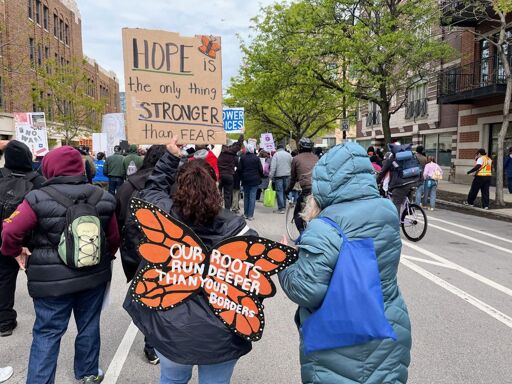
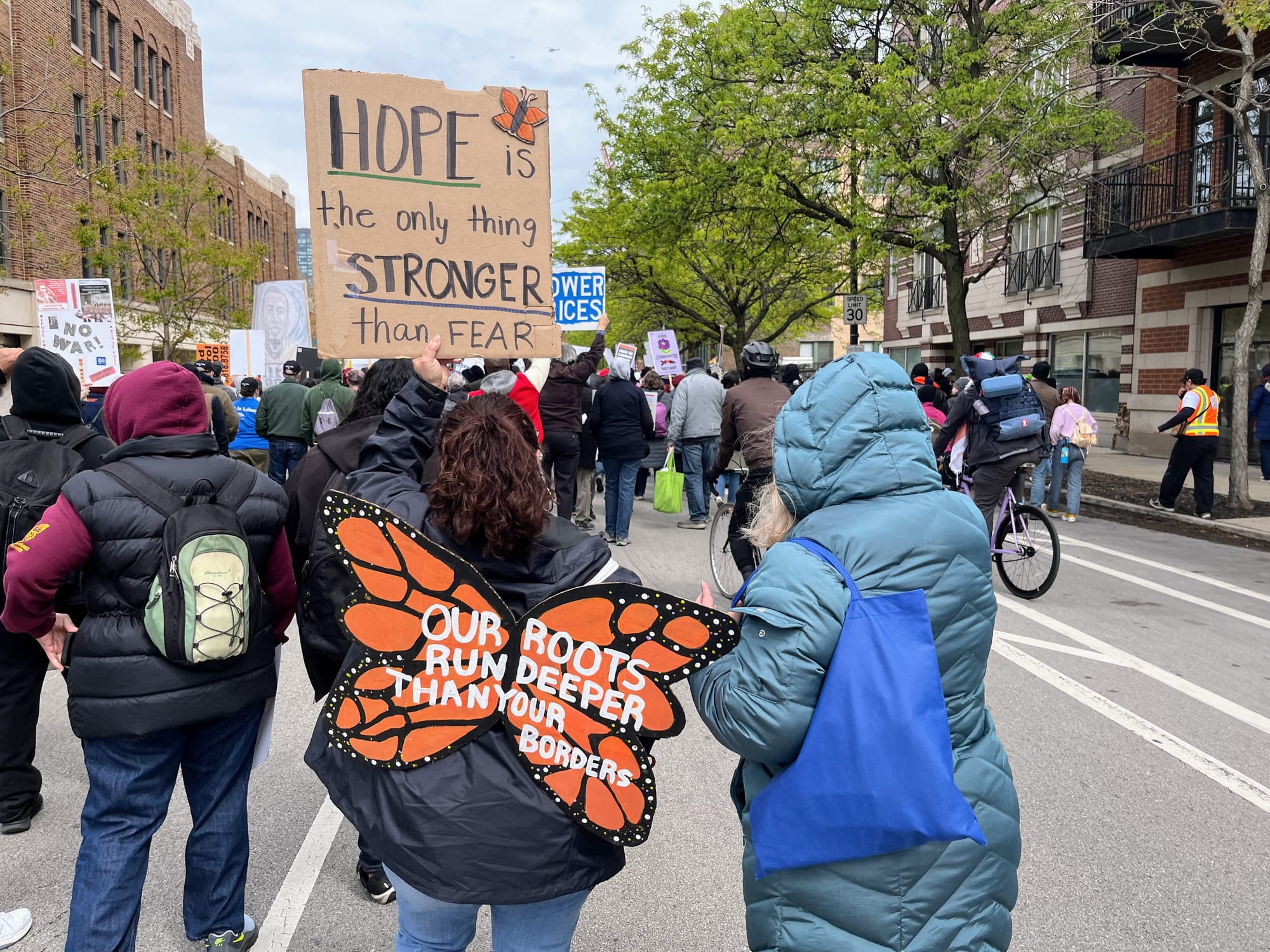
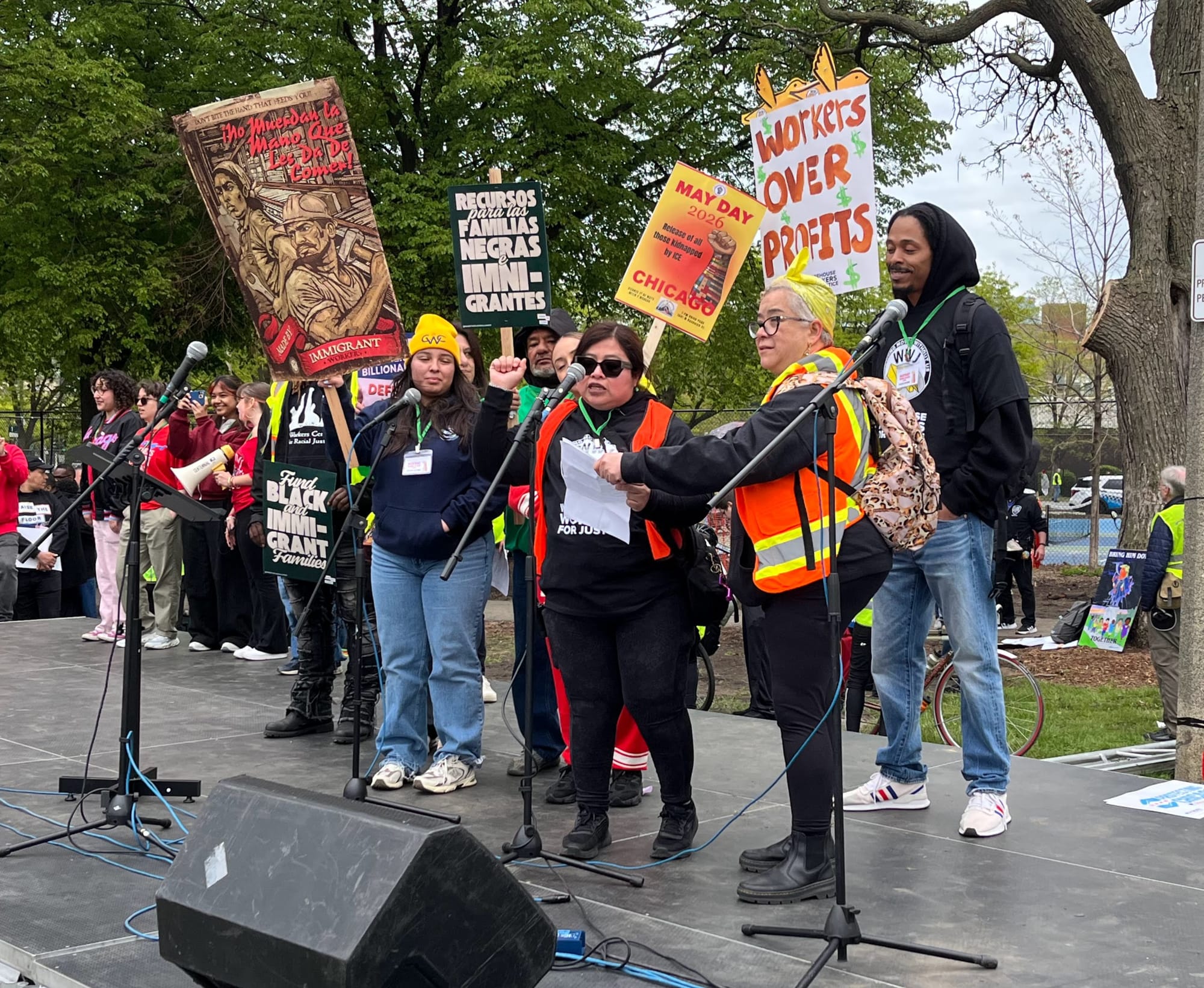
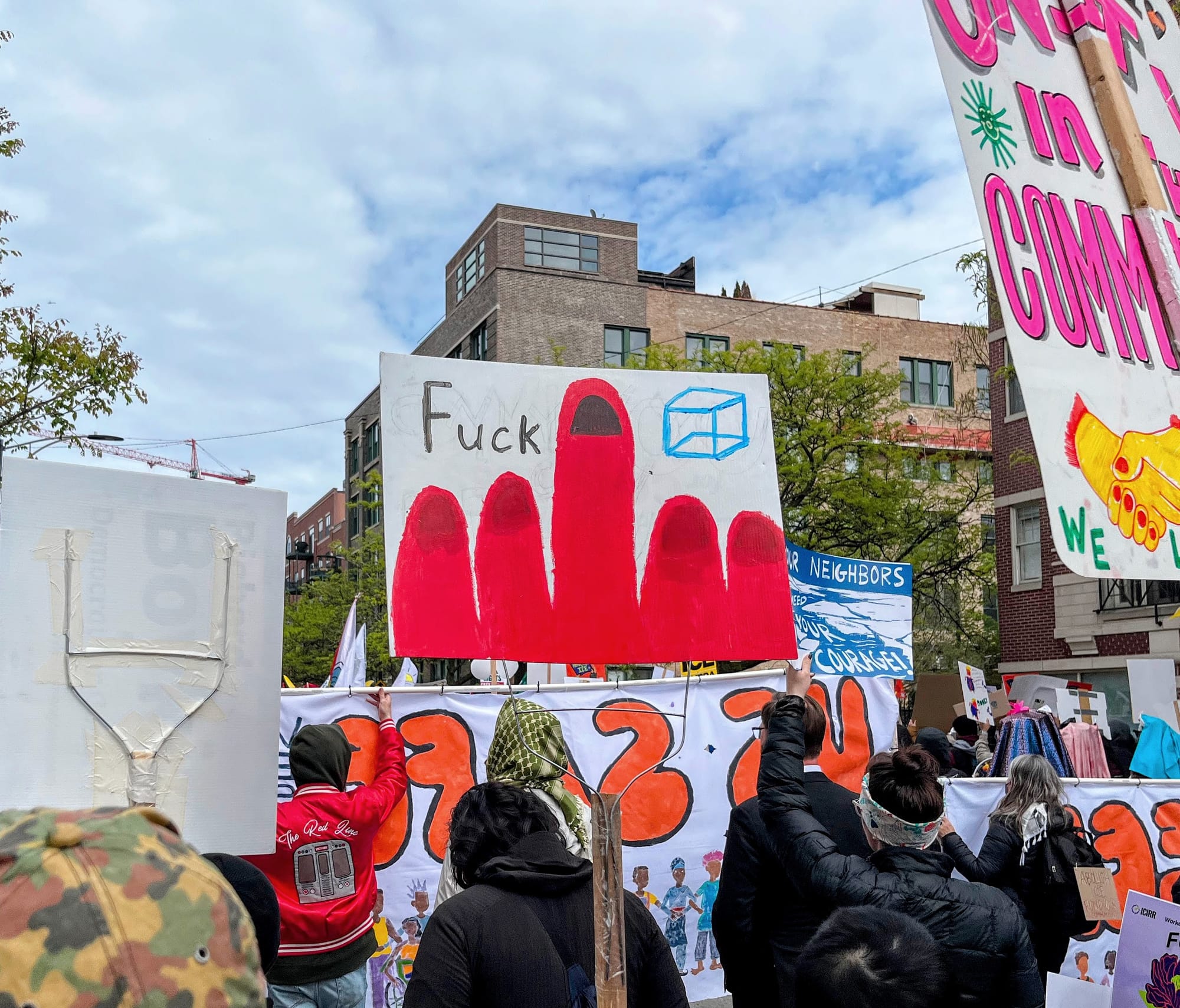
Chicago’s May Day rally and march linked labor, immigrant rights, and anti-war demands, while echoing the loving, militant spirit of our city’s resistance to Operation Midway Blitz last year. Here are a few of my favorite photos from the march.
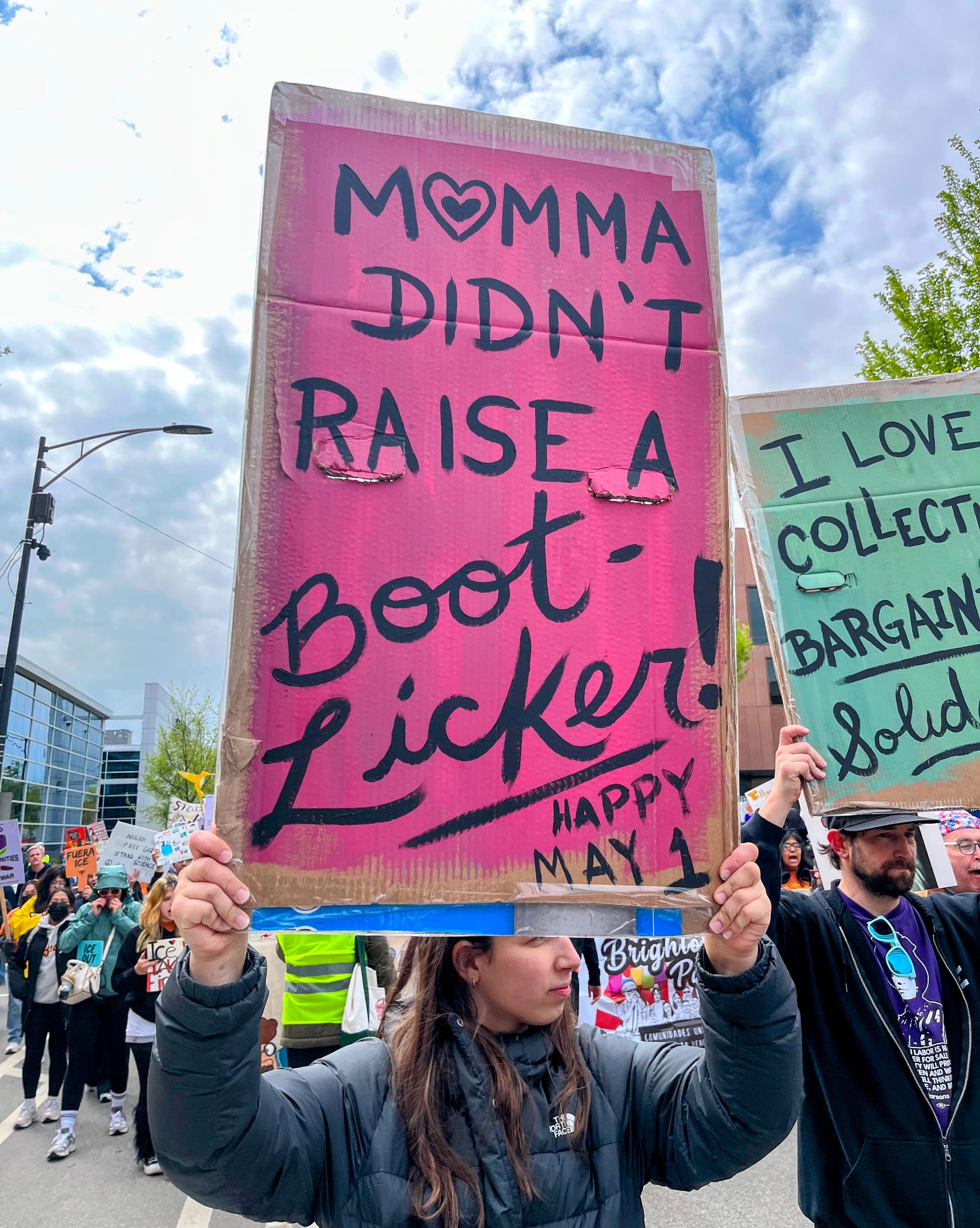
Photo: Kelly Hayes
(Photo: Kelly Hayes)

(Photo: Kelly Hayes)
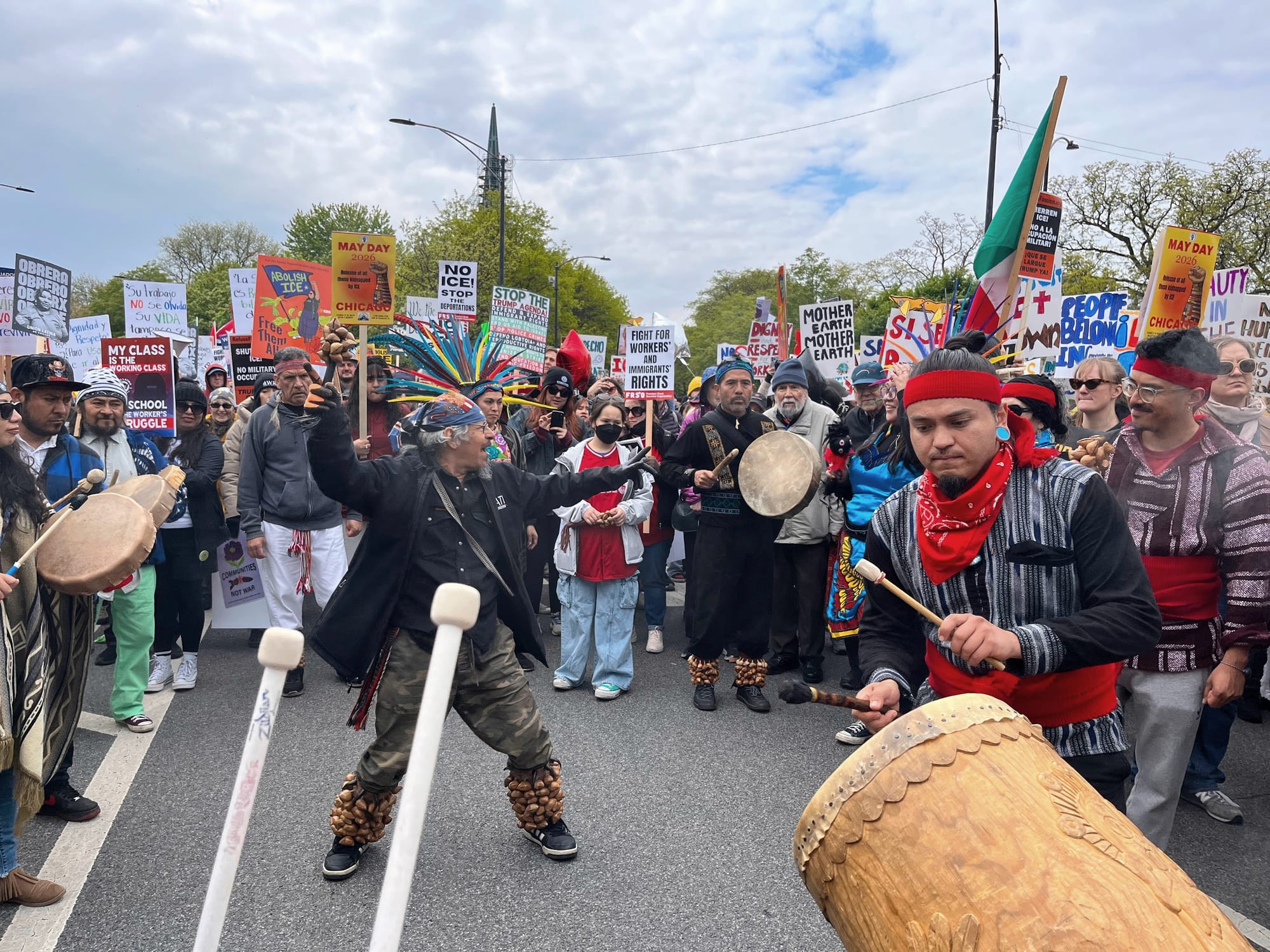
(Photo: Kelly Hayes)
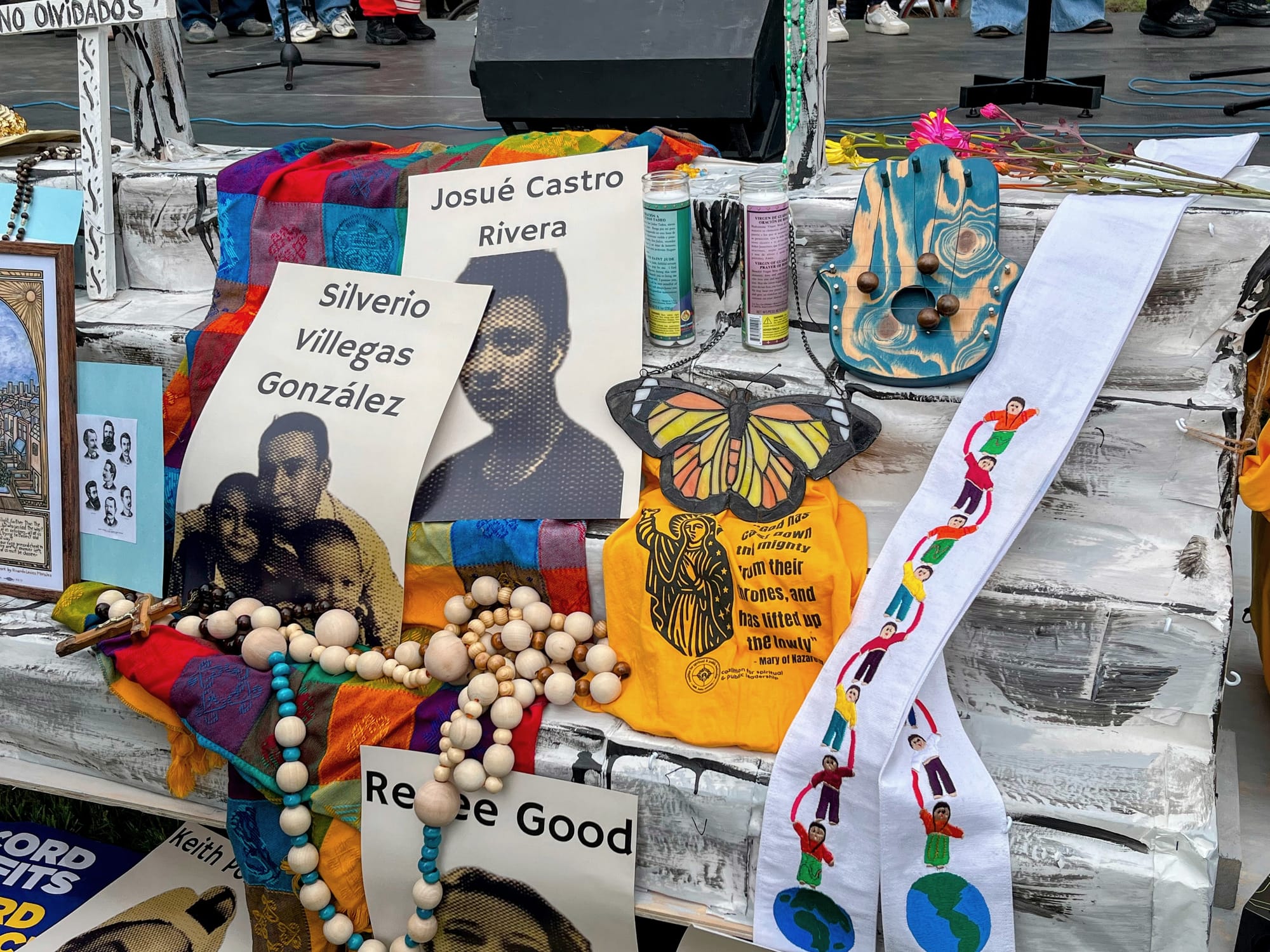
(Photo: Kelly Hayes)
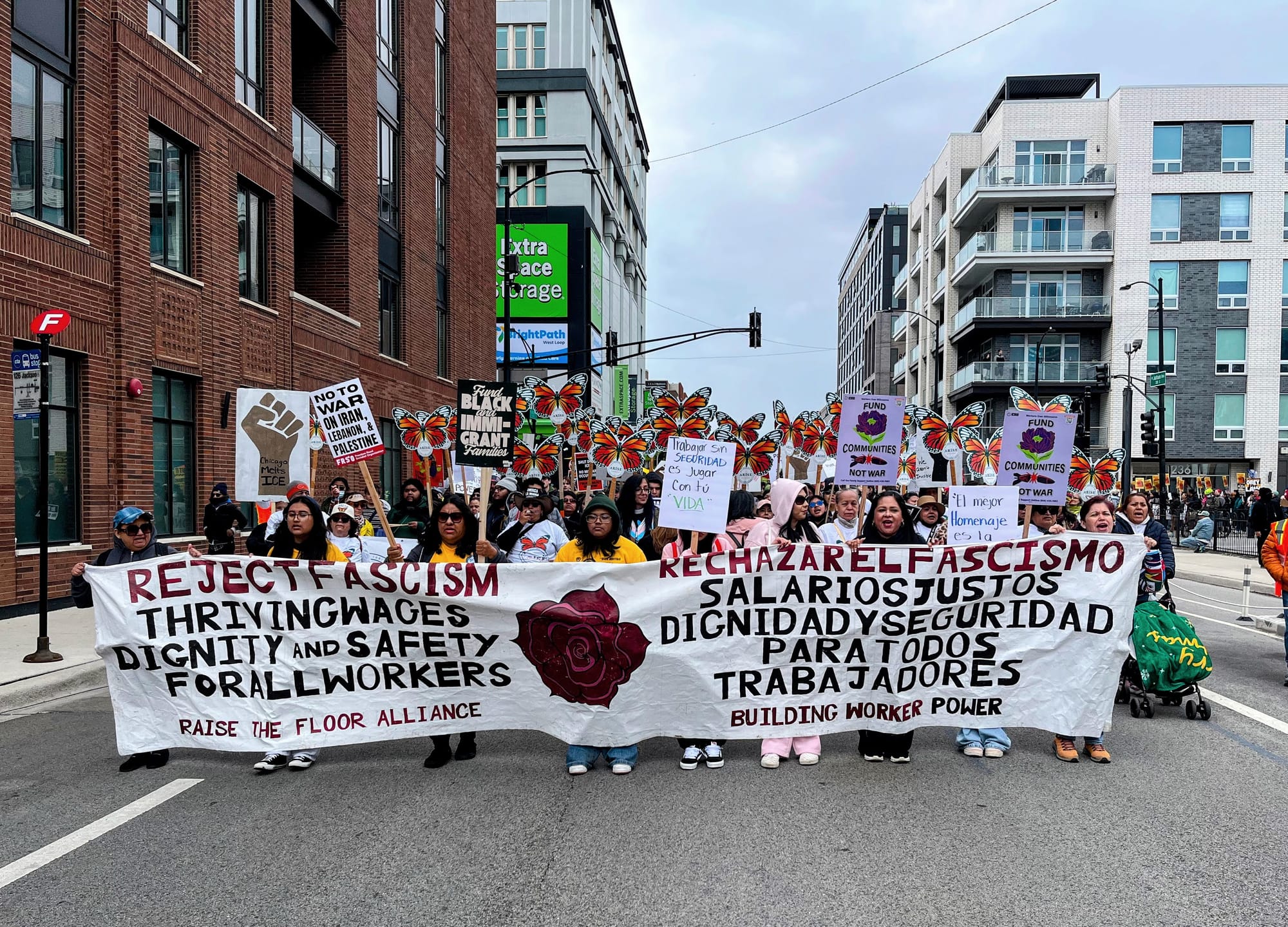
(Photo: Kelly Hayes)
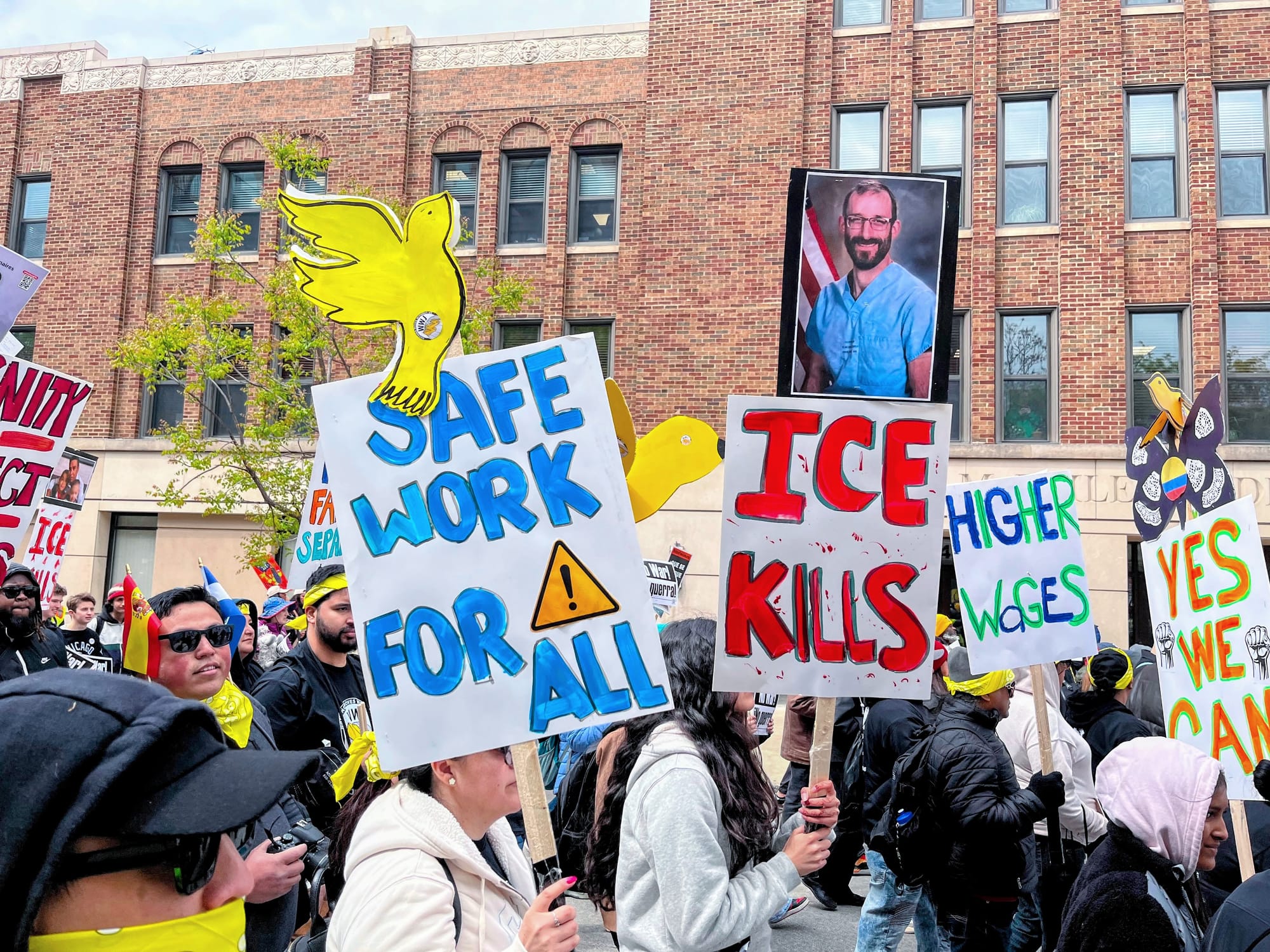
(Photo: Kelly Hayes)
(Photo: Kelly Hayes)
Must-Reads
Here are some of the most important articles I’ve read lately.
- Want to Resist a Data Center? These Organizers Share How They Did It by Derek Seidman. “Activate your community as quickly as you possibly can and inform as many people as possible. These projects move with an urgency and speed by developers that we haven’t seen before,” says KeShaun Pearson.
- Atlanta’s ‘Cop City’ Makes a Black Neighborhood a Testing Lab for AI Policing by Adam Mahoney and Madeline Thigpen. “A 2025 mapping project estimated that Atlanta now has about 124 surveillance cameras for every 1,000 residents, which is higher than any city in the world outside of a handful in China.”
- ‘The Night Guards’: Inside the Grassroots Network Fighting Back Against Israeli Settler Attacks by Majd Jawad. “As the pace of settler attacks on Palestinian communities reaches unprecedented levels, and amid a weak official response to escalating risks across the occupied West Bank, community-based volunteer groups known locally as protection committees or ‘night guards’ have emerged as a primary line of defense against near-daily violence.”
- Silicon Valley Is Bracing for a Permanent Underclass by Jasmine Sun. “If left to its own devices, Silicon Valley may summon a permanent underclass through its own market logic.”
- Over 4,732 Messages, He Fell In Love With an AI Chatbot. Now He’s Dead by Julie Jargon. “Jonathan Gavalas was a seemingly healthy and even-keeled 36-year-old when he began chatting with Gemini, Google’s chatbot, in part to seek comfort about splitting up with his wife.”
- Federal Judge Rules in Favor of Tribes, Halting Drilling at Black Hills by Amelia Schafer. “This is what we wanted, this is what we asked for,” said Wizipan Little Elk Garriott. “This is a huge victory, this is a big win for the people, for Unci Maka mother earth, for our continued fight for LandBack, for our continued fight to protect mother earth and to ensure a just world for all people.”
- Supreme Court Guts Voting Rights Act in “Devastating Blow” to Democracy & Civil Rights: Maya Wiley (Democracy Now! segment transcript and video)
- The Trump Administration Aims to Penalize Disabled Adults Who Live With Their Families by Eli Hager. “A rule change pushed by White House officials would slash benefits or end support for as many as 400,000 Supplemental Security Income recipients with Down syndrome, dementia and other disabilities whose parents or relatives receive SNAP benefits.”
- Precrime is No Longer Science Fiction by Sarah Fathallah. “A new generation of compulsory biometric devices pushes far into dystopian territory, raising questions about how much biological information the carceral state feels entitled to collect.”
- After Decades of Quiet Rumbling, an Epidemic Is Erupting Among California Stoneworkers by Kayla Yup. “The California Department of Public Health has described silicosis as an epidemic, one primarily plaguing young Latino immigrants like Hernandez who work in shops that fabricate engineered stone.”
- Bamboo-Based Plastic Can be Made to Biodegrade Quickly, But Still Holds Up in Tough Conditions by Gaby Clark. “The bioplastic resembles oil-based plastics in strength, shapability, and thermal stability but can biodegrade in soil within 50 days, presenting a new pathway toward sustainable plastic alternatives.”
Upcoming Zoom for Paid Subscribers
Saturday at 11 am CT, I will be hosting one of my periodic Zooms with paid subscribers. If you didn’t receive an invite, but believe you are a paid subscriber, please make sure your subscription is current. It may have lapsed due to an expired credit card. If you aren’t yet a paid subscriber, but would like to join the conversation, there’s still time to join in! I will send out another invite to all paid subscribers soon.
I am so grateful to the folks whose financial support makes this newsletter possible. I truly could not do this work without you.
For those of you who’ve had to cancel your paid subscriptions recently due to financial hardships, I appreciate the support you gave while you were able, and I hope we all see better times soon.
In Closing
As mentioned, I have been doing poorly and will likely need a break soon. There are some things I would like to do first, though, so you’ll be hearing from me a bit more before I take some space to try to get my health together. As always, I appreciate your support, patience, and well-wishes more than I can say. I know this is a difficult time for all of us, and I hope I am doing my part to help you do yours.
Much love,
Kelly
Organizing My Thoughts is a reader-supported newsletter. I need eight new paid subscribers this month to keep this project sustainable. Can you join in?
Sign up for Organizing My Thoughts
Subscribe
Email sent! Check your inbox to complete your signup.
No spam. Unsubscribe anytime.
From Organizing My Thoughts via This RSS Feed.
You must log in or # to comment.