


Nika Bartoo-Smith
Underscore Native News + ICT
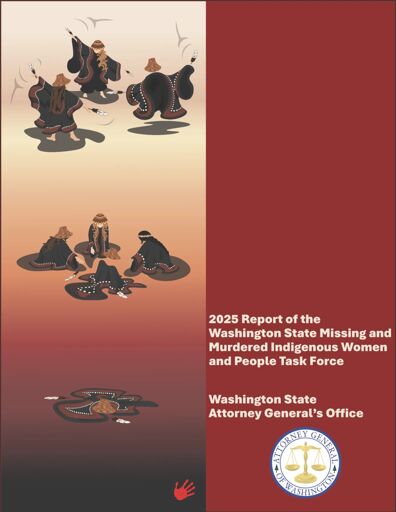
In the five years since its establishment, Washington State’s Missing and Murdered Indigenous Women & People (MMIWP) Task Force has worked to raise awareness across jurisdictions and implement strategies to combat the MMIWP crisis, including regular committee convenings, creating a state wide MMIWP alert system, establishing a cold case unit and releasing a toolkit for families and friends.
“[Our objective is] to educate the public that this is a crisis, and it’s their responsibility, as well as ours, to take care of all Washingtonians,” said Washington state Rep.Debra Lekanoff, Tlingit and Aleut, who is executive committee co-chair of the task force.
“[The Task Force is] helping Washington State recognize their responsibility to this crisis. Native American women and people are seen and heard and not forgotten in the responsibility of Washington state to protect them,” she continued.
In 2021, the Washington State Legislature established the state’s MMIWP task force under the attorney general’s office. The task force is made up of six subcommittees: executive, families, tribes, criminal justice and public safety, community services and resources, and data and research. The subcommittees meet monthly via Zoom.
The task force has aided in the creation of a state wide MMIWP alert system that launched in 2022, a cold case unit in 2023 and a toolkit released in 2025 for families and friends to use if a loved one goes missing.
As of April 2026, a total of 220 Missing Indigenous Persons Alerts have been issued by the Washington State Patrol since its establishment in 2022. Of that, 203 people were recovered, 12 are still missing and five were found to be deceased.
The cold case unit has helped resolve dormant cases, including some that date back 30 or 40 years, according to Lekanoff.
On a national level, President Donald Trump signed the Savanna’s Act and the Not Invisible Actinto law in 2020. The legislation, first introduced by former Congresswoman Deb Haaland, created both an advisory committee and guidelines for how to respond to cases of MMIWP.
However, implementation of the legislation has been lacking. In 2022, under the Biden administration, a federal commission met to study the crisis and released recommendations to the public in 2023. Last year, the recommendations were removed from government websites under the Trump administration’s sweeping diversity, equity and inclusion cuts. Tribes are sovereign nations, not DEI.
Moving forward
Looking to the future, Lekanoff hopes to see continued engagement between tribal, state and federal public safety officers.
She has also noticed a need for increased education, as many officers do not know what MMIWP is, according to Lekanoff.
“We are not part of equity and diversity,” Lekanoff said. “Decisions based on us, it’s not diversity. It is based on the sovereignty of the people that we are.”
Working to support MMIWP work and legislation, Lekanoff has found a significant lack of awareness from legislators, public safety officers and the general public about the MMIWP crisis and the importance of a task force dedicated to addressing it.
“How many moms like me had to have the conversation with my daughter that she is at higher risk than any other women of color to go missing or be murdered because of the color of [her] skin, because of [her] blood and because the United States has allowed this to continue to happen,”Lekanoff said. “And when she asks why, I can’t answer why, other than it’s pure genocide and racism.”
This story is co-published byUnderscore Native NewsandICT, a news partnership that covers Indigenous communities in the Pacific Northwest.
The post Washington state MMIWP Task Force: Still raising awareness, five years in appeared first on ICT.
From ICT via This RSS Feed.