

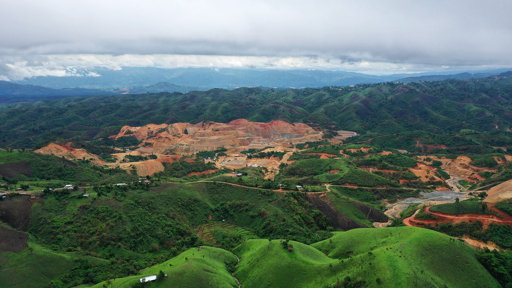
The Salween River, Asia’s longest free-flowing waterway that briefly serves as a border between Thailand and Myanmar, is facing a crisis as recent testing has found arsenic levels far exceeding the safe limit set by the World Health Organization. Researchers from Thailand’s Chiang Mai University first raised the alarm in September 2025 after detecting high levels of toxic contaminants in nearby rivers. Experts suspect unregulated mining in Myanmar is to blame, reports Mongabay’s Gerry Flynn. Satellite imagery analyzed by the Stimson Center, a U.S.-based think tank, identified 127 suspected mines that opened within the Salween River Basin between 2016 and 2026. What’s being mined is unclear, but some operations likely include rare earth mines, experts say. Chemicals like cyanide, mercury, arsenic and cadmium can be released into ecosystems during rare earth mining. The WHO’s safe threshold for arsenic exposure is 0.01 milligrams per liter. Tests of multiple water samples from the Salween River Basin have found arsenic levels several times that limit. For the millions of people living along the Salween’s 3,300-kilometer (2,050-mile) path, the river is a vital source of drinking water, irrigation and food. Pongpipat Meebenjamart, chair of the in Thailand’s Mae Hong Son province, reported that local fishers are afraid and struggling as buyers avoid potentially toxic catches. “It’s very urgent that, even if the contamination doesn’t exceed the safety levels, the government takes swift action to identify the source of the contamination, safe water supplies for affected communities,” Pongpipat said. “We can’t solve everything downstream here…This article was originally published on Mongabay
From Conservation news via This RSS Feed.