

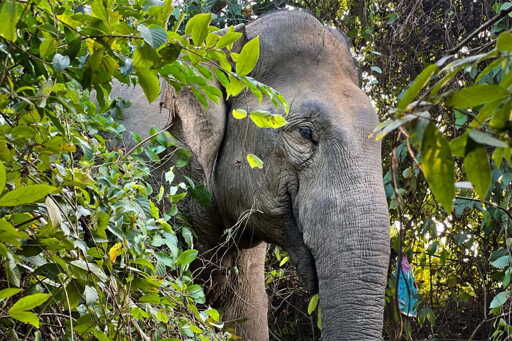
On April 25, 2026, a male elephant suffering from illness died in the hilly district of Rangamati in southeastern Bangladesh. Residents from the remote village where it died hacked away at its legs and trunk, which highlight serious failures by the country’s Forest Department as well as a lack of public awareness and sensitivity towards wildlife protection. The 60-year-old elephant (Elephas maximus indicus) had been injured several months earlier in a conflict with humans and later died while receiving treatment, said A.S.M. Jahir Uddin Akon, a conservator of forests in Bangladesh. Prior to this incident, in March, a 3-month-old baby elephant was found killed by humans in a protected forest in the neighboring Bandarban district. Before that, on Jan. 19, a captive elephant was killed following collision with a train in Sylhet district in northeastern Bangladesh. The mutilated elephant in Langadu sub-district, Rangamati. Image by Samir Mallik. According to the latest data from the forest department, between 2017 and 2025, at least 148 elephants — including resident, non-resident and captive ones — were killed in the country. ‘Resident’ here means those who live in the country’s forests, and ‘non-resident’ refers to those who frequently come in from the neighboring countries, India and Myanmar. The deaths of the three elephants this year have brought the total number to 151. Regarding the rising fatal incidents of elephants despite several conservation initiatives, Akon, who leads the Elephant Conservation Project at the Forest Department, told Mongabay, “We are working to resolve the crisis in…This article was originally published on Mongabay
From Conservation news via This RSS Feed.