

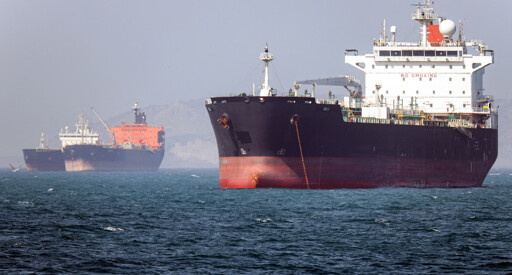
There have been a flurry of events in the Gulf over the last days — including the attempted (or rather, proclaimed) forced reopening of traffic in the Strait of Hormuz, direct clashes between naval units, and Iranian attacks against energy infrastructure in Fujairah and against oil tankers. They confirm what was already foreseeable since the inception of the U.S.-led blockade: it has failed to achieve its central political objective. Far from forcing Tehran to negotiate from a position of weakness, it has precipitated a dynamic of escalation in which Iran not only resists but continues to dictate the terms of the confrontation.
The underlying premise of the U.S. strategy was clear: sustained economic pressure, combined with financial isolation and the disruption of oil exports, would eventually bring Iran to the negotiating table on terms amounting to capitulation. That premise has proven to be flawed. The blockade has functioned as an instrument of attrition, but not as a decisive lever. Instead of breaking the will of the Iranian regime, it has pushed it to choose escalation as the rational alternative to surrender.
Washington’s decision to escort vessels and attempt to force the reopening of the Strait constitutes, in this sense, an implicit admission of the blockade’s failure as a coercive tool. Yet this move — far from stabilizing the situation — introduces an element of direct military friction that Tehran has skillfully exploited.
Anticipating Escalation: Iran Seizes the Initiative
Iran has not waited to be struck before responding. It has acted according to a preventive logic: to demonstrate — in a calibrated yet unequivocal manner — the costs of any deepening of the conflict. The message is clear: any attempt to guarantee freedom of navigation will entail heightened risk, increased potential losses, and a greater impact on energy markets.
By preempting a potential U.S. offensive, Iran is redefining the tempo of the conflict. It compels the United States to operate within an environment where every corrective maneuver generates new vulnerabilities. After weeks of war, several hypotheses regarding Iran’s actions are solidifying: capitulation is not on their horizon; control — or the denial of control — over the Strait of Hormuz constitutes a central strategic interest; and when faced with the choice between concession and escalation, Tehran systematically opts for the latter. Coercion, on its own, is not altering this calculus.
The Emirates as a Pressure Point
Within this framework, the selection of the United Arab Emirates as a priority target is no accident. It is, arguably, the most exposed — and most useful — link in the regional architecture aligned with Washington.
First, there is its role as a logistics and energy hub. Fujairah, situated outside the Persian Gulf, was precisely the alternative designed to bypass the Hormuz bottleneck. By striking there, Iran does not merely attack infrastructure, it undermines the very concept of secure routes lying beyond its reach.
Second, the UAE is a target due to its political-military alignment. On May 3, Iran confirmed that the UAE had deployed combat aircraft to bomb Iranian territory. This marks a turning point: the Emirates cease to be an ambiguous actor and become — in the Iranian perception — a direct belligerent. Their integration with the United States and Israel — deepened since the Abraham Accords — shifts from being merely diplomatic to becoming operational.
Third, the UAE has undergone a strategic repositioning. Dubai’s global prominence amplifies the impact of any attack; yet, above all, the war has called into question the very foundations of its model. Simultaneously, the UAE’s strategic gamble — moving away from traditional frameworks such as OPEC while deepening its military integration with Washington and Tel Aviv — exposes them even further. Through this maneuver, they cease to be an intermediary actor and instead assume the role of a direct adversary.
The Mirage of the “Miracle Strike”
Faced with this scenario, a recurring temptation resurfaces in Washington: to intensify bombing campaigns, strike at command structures, and gamble on a form of “decapitation” intended to alter the balance of power. However, recent experience suggests that such an approach is unlikely to resolve the impasse.
Iran has demonstrated a remarkable capacity for absorption and adaptation. Its political-military structure does not rely on a single vulnerable node, and its network of capabilities — ranging from missiles to light naval forces — is designed precisely to survive under pressure and respond in an asymmetric manner. While each round of attacks may degrade assets, it also validates the Iranian narrative of resistance and legitimizes further countermeasures.
Moreover, aerial escalation fails to address the central issue: effective control — or at least the capacity to deny control — over energy transit routes. As long as Iran retains the ability to disrupt traffic through the Strait of Hormuz and its alternative routes, regional stability will remain precarious.
The result is a paradoxical equilibrium. The United States fails to force decisive concessions; Iran cannot prevail without assuming existential risks. Yet in this stalemate, the dynamic favors the party capable of turning uncertainty into a tool: driving up prices, disrupting supply flows, and compelling third parties to push for a resolution.
Trump’s strategic frustration is evident. The maneuvers devised have failed to break the conflict’s deadlock: neither the blockade nor an escalation of airstrikes appears capable of bringing about the capitulation Washington seeks. At the same time, by downplaying Iranian attacks — and effectively raising the threshold for what constitutes a “violation” of the ceasefire — Washington signals its reluctance to engage in full-scale escalation, even if it cannot rule it out entirely. For the time being, the negotiating positions remain irreconcilable. For its part, by anticipating the costs of escalation while simultaneously avoiding a qualitative leap in the conflict, Iran continues to deepen Washington’s dilemma — an equilibrium that is becoming increasingly difficult to sustain.
This article was originally published in Spanish on May 4, 2026 in La Izquierda Diario.
The post Tensions and Military Friction are Growing in the Strait of Hormuz appeared first on Left Voice.
From Left Voice via This RSS Feed.