

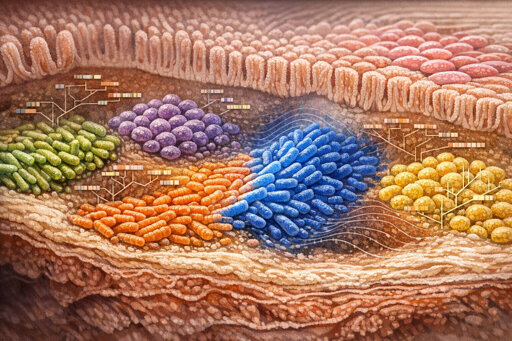
The human gut harbors a complex ecosystem of trillions of microorganisms (the microbiome), which influences digestion, the immune system and metabolism. A research team led by the University of Vienna has used the “reverse ecology” analytical approach to demonstrate that many known gut bacterial species consist of several evolutionarily distinct groups that have adapted to different conditions in the gut. Some of these populations are associated with advanced age, chronic inflammatory bowel diseases, colorectal cancer and type 2 diabetes. The findings have now been published in Nature and may in future improve the search for biomarkers and, in the long term, enable more precise therapies.
From Biology News - Evolution, Cell theory, Gene theory, Microbiology, Biotechnology via This RSS Feed.