

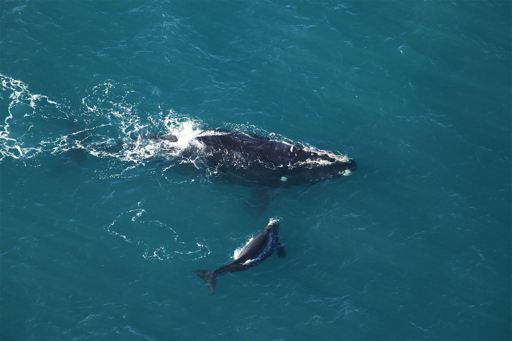
Calving season for the critically endangered North Atlantic right whale has come to a close with 23 new baby whales, the most calves born in a single year since 2009. Part of the baby boom during the winter calving season can be attributed to females giving birth at closer intervals than in years past: 18 of this year’s moms gave birth within the last six years. “While a healthy right whale can give birth every three to four years, we had been seeing nearly 10 years between calves for some females,” Amy Warren, scientific program officer with the New England Aquarium’s Anderson Cabot Center, said in a statement. One explanation for the calving delay is the stress of climate change, researchers say. Small crustaceans called copepods, the main food source for baleen whales, including North Atlantic right whales, have started shifting locations over the last decade, and many whales are traveling farther to find sufficient food. There are an estimated 384 North Atlantic right whales (Eubalaena glacialis) today, living along the East Coast of North America. At least one whale was spotted near Ireland, and many are turning up in Canada’s Gulf of St. Lawrence, over a thousand kilometers from their usual habitat. Swimming to the Gulf makes their 1,600-kilometer (1,000-mile) migration from Florida to New England roughly 50% longer. That equates to more energy put into finding food, potentially leaving less resources for raising babies, Philip Hamilton, a senior research scientist with the New England Aquarium, told Mongabay in an email.…This article was originally published on Mongabay
From Conservation news via This RSS Feed.