

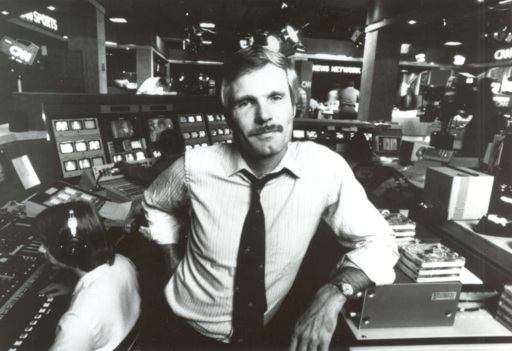
Ted Turner, who died on May 6th, liked to present himself as a businessman who had simply applied the same habits to a larger subject. First he bought a struggling billboard company and made it work. Then he built a television empire, beginning with CNN in 1980. After that, he turned much of his attention to land, wildlife, and the many ways humans damage nature when they treat it as an afterthought. He was rarely subtle about the stakes. “The planet is collapsing all around us,” he told an audience at Stanford in 2010. Turner’s environmentalism was neither ornamental nor detached from power. He did not confine it to speeches, documentaries, or naming rights. He pursued it in three connected ways: by acquiring and managing large landscapes; by funding environmental and public-health groups; and by using his prominence to argue that climate, biodiversity, and population pressures were practical problems, not cultural preferences. The mix could be hard to categorize. He was a billionaire who disliked the idea that capitalism required plunder, and a sportsman who came to talk like a restoration ecologist. His landholdings were central to the story. By the 2010s he was described as one of America’s largest private landowners, with roughly 2 million acres spread across multiple states, and additional holdings abroad. The scale mattered less than his intent. Turner repeatedly tried to keep places “as natural as possible,” and he was willing to spend money and hire people to do it. On his Nonami Plantation near…This article was originally published on Mongabay
From Conservation news via This RSS Feed.