

Erin In The Morning is a reader-supported publication. To receive new posts and support my work, consider becoming a subscriber.
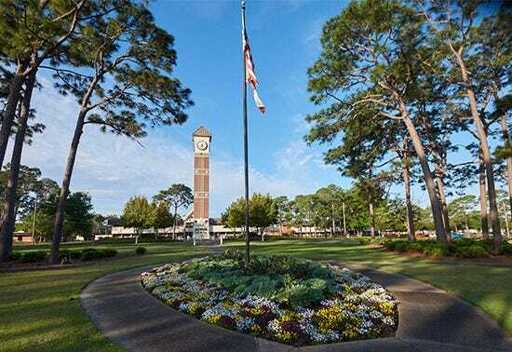
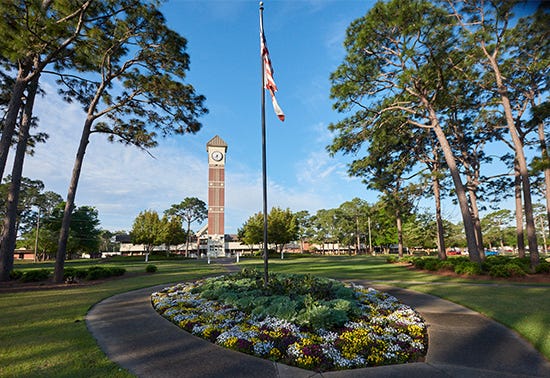
On May 1, the Foundation for Individual Rights and Expression published a letter alleging severe restrictions on the freedom of speech of students at Pensacola State College in Pensacola, Florida. The letter alleges that three student-written articles about LGBTQ+ people—a profile of a local drag queen, a piece on a queer bookstore, and a story about a community poetry club—were barred from publication in a student journalism magazine sponsored by the college. According to FIRE, Brenda Kelly, the college’s Associate Vice President of Academic Affairs, met with journalism professor Marisa Mills on April 29 and told her the articles could not be published because their LGBTQ+ content could violate Florida’s Stop WOKE Act. The fight is now blowing up as the latest example of college students being restricted from even mentioning LGBTQ+ people in academic and journalism contexts—following Texas Tech’s ban on student theses about LGBTQ+ topics and the DOJ’s investigation of 36 Illinois schools for acknowledging that LGBTQ+ people exist.
“On April 29, 2026, Brenda Kelly, General Studies Associate Vice President of Academic Affairs, held a meeting with Professor Marisa Mills and told her that students could not publish the stories that contained LGBT+ content,” reads the letter from FIRE. “Kelly explained that publishing this content could violate the Stop WOKE Act, specifically its prohibitions on funding advocacy ‘for diversity, equity, and inclusion’ and ‘instruction’ in a public university or college that ‘espouses, promotes, advances, inculcates, or compels’ a student ‘to believe’ any viewpoint contained on an enumerated blacklist. At the meeting, she shared Florida College System guidance on implementing these two provisions of the Stop WOKE Act.”
The college has denied the allegations. In a response to FIRE’s letter, Kelly said that “Dr. Mills’ students completed the collaborative project without any intervention from me or any other PSC administrator” and that she only met with Mills on April 29 “to discuss the optional, not required, printing of the magazine.”
But students tell a different story. Casey Hignite, a student in Mills’ class who also writes and draws political cartoons for the college’s student newspaper, told the Pensacola News Journal that the magazine’s content was censored. Only one of the three LGBTQ+ articles would have been allowed to remain only after heavy editing to strip out its central themes—the author chose to pull the piece entirely rather than gut it. Hignite said they also chose not to submit their own story about a local goth shop because the shop’s owner “wouldn’t want to take part in censorship.” The magazine has not been published. “This is just the latest in what PSC has done to censor and intimidate its faculty and students,” Hignite said. “There are issues that are not even being reported on because people are afraid to lose their livelihood.” Mills, the journalism professor at the center of the dispute, declined to comment after her union representative advised her not to speak publicly.
The move to censor students from writing about LGBTQ+ people breaks with both recent and longstanding precedent, and the cited justification doesn’t even hold up. Florida’s Stop WOKE Act, signed by Governor Ron DeSantis in 2022, prohibits public colleges from funding “advocacy” for diversity, equity, and inclusion and establishes a sort of Don’t Say Gay protocol that applies to colleges. But a federal judge blocked the law’s provisions, calling them “positively dystopian” and finding that the act “officially bans professors from expressing disfavored viewpoints in university classrooms while permitting unfettered expression of the opposite viewpoints.” The 11th Circuit affirmed that injunction in 2024, describing the law as “the latest attempt to control speech by recharacterizing it as conduct” and calling viewpoint-based restrictions “the greatest First Amendment sin.” The law remains enjoined to this day; PSC is censoring students to comply with a law it is not even legally required to follow.
More broadly, student press freedom at public colleges is well established. In Papish v. Board of Curators of the University of Missouri (1973), the Supreme Court held that a public university could not punish a student for distributing a newspaper containing content administrators found offensive, ruling that “the mere dissemination of ideas—no matter how offensive to good taste—on a state university campus may not be shut off in the name alone of ‘conventions of decency.’” In Rosenberger v. Rector and Visitors of the University of Virginia (1995), the Court held that a public university cannot withhold funding from a student publication based on its viewpoint. Notably, that is the precise mechanism PSC is using here. Repeatedly, the Supreme Court has acted to protect student publicaitons.
This is not the only case of severe restrictions on speech involving LGBTQ+ people in recent months. Just last month, Texas Tech issued a memorandum that barred graduate students from writing theses or dissertations centered on LGBTQ+ topics, required professors to skip over LGBTQ+ content in textbooks, and used an AI algorithm to scan the entire system’s course catalog for references to sexual orientation or gender identity—flagging over 1,400 courses for review. Meanwhile, the Trump administration has launched investigations into 36 Illinois school districts for the apparent offense of teaching students that LGBTQ+ people exist—threatening federal funding losses if schools allow transgender students to use bathrooms or include LGBTQ+ content in their curriculum.
FIRE demanded that PSC reverse course by May 4, warning that administrators who violate “clearly established law” can be stripped of qualified immunity and held personally liable for monetary damages. Meanwhile, the students are taking matters into their own hands. “We’re working right now on removing the magazine from under PSC,” Hignite told the Pensacola News Journal. The magazine has not been published.
Erin In The Morning is a reader-supported publication. To receive new posts and support my work, consider becoming a subscriber.
From Erin In The Morning via This RSS Feed.