

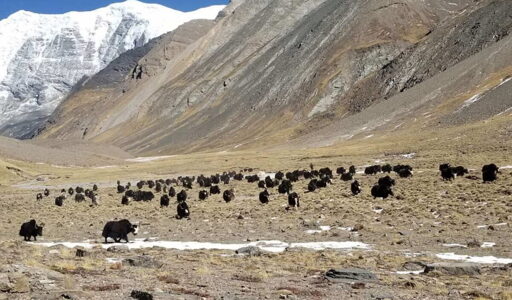
In the remote Dolpo region of western Nepal, the ancient practice of yak herding is facing an existential crisis. Traditional herders of domesticated yaks in these alpine rangelands are struggling against the convergence of climate change, rising operational costs, labor shortages, and the spread of lethal diseases, reports Mongabay’s Sonam Lama Hyolmo. According to the International Centre for Integrated Mountain Development (ICIMOD), warming temperatures are fundamentally altering Himalayan high-altitude ecosystems. The shifts are disrupting water cycles, affecting vegetation, and drying out wetlands, which then increases fire risks and reduces available grazing areas for domesticated yaks (Bos grunniens). The region is also facing a socioeconomic shift. Massive outmigration of young people to cities or abroad has left a critical shortage of labor for the intensive work of herding. Furthermore, the post-COVID-19 closure of border crossings into China has barred herders from their traditional rangelands, forcing some to switch to goats and cattle, which increases the risk of overgrazing. These challenges extend to the wild yak (Bos mutus). While the total number of wild yaks isn’t established, estimates suggest fewer than 10,000 individuals remain globally. As rangelands are degraded and shrink, the habitats of wild and domesticated yaks increasingly overlap. This proximity leads to crossbreeding, said Krishna Prasad Acharya, a veterinarian officer at the Department of Livestock Services in Nepal. He warned this threatens the genetic purity and adaptive traits of the wild population. While some yak herders once sought to crossbreed their animals to produce stronger calves, the hybrids are often…This article was originally published on Mongabay
From Conservation news via This RSS Feed.