

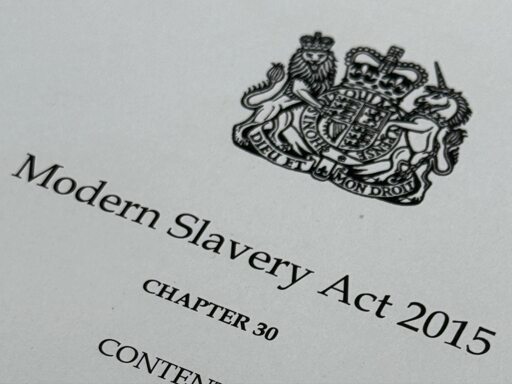

Modern slavery has been on the rise in the UK for almost a decade. The Canaryfirst reported on an increase in the number of modern slavery cases in 2018. More recent governments have even sought to criminalise victims to seek refuge in the UK.
Now, a new report shows that, despite the introduction of the Modern Slavery Act 2015, instances of modern slavery have grown rather than receded, often aided by new forms of technological exploitation.
Not a product of ‘better detection’
Eleanor Lyons, who is currently serving as the Independent Anti-Slavery Commissioner (IASC), notes that reports of modern slavery and trafficking on:
the National Referral Mechanism reached 23,411 in 2025 – the highest number on record, and a 22% increase in a single year.
The National Referral Mechanism is “a process set up by the Government to identify and support victims of trafficking in the UK” specifically. It is “born out of the Government’s obligation to identify victims under the Council of Europe Convention on Action against Human Trafficking“.
It is not unheard of that an increase in the reporting of certain crimes occurs as a consequence of new laws enacted to identify cases. After all, it is the invention of new laws that often creates new categories of crime that were previously not reported. With regards to modern slavery, however, Lyons argues this is not the case. The increase in referrals:
is not simply [the result of] better detection. It reflects a crime that is expanding, adapting, and embedding itself more deeply into the fabric of everyday life.
Lack of public awareness
More instances of modern slavery are being reported, but the IASC report also notes that there are deep-rooted misconceptions about its prevalence. It argues:
too many people still see modern slavery as something that happens elsewhere to someone else. That misconception allows exploitation to continue in plain sight. Without widespread public awareness, even the strongest laws will struggle to deliver real-world impact.
This is to suggest that modern slavery is seen as an exceptional crime, rather than something far more prevalent. In fact, the report argues that modern slavery is like many other forms of crime. The forces driving it are reflective of worsening living conditions for many:
Poverty, global instability, conflict, displacement of people, and the breakdown of safe migration routes are creating a growing pipeline of vulnerability that traffickers are quick to exploit.
In this environment, exploitation “flourishes,” and:
without sustained investment in stabilisation and protection these conditions endure.
New technologies of exploitation
As the UK government is keen to roll out new forms of technological surveillance and repression — all in the name of better governance, data gathering, and crime reduction — the report notes how these same technologies are also allowing traffickers to more innovatively exploit vulnerable people as well:
Artificial intelligence and digital platforms are transforming how traffickers identify, recruit, and control victims at scale. The rise of AI-enabled scams, deepfakes, synthetic identities, and new forms of digital labour exploitation are lowering barriers to entry for criminals, expanding the pool of victims, and making exploitation harder to detect. These tools have become a force multiplier for criminal networks, while the systems designed to stop them lag.
In particular, the report notes how “online-enable sexual exploitation” is flourishing more and more as well:
As exploitation moves into less visible digital spaces, detection and enforcement is more difficult.
As a result, the sexual exploitation of women and girls “has risen 54% in the last five years”. The report continues:
Recruitment, grooming, and control has shifted onto digital platforms, offenders are operating with greater anonymity, scale, and reach. Social media, encrypted services, and commercial platforms are being used to traffic and exploit victims, alongside emerging patterns such as online grooming, the use of short-term accommodation as popup brothels, and coercion facilitated by drugs.
‘A stark conclusion’
A decade on since the introduction of the Modern Slavery Act, the conclusions of the report are damning:
the current response is no longer sufficient.
You can read the report in full here.
In short, it calls for new measures:
coordinated across government and rooted in prevention as much as prosecution of perpetrators.
But it remains to be seen if this government will take this crisis seriously. Its wholly reactionary response to those fleeing war and social disintegration abroad — not to mention its active facilitation of mass displacement in West Asia in particular — shows it is more comfortable enabling the conditions where slavery and trafficking flourish, rather than disabling them.
A government serious about modern slavery would take a far more holistic approach to the devastation facing vulnerable people around the world than our current one seems capable of.
Featured image via UK Parliamentary Committees
By The Canary
From Canary via This RSS Feed.