


Under the neoliberal state, autism is being attacked from every angle: demonising parents advocating for their children, perpetuating the idea that those on benefits are scroungers, and vilifying those seeking a diagnosis in order to justify lack of funding. The mainstream media are propping this up more than anyone. This weekend, the Times did so in an interview with Sarah Wild, headteacher of the UK’s only school specifically for autistic girls.
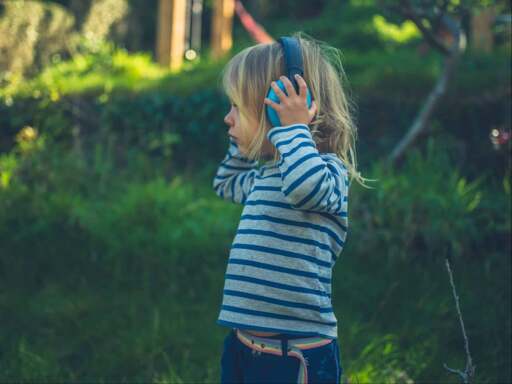
In it, Wild describes how Limpsfield Grange School ‘prepares’ autistic girls for a world where ‘fewer adjustments’ will be made for them, and discusses exposure to difficult situations. The Times has particularly zoned in on her criticism of overuse of ear defenders in mainstream settings, which comes not long after Richard Tice’s comments that their use is ‘insane’.
A fundamental misunderstanding of autistic brains
Those who argue for the taking away of sensory tools like ear defenders fundamentally misunderstand how autistic brains work. When they say we over-rely on them and just need to go without, this is not only ableist but treats our needs as something to be ignored.
Autistic brains do not ‘divert’ sensory input in the same way that non-autistic brains can. For many non-autistic people, there is an acknowledgement of a sensory input – like noise in a cafe – followed by being able to push it into the background. Autistic brains do not do this. Instead, each sensory input continues to be at the front of our awareness, building up and therefore being more likely to become overwhelming. This is part of our bottom-up processing where we take in all details first and build a bigger picture (in direct comparison to non-autistic top-down processing that does the opposite).
This is why tools like ear defenders are crucial. When you cannot divert sensory input, dampening it is critical to preventing meltdowns, shutdowns and overstimulation. Our brains do not simply assimilate into non-autistic brains when exposed to sensory input, and we are normalising distress by discouraging the use of aids. This being normalised across oppressive settings like education is causing further trauma to young people who are already struggling.
We aren’t just afraid of being uncomfortable
It is, of course, true that young people of any neurotype need to be placed in difficult or uncomfortable situations in order to grow, change, and develop. I do not think that autistic advocates are against this. But we have to understand the difference between what is discomfort and what is distress, which is unnecessary and often traumatising.
Autistic adults who use sensory aids, adaptations and supports in everyday life are not inherently afraid of discomfort. We have fought through a system that has suppressed us and caused consistent distress, and have had to learn how to support our own needs and advocate for them. The irony in all this is that these sorts of aids mean we can go on to navigate uncomfortable and difficult situations.
Why can’t we adapt the world?
We hear it all the time: the whole world cannot always change for autistic people. But why does that mean we should be the ones to always change? This issue is related to what Dr Damian Milton termed as the ‘double empathy problem’ – where non-autistic and autistic people struggle to understand how the other sees the world, but all the pressure is placed on autistic people to change. Instead of meeting each other where we are, society places emphasis on the current norms and expects us to mould ourselves and mask, instead of there being any discussion of shifting the world towards the needs and differences of neurodivergent people.
This is all about neuronormativity: the norms, expectations and standards of functioning which society is built on. Instead of society decentering these and supporting the diversity amongst human minds and nervous systems, we are stuck in forcing neurodivergent people to conform and twist themselves into something they are not. It cannot be underestimated how traumatic this can be, and we are taught to do this from an extremely young age.
Wild says ‘we can’t adapt the entire world to meet the needs of autistic people’, but there is so much that can be done to adapt the world that most people refuse to engage with. This is often not an issue of ‘can’t’; it is an issue of ‘won’t’. Maybe we cannot adapt the entire world, but at the moment, many systems and settings barely adapt at all.
Stoking the narrative is normalising distress
Sarah Wild’s interview has, of course, had headlines made of its most inflammatory statements. It must be acknowledged that she states later in the paywalled piece that there is not a blanket ban of ear defenders at the school, and discusses positive ideas like not focusing only on academic achievement. However, much of the interview perpetuates neuronormative ideas and constantly drives the idea that autistic people simply need to learn how to be uncomfortable.
It is also critical to mention that Wild’s interview comes from a specialist setting for autistic girls. Her criticism of overuse of sensory tools or adjustments like wearing PE kit misunderstands the level of pressure that mainstream schools are under and the lack of time, capacity, and money they have to support autistic and neurodivergent young people. This is a severe systemic issue, not teachers being soft.
Autistic young people have a right to an education, and at the moment, it is almost normal for this to be breached. Thousands are out of education without support or appropriate placements. Wild’s interview is another example of the mainstream media stoking the flames of narratives we hear that suggest reasonable adjustments and supports are unnecessary, too costly, or over the top.
The knock-on effect of these sorts of comments cannot be underestimated, and forcing autistic people to assimilate should never be the goal. Why ditch the ear defenders, when we could shape better systems?
Featured image via Excaliber Press
From Canary via This RSS Feed.