

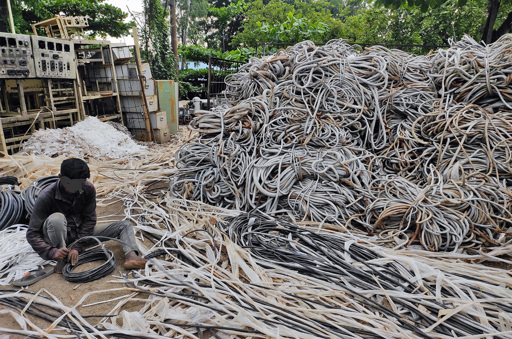
As the world turns its attention to China’s increasingly stringent waste import ban, a dangerous stream of electronic waste is entering Bangladesh. Despite the enactment of the Hazardous Waste (e-waste) Management Rules 2021, weak regulatory systems and illegal trade routes are making the country a major destination for global “e-waste.” Electronic waste (e-waste), which includes discarded computers, laptops, phones, refrigerators and medical equipment, has become a growing crisis. According to the Bangladesh Mobile Phone Importers Association, about 35 million mobile handsets are sold every year in Bangladesh. With an average lifespan of just 2-4 years, about 30 million devices enter the local waste stream every year, most of which go unmonitored. The crisis is exacerbated by a massive increase in electronics imports. Bangladesh Bank (BB) data show that more than $2.47 billion was spent on imports of electrical appliances and accessories in the 2024-25 fiscal year. A significant portion of this was coming from China worth $1.8 billion. However, experts warn that a growing black market in refurbished products is hiding the true extent of the environmental threat. Refrigerator compressors stored and dismantled in unsafe ways. Image by Abdullah Zahid Osmani, TIB. Escalating electronics imports and the e-waste shadow The influx of electronics into Bangladesh has reached staggering proportions, raising significant concerns over the nation’s potential role as an unwritten “dumping ground” for global waste. A latest Transparency International Bangladesh (TIB) study, using import and export data from the customs department, has revealed that Bangladesh imported e-waste materials worth around…This article was originally published on Mongabay
From Conservation news via This RSS Feed.