

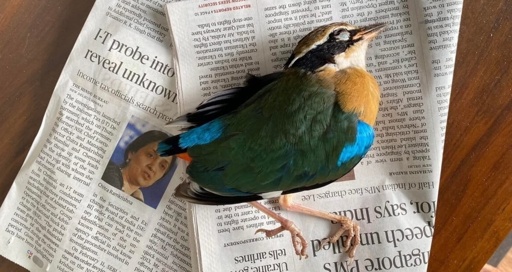
Bird deaths from collisions with glass structures are a global problem. But in India, conservationists are just beginning to learn the scale of the issue, reports Mongabay India’s Kartik Chandramouli. While humans are taught the concept of glass and its transparency, birds likely perceive the reflection of vegetation or the sky as reality, researchers say, leading to collisions, often fatal. In Gujarat state, in western India, for example, more than a dozen migratory rosy starlings (Pastor roseus) crashed into a glass building in February 2022. In Meghalaya, in northeast India, several long-tailed broadbills (Psarisomus dalhousiae) collided with the façade of an automobile showroom in January this year. While such sporadic local reports exist, well-recorded data on bird collisions are generally missing in India. Only recently have a few studies started offering some trends. A 2025 study in Nilgiri Biosphere Reserve in southern India recorded 35 instances of collisions in just one year, involving 22 bird species, including the endemic Nilgiri wood pigeon (Columba elphinstonii). These collisions involved two-story buildings. “Tall glass skyscrapers are not the only culprits,” Peeyush Sekhsaria, an architect and bird-watcher, told Mongabay India. Many birds in India move between trees and plants tall enough to reach the fourth floor, placing most buildings directly in their flight paths. Given the lack of data, Sekhsaria and Ashwin Viswanathan, an ecologist at the nonprofit Nature Conservation Foundation, launched a citizen science project called Bird Collisions India on the iNaturalist app in 2020. As of April 2026, it’s recorded nearly 88…This article was originally published on Mongabay
From Conservation news via This RSS Feed.