

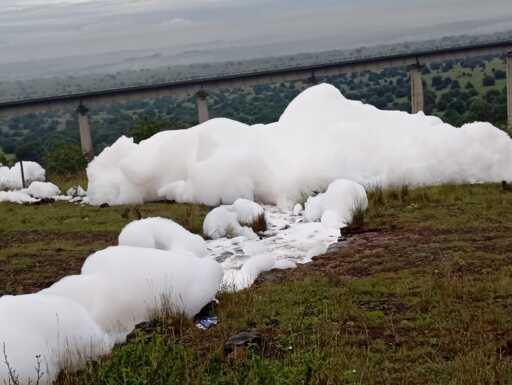
A suspected chemical discharge is flowing into Nairobi National Park, raising concerns over the vulnerability of a unique protected ecosystem and the growing pressure of urban-industrial activity at its borders. On April 30, 2026, the Kenya Wildlife Service (KWS) reported in a press release sent to Mongabay “abnormal foamy water inflows” entering the park through the Mlolongo drainage corridor. In a statement sent to Mongabay, the agency described white, effervescent bubbles, continuous discharge and unnatural coloration, all “consistent with possible chemical contamination”. What makes the situation particularly alarming is the location. Established in 1946, Nairobi National Park is the only national park in the world located within a capital city. The park covers 117 square kilometers (45 square miles) of savanna, forest and wetlands. It’s home to four of the “Big Five”: lions, buffalo, leopards and rhinos (missing only elephants). The park also hosts a rhino sanctuary and an animal orphanage where injured wildlife are treated. But its proximity, surrounded by Nairobi’s expanding industrial zones, has long made it vulnerable. KWS warned that the risk goes beyond wildlife, noting, “The affected system feeds into the Mbagathi and Athi Rivers, placing Athi Dam a critical ecological and water resource at significant risk, alongside aquatic biodiversity and downstream water users, including communities, agriculture, and livestock.” Authorities have urged the public to avoid fishing and using water from the rivers. An investigation has been launched to determine the source of the contamination. Preliminary findings suggest that “the runoff may have interacted with nearby…This article was originally published on Mongabay
From Conservation news via This RSS Feed.