

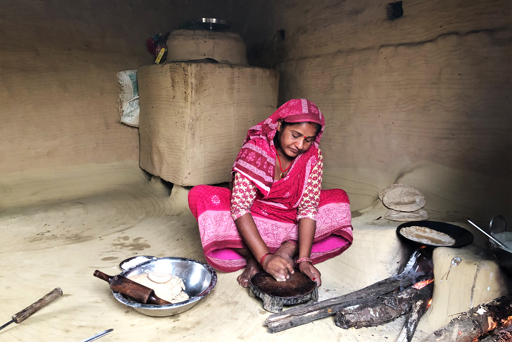
DANG, Nepal — With the start of the summer season in Nepal, farmers are worried about keeping their grain safe from extreme heat and insect infestation. But at Chattrapati Yadav’s home in Dang in western Nepal, that is not a concern thanks to handmade earthen pots passed down from previous generations. The 70‑year‑old learned the craft of making the pots from her mother. She eventually taught it to her daughters and granddaughters. “My granddaughter made this one, and that one was made by my mother‑in‑law,” Yadav said, pointing to the cylindrical and rectangular storage vessels. Across Nepal’s Terai, members of Indigenous communities, including the Tharu and Yadav, keep their grains safe using the dehari (traditional seed storage bins) secured by ancestral craftsmanship and Indigenous knowledge honed over centuries. These continue to stand the test of time even amid climatic stresses. “We use locally available mud and husk with some dung; we don’t use anything that isn’t available here,” Yadav said. “It takes around a week to make and a month to dry them.” If protected from water, a dehari can even outlast its maker. Dehari, traditional food grain and seed storage earthen pots made out of clay soil and husk inside Chattrapati Yadav’s family home in Dang, Nepal. These pots have been used to store grains for generations by Indigenous and local communities, including Tharu and Yadav. Image by Tanka Dhakal. A Tharu village in Chitwan, Nepal. Image by tearsxintherain via Flickr (CC BY-NC-SA 2.0). Climate-resilient storage In the Terai,…This article was originally published on Mongabay
From Conservation news via This RSS Feed.