

Nothing is sacred to our rulers. Nothing, that is, except the worship of Mammon, the god of money. Disciples of Mammon, otherwise known as capitalists, see the world through the lens of dollars. That extends to our holidays and celebrations of great leaders and historical events. What’s the meaning of US President’s Day? The first big sales events of the year. The birth of Jesus? Mountains of toys. Cinco de Mayo? Margaritas until you mumble, “Yeah, Trump’s right, Gulf of America!”
The greeting card industry not only has a whole line of Cinco de Mayo cards featuring margaritas and St. Patrick’s Day cards urging you to drink until you turn green — Hallmark working hand in hand with the liquor industry — but if we didn’t see the cards at our local superstore, would we even know that “Bosses Day” or “Administrative Professionals Day” is a thing!
As Cinco de Mayo approaches, Bill Gallegos isn’t asking for any cards. He reminds us that it’s the date of an actual historical event and that Chicanos chose it as a symbolic day for revitalizing Mexican pride. They fought for and won the demand that public schools teach Mexican history so Mexican American kids can know they belong to a brave, democratic people who won’t tolerate foreign bullies invading to commodify their country — they are not from a violent nation of criminal cartels as the nightly news tells them.
What’s next? I won’t be surprised if I walk down the greeting card aisle soon and see, “Happy CIA Day!” or “Chug-a-Lug for Manly Men Day!” But it’s so wrong for capitalists to make a mockery of the celebrations of holidays established by the people, for the people and in defense of a people. Get out! Don’t gringo our cinco!
Bill Gallegos is a long-time activist in the Chicano Liberation Movement. His family lived for centuries in the land of Nuevo Mexico and Colorado; after the US annexed that territory in 1848, ancestors ended up in the coal mines and on railroads. Bill wrote The Struggle for Chicano Liberation, a revolutionary analysis of the Chicano self-determination struggle, and has written from a Chicano point of view for the Adelante series of pamphlets by Liberation Road. Currently he is helping to build a chapter of the Mexico Solidarity Project in Los Angeles, Califas.
Many people in the United States today see Cinco de Mayo as Mexican Independence Day, but it isn’t. What historical significance does the day have?
Bill Gallegos: Cinco de Mayo — May 5, 1862 — marks the date Mexican troops defeated the invading French army at the Battle of Puebla.
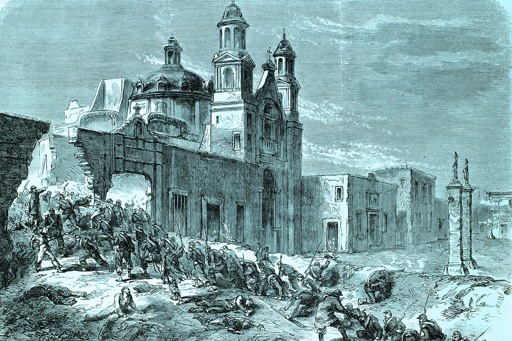
After centuries of Spanish rule, Mexico had declared its independence from Spain on September 16, 1810 — the official Independence Day — and threw off Spanish rule in 1821. Then here comes Napoleon III, emperor of France, looking to add Mexico to the French colonial empire. He sent in over 5,000 troops from the world’s most powerful army. They landed in Mexico and set out to march to the capitol of Mexico City. Directly in their path: the city of Puebla, defended by 4,700 poorly armed troops but commanded by lgnacio Zaragosa, a seasoned guerilla warfare strategist. The French troops charged against the heart of the Mexican defenses. The defenses held. The French lost 1,000 soldiers. The Mexicans only lost 85 men. The Battle of Puebla handed France its first military defeat in 50 years and left the whole world looking at Mexico with new respect.
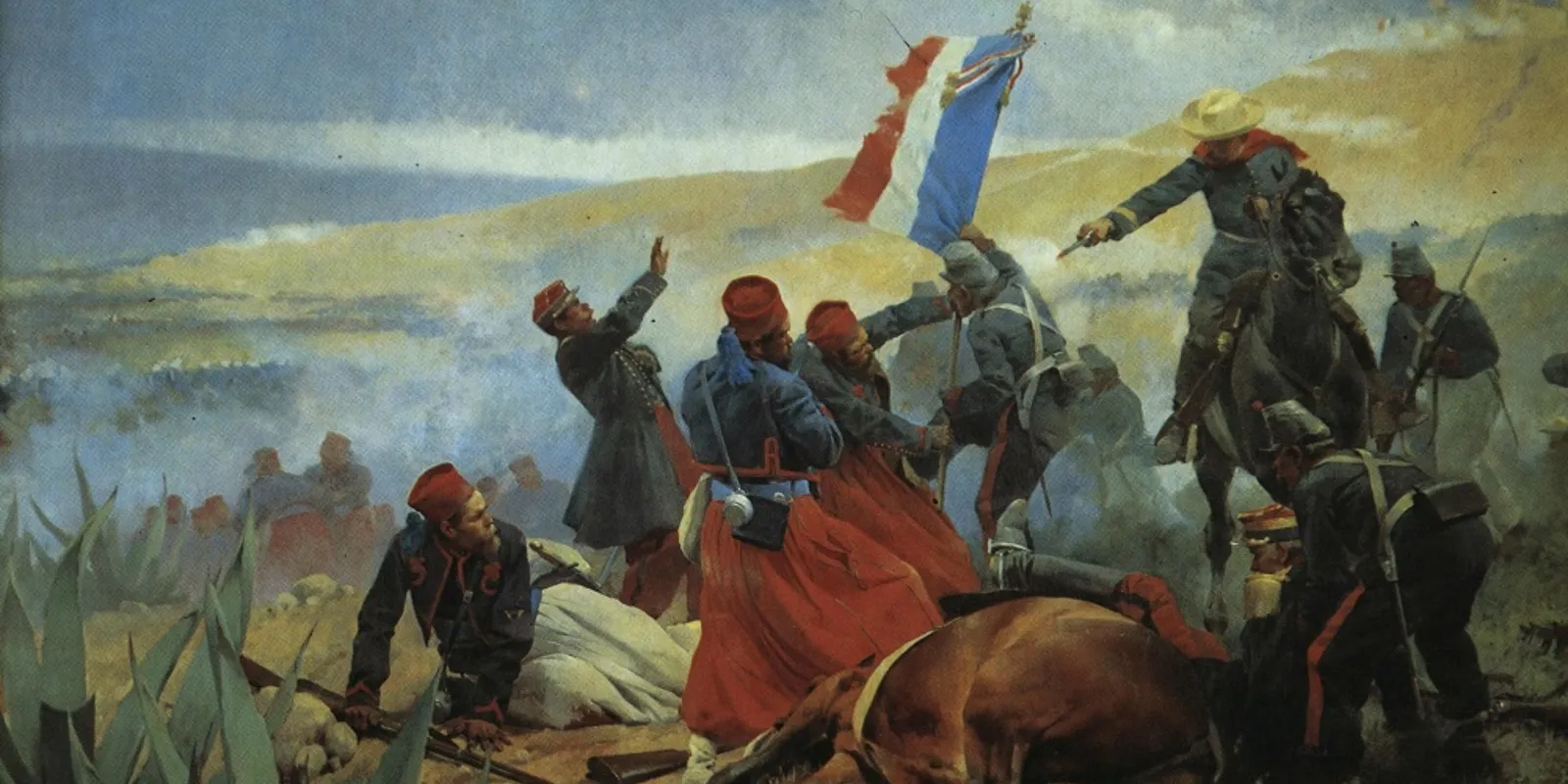
The Battle of Puebla was a significant Mexican victory on May 5, 1862, against French forces during the second French intervention in Mexico.
How did Cinco de Mayo become a rallying cry for the Chicano movement in the US?
Antonio Sanchez from Central Washington University explains that well in The Real Meaning of Cinco de Mayo. In the late 1960s, he notes, Chicano civil rights activists on college campuses throughout the Southwest and California “purposely adopted the Battle of Puebla and May 5 as their day to publicly celebrate” their proud heritage.
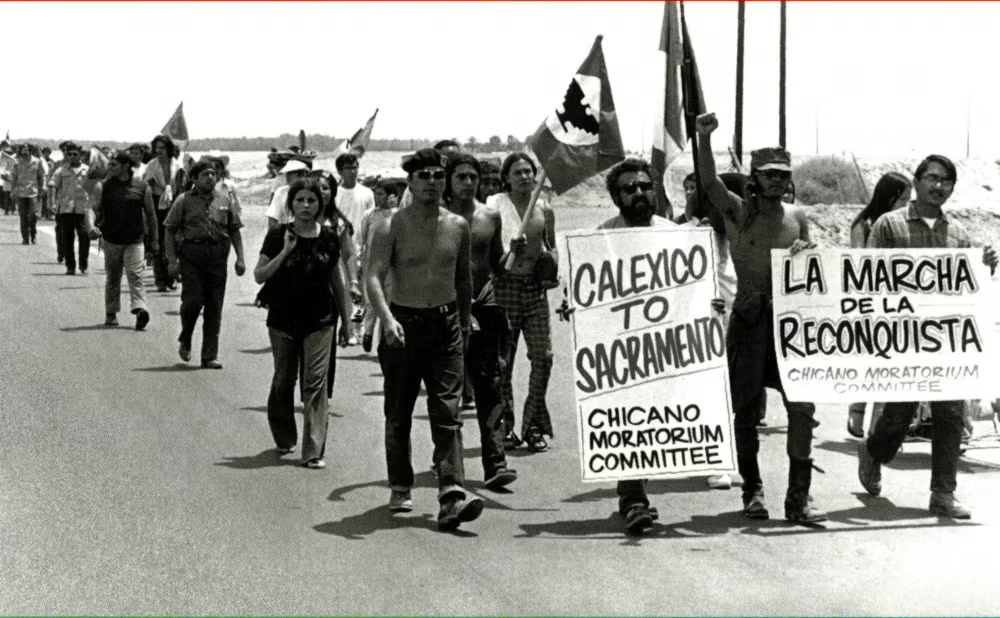
The Chicano civil rights struggle in Los Angeles in the 1960s and 1970s Photo: UCSB
For the first time, he adds, college campuses heard the cries of “Viva la raza, viva Cinco de Mayo!” That cry amounted to “a bold statement of self-determination” and “cultural allegiance with Mexico,” a “defiant recognition of the accomplishments of the capable Mestizo people of Aztlan.” A new and hopeful Chicano holiday had “emerged triumphantly” from the struggle for civil rights.
How was Cinco de Mayo used to build the Chicano movement?
Cinco de Mayo, as a slogan and celebration, proclaimed our national pride in full view of the greater US public and opened the door to a larger discussion of our history, including the real meaning of the US annexation of Mexico’s northern territories in 1848.
People of Mexican/Indigenous descent had lived on the lands now in Texas, Arizona, New Mexico, Colorado and California for hundreds of years and had maintained a culture still rooted in Indigenous practices and beliefs.
Our movement developed an analysis that this culture represented a new Chicano Nation, with a unique identity forged by a century of life in the United States under an oppressive racist system. Through this analysis, the Chicano struggle became integrally connected with struggles in Mexico against Yanqui imperialism. We fought not just for equality with white Americans but for Chicano sovereignty.
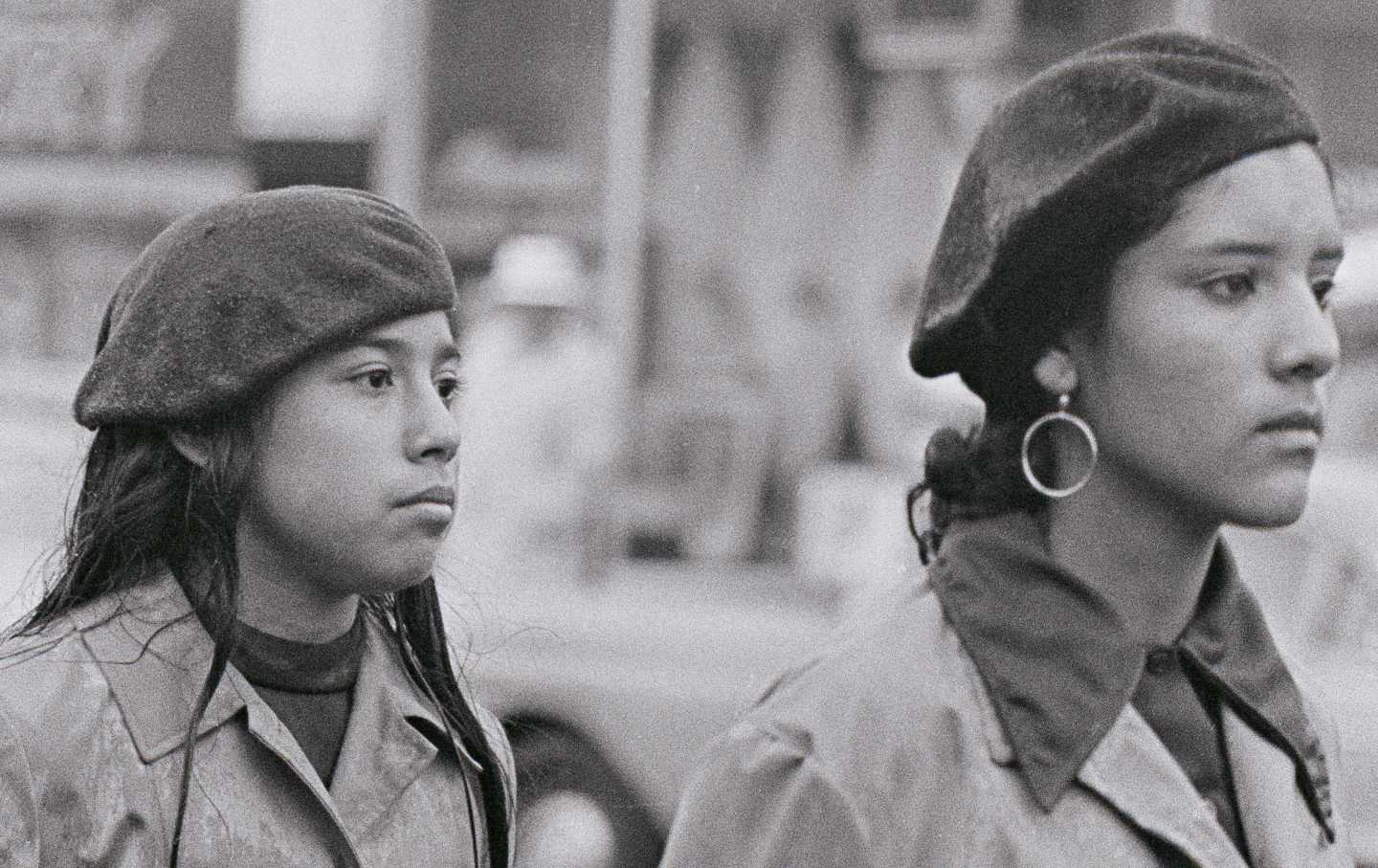
Members of the Brown Berets, 1971.
Cinco de Mayo is now recognized nationally, even on Hallmark calendars! Do you consider that a victory?
Unfortunately, US alcohol corporations have largely coopted this holiday. They market it as an occasion to get drunk and party, not to celebrate an anti-imperialist victory, much less to motivate the Chicano people’s ongoing struggle against racism and national oppression. They horribly disfigured the holiday into “Drinko for Cinco.” But we still do have authentic celebrations in some communities and college campuses. And we still need to insist that our true history be recognized and honored throughout the US educational system and in popular culture.
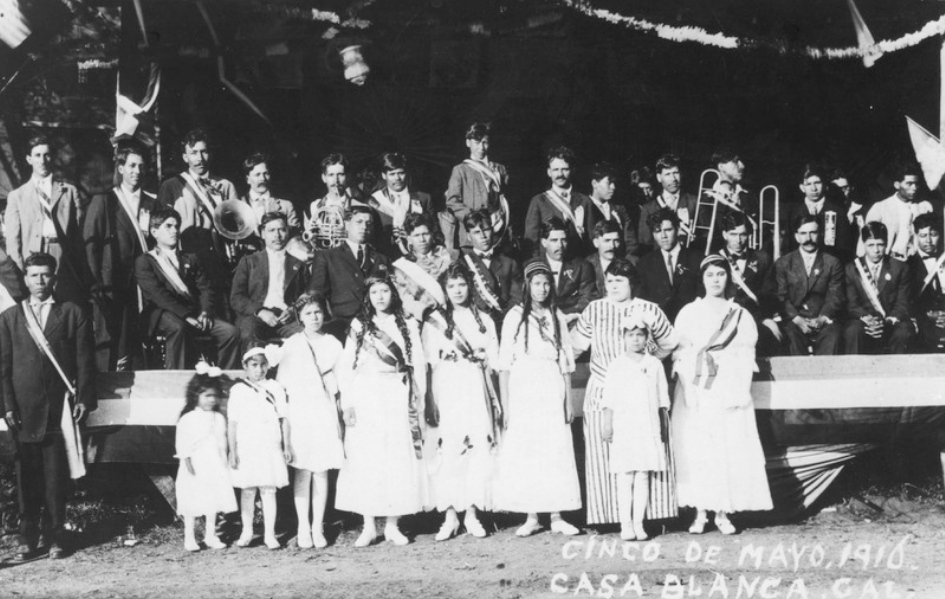
1910 Cinco de Mayo celebration
Have Chicano activists built solidarity with the people of Mexico?
Yes! Chicanos provided powerful support for the Zapatistas and, more recently, supported the Morena Party, which swept to victories throughout Mexico in 2018.
The right of Chicanos to self-determination in the illegally annexed territories of Aztlán in the US Southwest and the right of Mexico to exercise sovereignty free from US domination have been and will be two parts of the same struggle.
Meizhu Lui’s experiences as the daughter of Chinese immigrants and as a single mom led her to focus on addressing inequalities based on race, gender, and immigration status. A hospital kitchen worker, she was elected president of her AFSCME local. She coordinated the national Closing the Racial Wealth Gap Initiative, and co-authored The Color of Wealth: The Story Behind the U.S. Racial Wealth Divide. Liberation Road, a socialist organization, has been her political home.
-

People’s Mañanera May 4
May 4, 2026
President Sheinbaum’s daily press conference, with comments on US requests for detention of Sinaloa political figures, public security, and social programs.
-
Morena Can Win Elections But Lose Leadership
May 4, 2026May 4, 2026
There hasn’t been a break with Obradorism, but there’s no orderly direction either. The risk is not to lose votes right away, but to weaken the coalition that made Mexico’s Fourth Transformation possible.
-
“That a poor right-winger votes for Trump or Milei is a result of cognitive warfare”: Omar González
May 4, 2026May 4, 2026
Cuba’s former Deputy Minister of Culture will give a seminar from May 5th to 12th at UNAM in Mexico City.
The post Cinco de Mayo: The Chicano Holiday appeared first on Mexico Solidarity Media.
From Mexico Solidarity Media via This RSS Feed.