

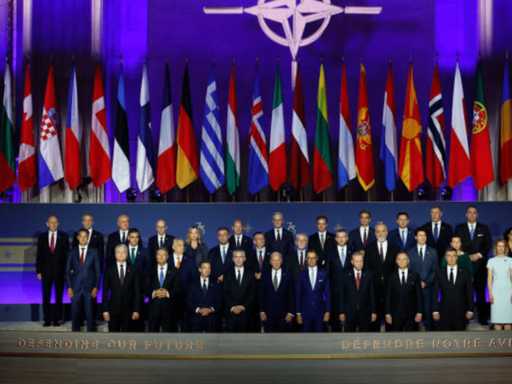

Several prominent writers have warned NATO is courting creatives through a series of propaganda workshops. Several prominent writers have accused the alliance of trying to use the sessions to push its militaristic agenda.
The Guardian reported that NATO had been:
holding closed-door meetings with film and TV screenwriters, directors and producers across Europe and the US… prompting accusations the alliance is seeking to use the arts to generate “propaganda” for the bloc.
So far the alliance has held:
three meetings with film and TV professionals in Los Angeles, Brussels and Paris and is due to continue its “series of intimate conversations” next month in London, meeting with screenwriter members of the Writers’ Guild of Great Britain (WGGB), which represents professional writers in the UK.
The newspaper also noted that the backers of the alliance had recently:
advocated for greater relations with the arts.
The Centre for European Reform thinktank released a report earlier this year calling on governments to engage with cultural leaders, including screenwriters and film producers, to build public support for greater defence spending and to “better tell the story of why these investments in defence are needed”.
NATO deputy assistant secretary general for hybrid, cyber and new technology James Appathurai is understood to be attending:
along with other officials from the alliance.
The hosts are enforcing set of rules usually reserved for military or intelligence related think-tank events:
The topic of conversation at the meeting, to be held under the Chatham House rule – in which participants are free to use information received, but identities of attenders are not revealed – will be the “evolving security situation in Europe and beyond”.
You can read about Chatham House rules here.
‘This is NATO propaganda’, writers warn
A Writers’ Guild of Great Britain (WGGB) email seen by the Guardian.
suggested that the meetings had already led to “three separate projects” in development, which were “inspired, at least in part, by these conversations”.
The email also claimed:
Nato was “built on the belief that cooperation and compromise, the nurturing of friendships and alliances, is the way forward”, adding that “even if something so simple as that message finds its way into a future story, that will be enough”, according to the organisers of the event.
Several writers disagreed with these the sentiments and the meeting series as a whole. Alan O’Gorman told the Guardian:
I thought it was tone deaf and crazy to present this as some sort of positive opportunity. A lot of people, myself included, have friends and family or themselves come from countries that are not in Nato, that have suffered under wars that Nato has joined and propagated.
O’Gorman said it was a matter of NATO trying to:
get some of its messaging out there in film and TV.
He said NATO was “fearmongering throughout Europe”.
I see it in an Irish context, where there’s been a push through some of the media and government to present Nato in a positive light and align ourselves more closely with them. I think the Irish people, for the most part, don’t want anything to do with wars on foreign lands.
Screenwriter Faisal A Qureshi said it was a risk:
for any creative who dips into this unattributable world of intelligence or military briefings is that they can get seduced into thinking they now have some secret knowledge.
That there exists a world of greys where morality is stretched and human right abuses are acceptable when done for the greater good.
NATO said the workshop:
follows from interest expressed by members of the industry to know more about what Nato is about and how it works.
And the WWGB said that it was normal to bring in third party organisations for events:
that may be of professional use or interest to our members. These interactions do not necessarily represent an endorsement of these organisations.
Clearly not all writers agree with this. The steady creep of militarism into the arts – and many other areas of our lives – is a cause for concerns. Especially at a time when massive defence spending, war and even genocide are becoming normalised in global politics.
Featured image via the Canary
By Joe Glenton
From Canary via This RSS Feed.