

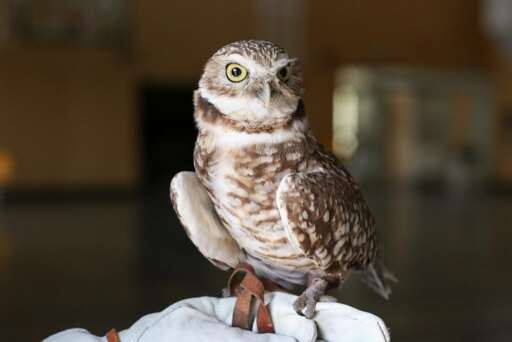
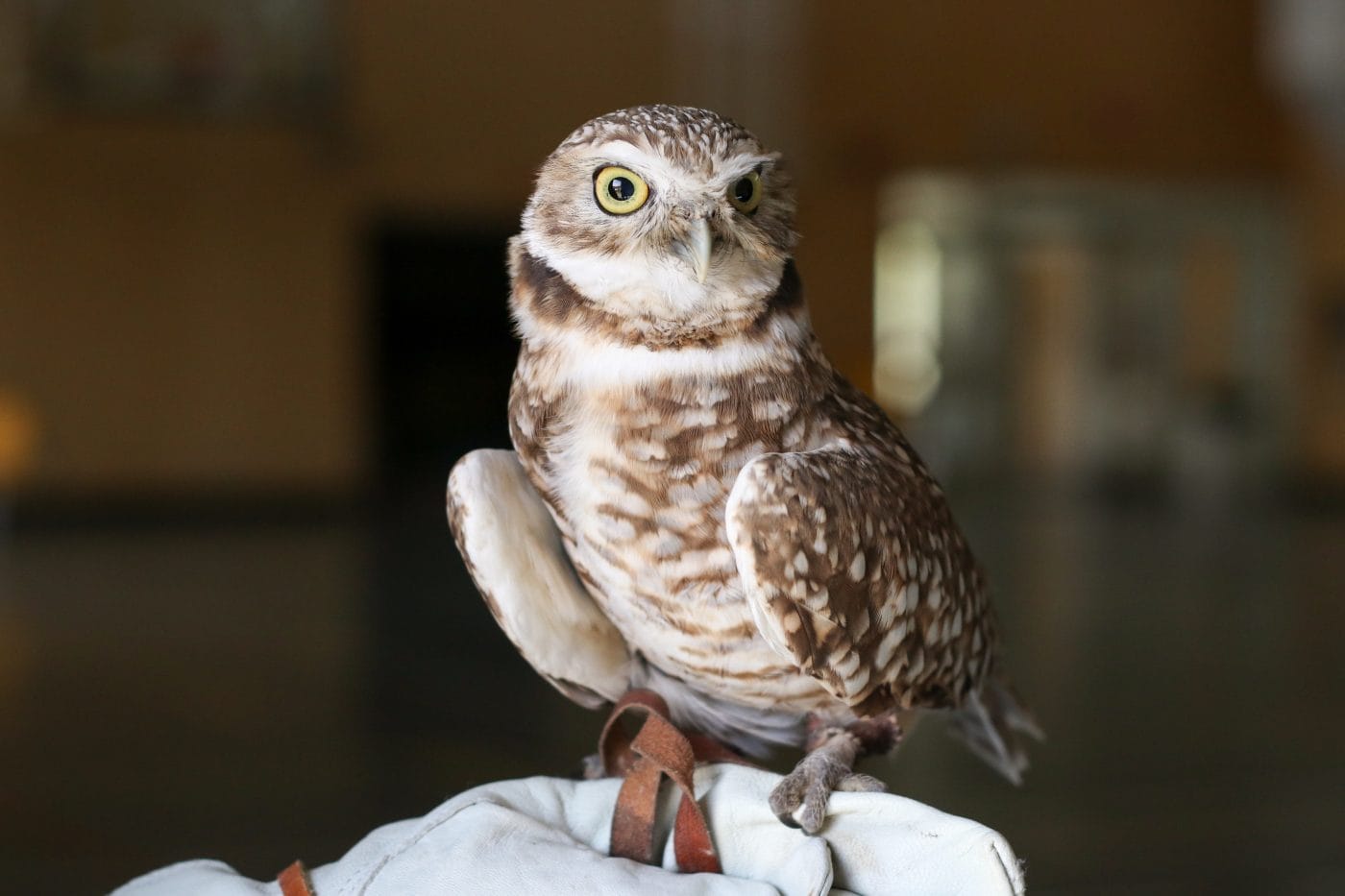
Nine-year-old John Smithers cradles a tiny burrowing owl in his hands, preparing to release it into the grasslands of Upper Nicola Band territory.
Like other young syilx people, he’s grown up hearing stories about the small birds of prey that have nearly disappeared from his Thompson-Okanagan homelands in the last century or so.
The owls – known in syilx culture as guardians, guides or messengers – were “once a common element” in landscapes stretching from the southern Interior of B.C. all the way to Manitoba, according to Canada’s Committee on the Status of Endangered Wildlife.
Now, burrowing owl sightings are rare. In 2003, the Government of Canada listed the burrowing owl as endangered under the federal Species At Risk Act. According to the Burrowing Owl Alliance, the bird’s population in the country has declined by over 96 per cent since 1987. Experts link the bird’s decline to the gradual loss of its grassland habitats over the last century.
“Lots of animals can come and get them,” Smithers said about the lack of protective habitat for the burrowing owl.
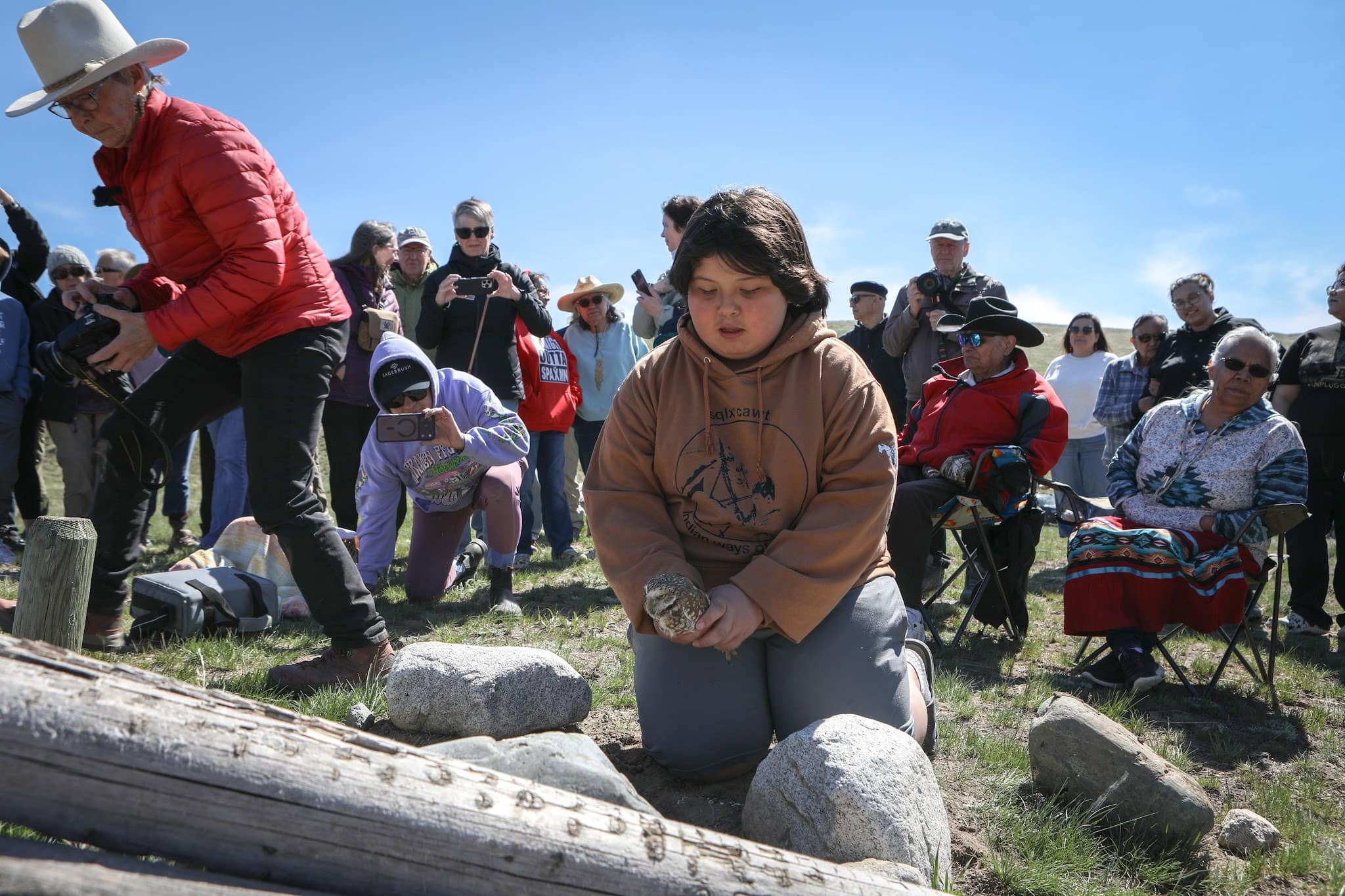
John Smithers, a nine-year-old student from Upper Nicola Band’s N’kwala School, prepares to release a captive-born burrowing owl down an artificial nesting burrow and into the wild.
Aware of the owls’ importance and decline, earlier this year Smithers became N’kwala School’s annual student ambassador to a regional burrowing owl recovery program that’s being led by the First Nation.
As ambassador, he was invited to be the first person of the year to release a captive-born burrowing owl into the wild on April 22, in his home community of spax̌mn (Douglas Lake) in B.C.’s Nicola Valley.
The release, which coincided with Earth Day, marked 10 years since Upper Nicola Band began releasing captive-born burrowing owls onto their homelands.
In return, those captive-raised owls have produced 125 “wild-born” baby owls — or fledglings — since being released from the community’s restoration site.
Despite high winds and the risk of ticks, dozens of excited people from all age groups turned out in high spirits for the release.
Students, nature enthusiasts and Elders alike shared laughs and smiles at the sight of the precious birds, with their round heads, short stature and long legs.
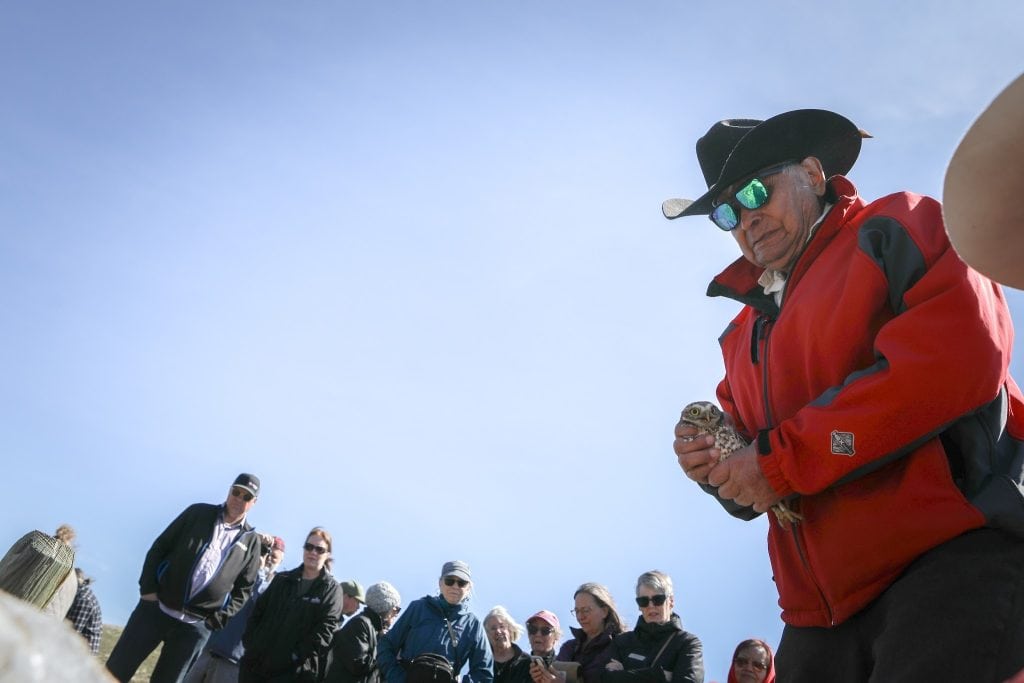
Upper Nicola Band Elder Howard (Howie) Holmes prepares to release a captive-born burrowing owl down an artificial nesting burrow.
Framed by grassy hills, Smithers released the owl under the warm sunshine with the help of Dawn Brodie, one of the main field technicians who has been involved in the program since its inception.
The nervous bird nearly escaped from his grasp and into the open air. But thanks to the quick reflexes of the adults around him, helping hands connect the captive-born owl back to the land and down an artificial nesting burrow that had been prepared by the Upper Nicola Band stewardship department.
“Soft” is the word Smithers used to describe the feeling of holding the owl.
Soon after, several guests in attendance – from program partners to youth and Elders – were invited by the field technicians to release an owl down different burrows that were created by the recovery program and its partners.
Some of the owls wore amusingly bewildered expressions as they waited in the gentle grasp of human hands before being placed into a burrow.
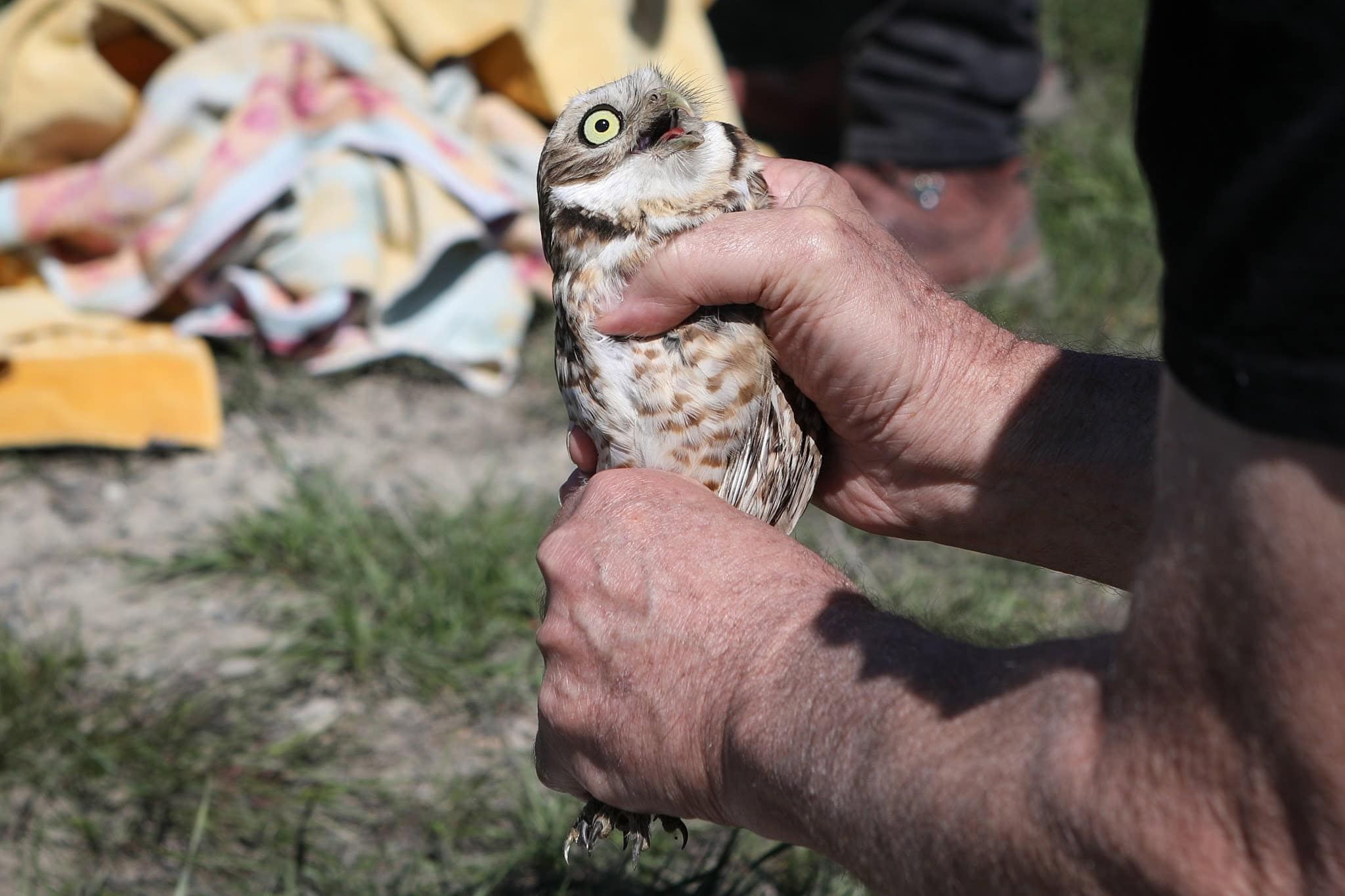
A captive-born burrowing owl prior to being released into an artificial nesting burrow. Some attendees were amused by the owls’ bewildered facial expressions.
In total, 11 captive-born owls — six males and five females — were released into five of the site’s 35 artificial burrows that day. They are all just under one year old.
“The program has exceeded all our expectations,” Loretta Holmes, an Upper Nicola Band member and senior resource technician with the band’s stewardship department, said.
“The owls, which we call sq̓əq̓axʷ, have responded better than we dared to hope ten years ago. And community interest and involvement has been strong since the start.”
Owls released into artificial burrows filled with frozen mice
The tiny burrows are connected through a network of underground tunnels hidden under the grassland hills above spax̌mn.
Each artificial burrow consists of a small, corrugated tube in the ground that serves as its entrance, which feeds into the larger network of tunnels. The entry points are camouflaged in the field by grass and large rocks.
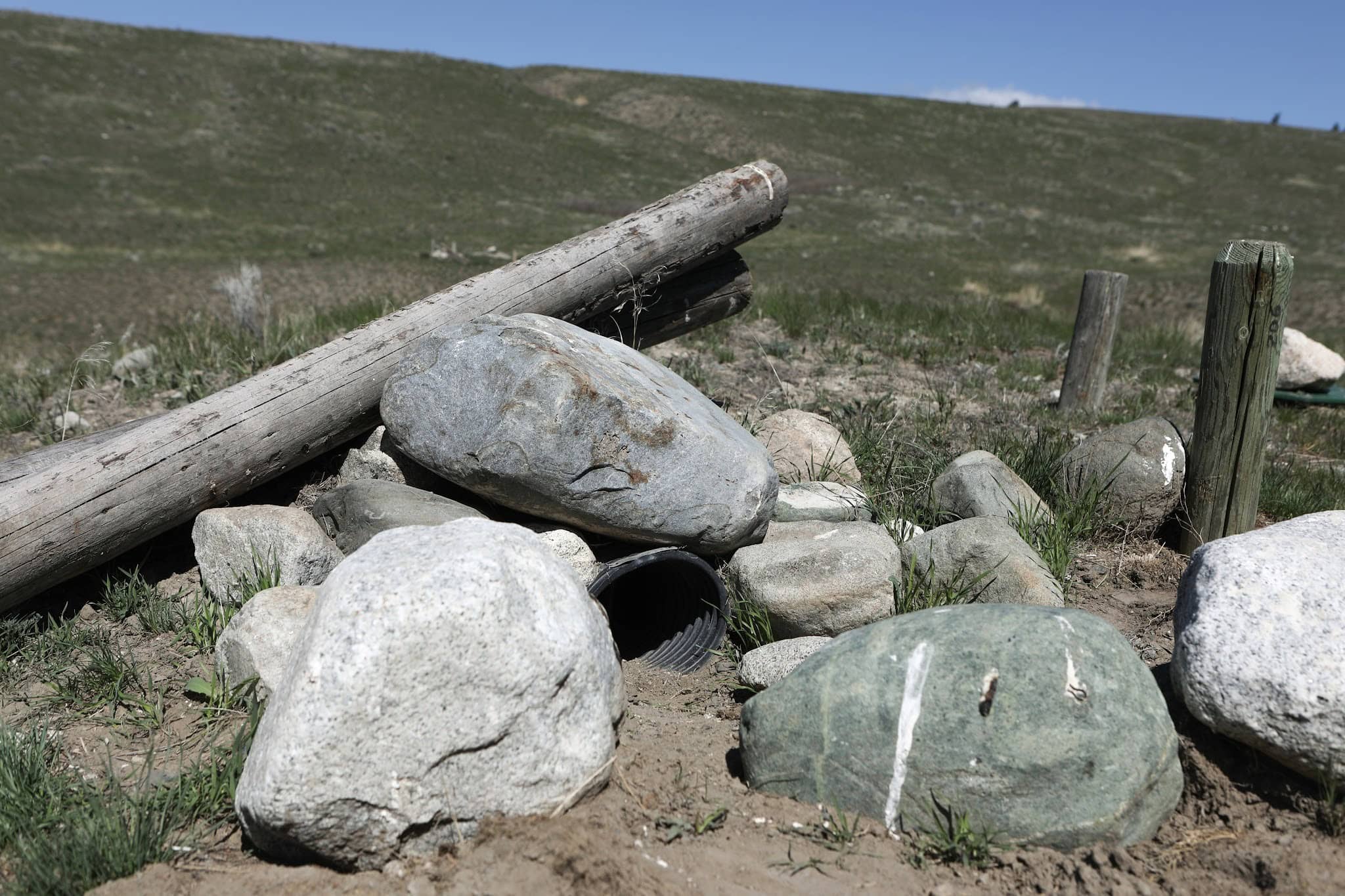
Artificial nesting burrows are scattered throughout the grassland hills above Upper Nicola Band, at the community’s burrowing owl restoration program site in spax̌mn (Douglas Lake). The decline in badgers on the territory has led to a decline in natural burrows.
Before any captive-raised owls are released, handfuls of frozen mice are inserted into the burrows and tunnels.
“That helps them not have to go as far to hunt as often. It encourages them to lay more eggs, and helps them rear their young ones when they’re hatched,” Holmes said.
Once released, the burrow entrances are closed off for a few days, explained Chris Gill, a project biologist with the band’s Species-At-Risk program.
“It’s to let them acclimatize and calm down, basically. And potentially bond with the mate that’s in there,” Gill said.
Breeding gets underway as soon as two owls choose each other as mates, and Gill said that eggs are laid in June.
The burrow tunnels, which protect the owls from predators, are connected to a nest box. The nest box has an opening at ground level, allowing technicians to observe how many eggs have been laid and monitor activity.
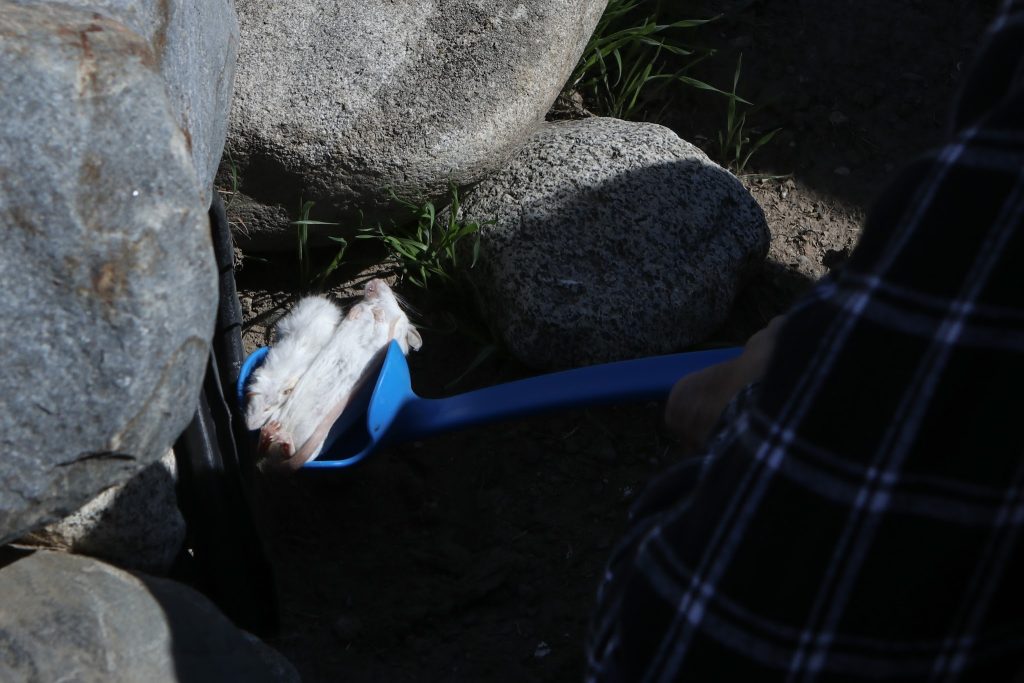
Frozen mice are placed into the artificial burrows to fuel the owls as they adjust to the wild, and encourage them to lay more eggs.
Technicians also attach leg bands to the newly-hatched birds here, to track future migration.
Mice are also delivered to the burrows two to three times a week. Holmes said that this type of care results in nests that carry nine to 10 eggs — more than the average of six to eight laid by burrowing owls in the wild.
The mice are “giving them a big head start and maximizing the chances of producing healthy fledglings, and healthy parents as well,” Gill said.
The owls stay in the site’s burrow network anywhere from four days to up to a week, depending on weather conditions, and are then free to fly around in the open air.
“They mostly stick at the site, even after you release them out of the burrow, because they’re now used to the site,” Gill said.
“They may have paired up, or they may choose another mate from the site.”
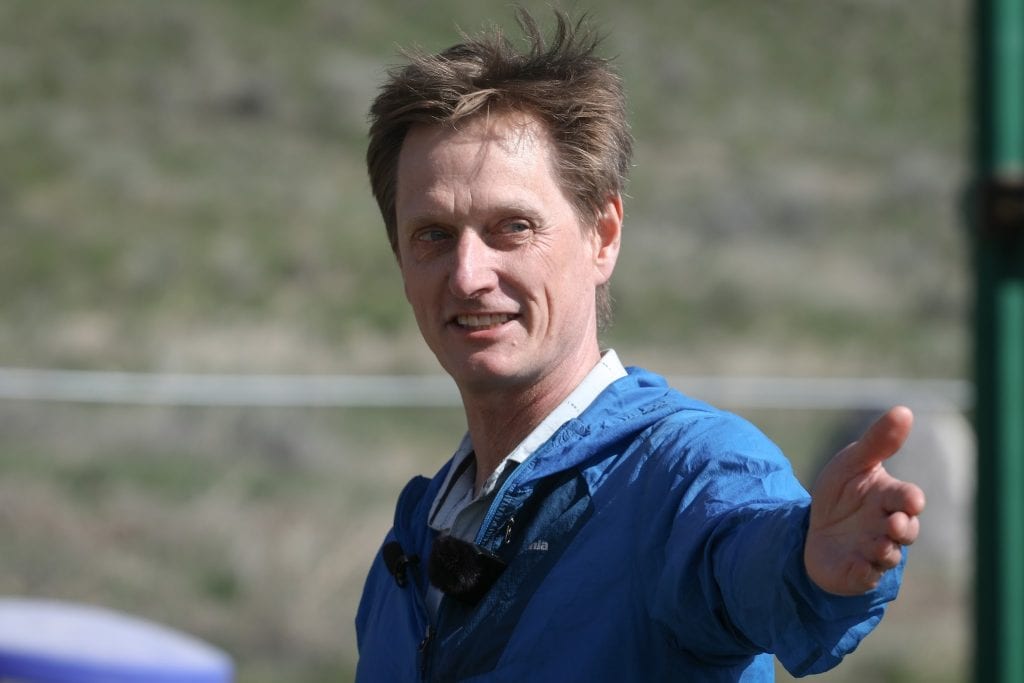
Chris Gill, a project biologist with the Upper Nicola Band’s Species-At-Risk program, addresses attendees of the release event at the playground of N’kwala School in in spax̌mn (Douglas Lake).
By July, fledglings will start to emerge from the burrows, and the owls usually start to migrate south in September and October. They’ll return to the breeding sites next April.
Tracked migration data from burrowing owls who left the site in previous years revealed that the birds travel as far as San Jose, California.
“It’s just so amazing that they went all the way somewhere, wintered in those conditions and came back,” Holmes said.
“It’s wonderful.”
Owl recovery “one piece of a larger puzzle” in restoring ecosystem health
In the last decade, more than 100 burrowing owls have been raised in captivity at the Kamloops Wildlife Park by the Burrowing Owl Conservation Society, before being released at spax̌mn. There’s a site in Oliver that supports the program as well.
The captive-raised owls all come with identification tags on their legs, which are documented by field technicians before they are released into the burrows.
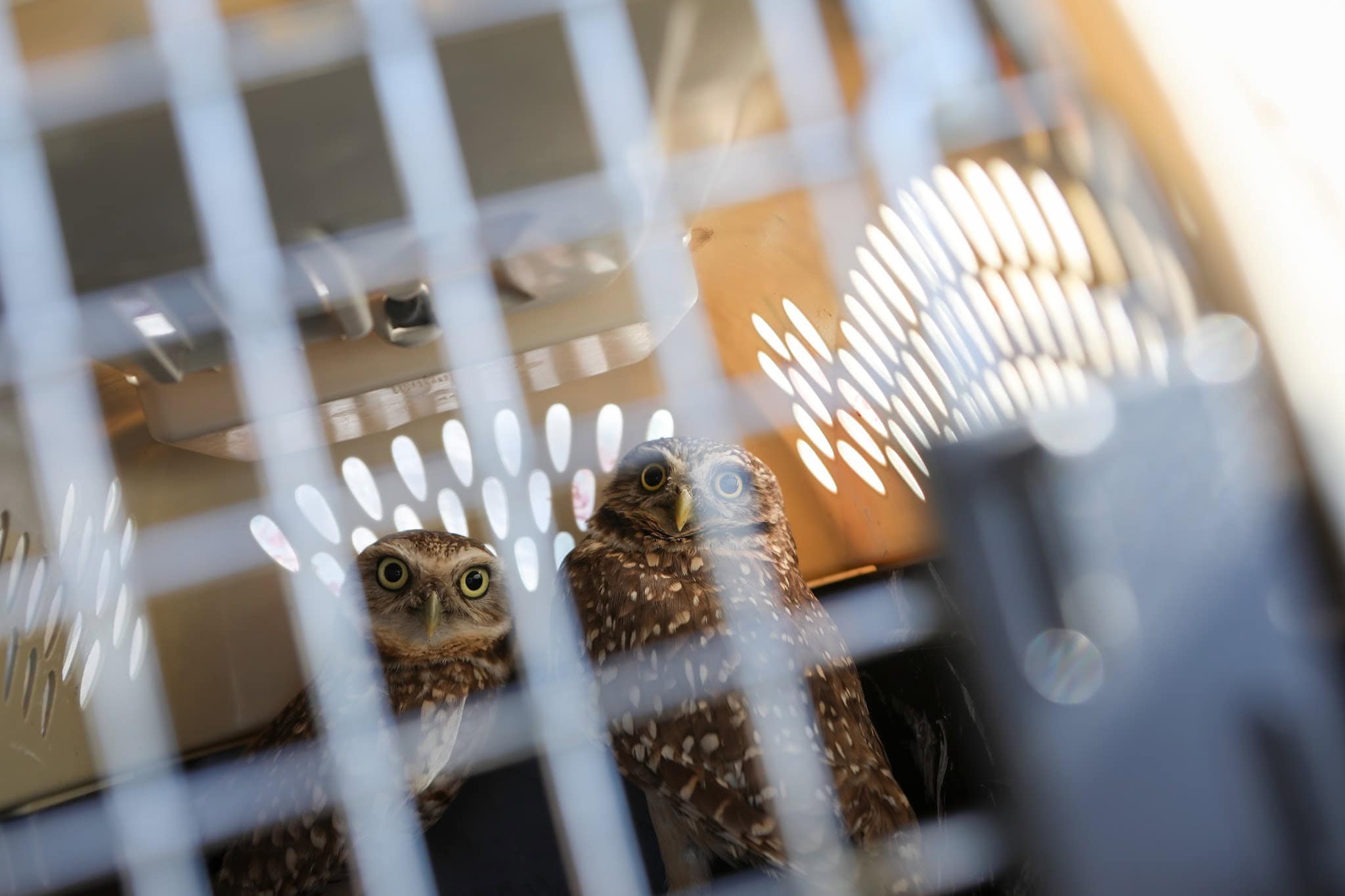
Two captive-born burrowing owls from the Kamloops Wildlife Park — one female and one male — are transported to their artificial burrow for release. Soon after release, the owls will choose a mate and begin to lay eggs.
Many of the 120-plus wild-born owls have left the Upper Nicola Band site and returned, including four who came back this spring; two males and two females, three of which were born at the site last year.
While the conservation efforts are helping to re-populate the burrowing owl species in this part of the country, Upper Nicola Band views this work as only one piece of the larger puzzle of how to protect the community’s rare and sensitive grassland ecosystem habitats.
By stewarding these ecosystems — and restoring and supporting the biodiversity that has been depleted — it’s also an act by the band to protect their cultural identity and fulfill generational responsibilities around caring for the land and for all living things.
“Conserving a species at risk, like a burrowing owl, it’s about far more than a single bird or species. It’s about upholding relationships, responsibilities and balance with the living world,” Holmes said.
Animals like the burrowing owl are part of an interconnected system that has sustained Indigenous Peoples for generations, she said.
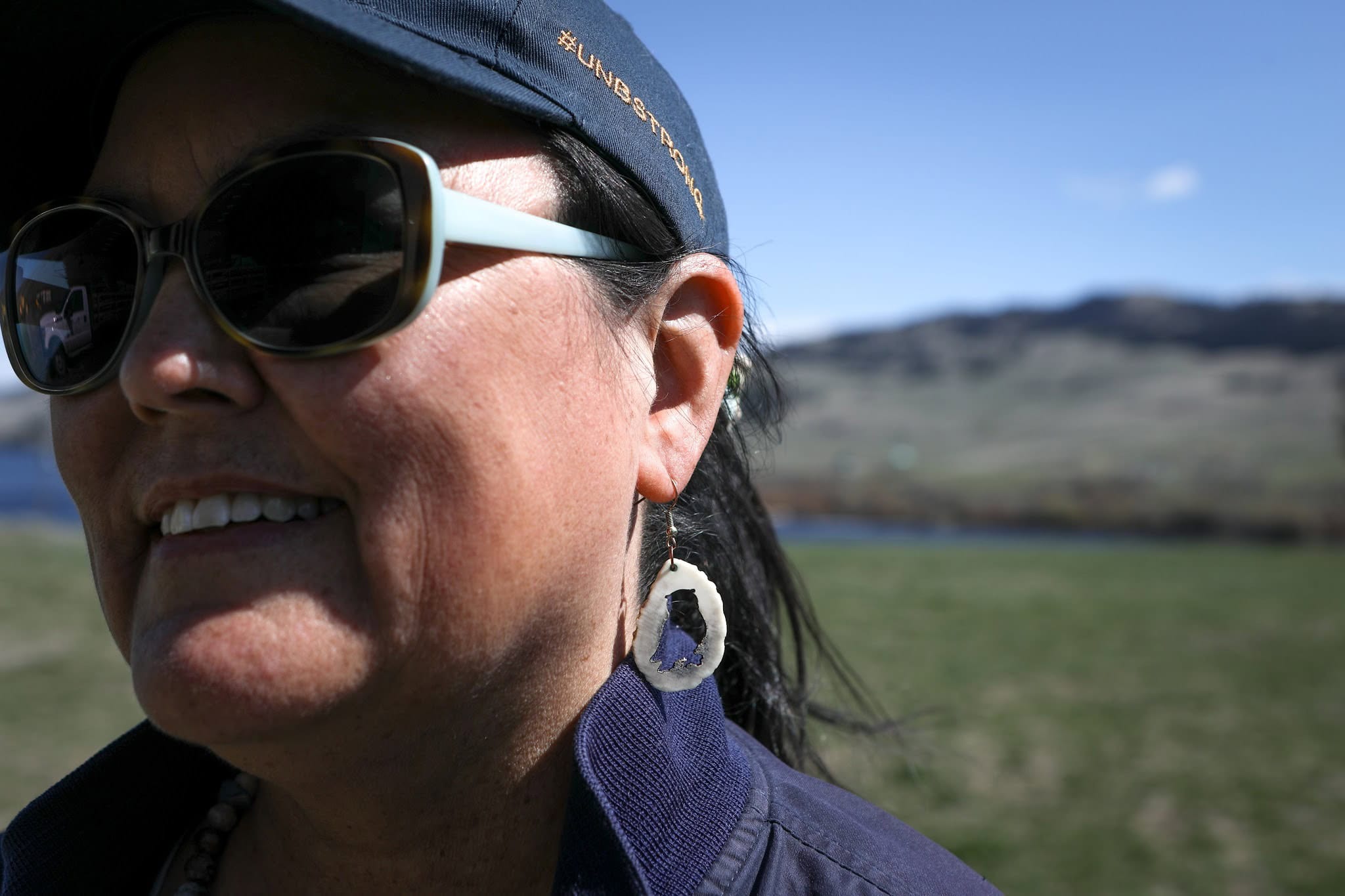
Loretta Holmes, an Upper Nicola Band member and senior resource technician with the band’s stewardship department, wears owl-themed earrings made by a Kamloops-based Indigenous artist.
“If one species declines, it signals that the relationship between people and the land is out of balance. Conservation becomes an act of restoring harmony and respect in that system,” she said.
“Protecting species at risk aligns with Indigenous laws that emphasize caretaking. Conservation efforts honour the principle that decisions made today must ensure the healthy lands and wildlife for our relatives yet to come.”
It’s just one of many projects under the community’s stewardship department’s larger Species-At-Risk program, which is designed to protect and restore endangered species populations on their lands.
The program also looks at restoration efforts for species including the American badger, Lewis’s woodpecker and Great Basin spadefoot — all of which have been federally recognized as threatened or at-risk.
Penticton Indian Band — a fellow syilx community that’s under the Okanagan Nation Alliance (ONA) along with Upper Nicola Band — also released burrowing owls through their own similar program that same week.
“In British Columbia, burrowing owls are extirpated. That means that they’re not actually existing on the landscape without reintroduction programs, like the Upper Nicola Band’s,” Gill said.
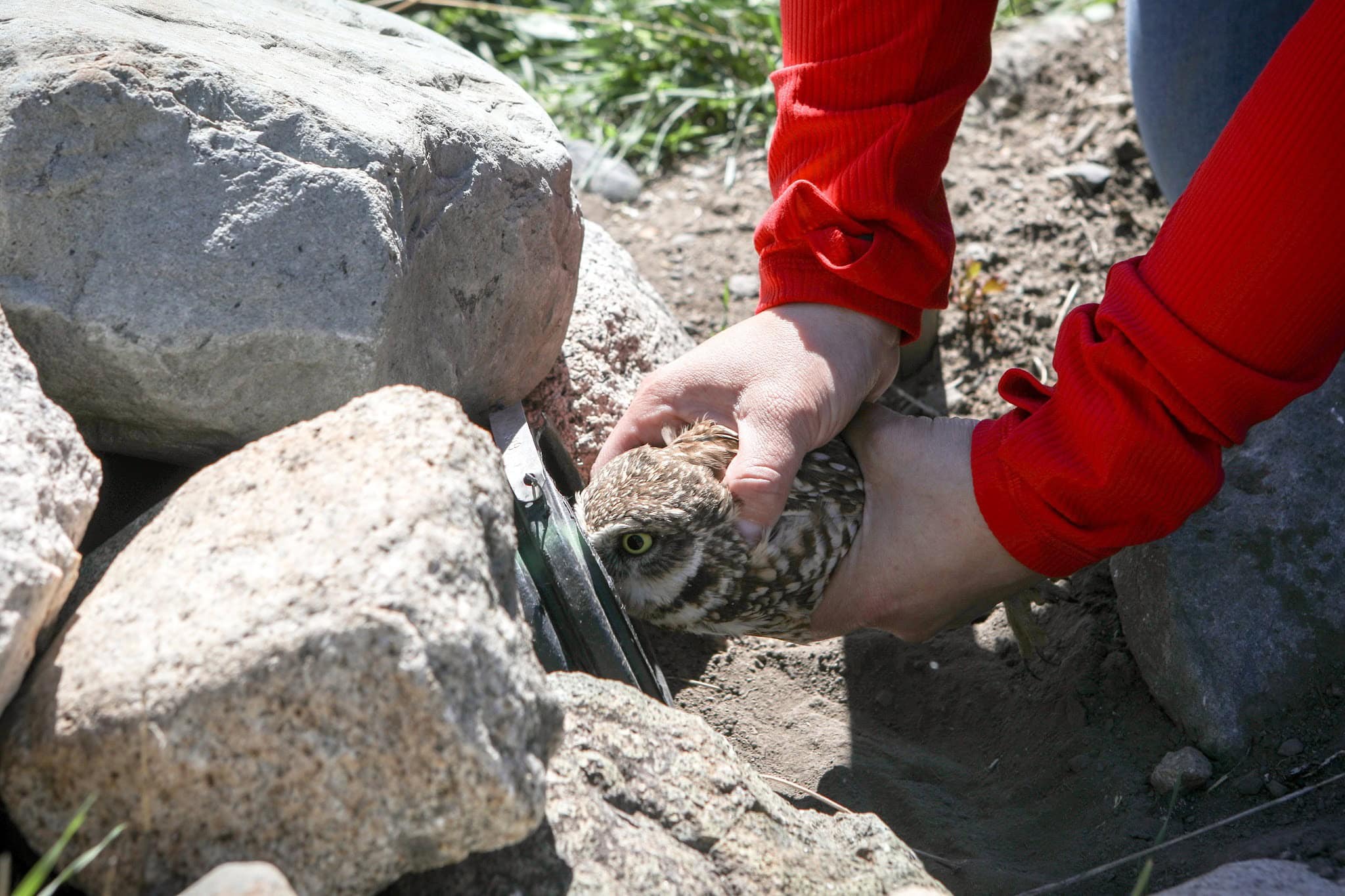
A captive-born burrowing owl is released into an artificial nesting burrow. The burrows will be sealed for a few days, to give the owls a chance to acclimate (and dine on frozen mice).
But Traditional Ecological Knowledge gathered from Elders and advisors confirmed that burrowing owls historically existed on the spax̌mn landscape.
In 2015, a year before the burrowing owl recovery program launched, the Species-At-Risk team conducted surveys on reserve lands to determine a suitable habitat for the birds.
They settled on the grasslands above the Upper Nicola Band community as the reintroduction program’s site.
“We found suitable habitat for burrowing owls — but no burrowing owls present,” said Gill.
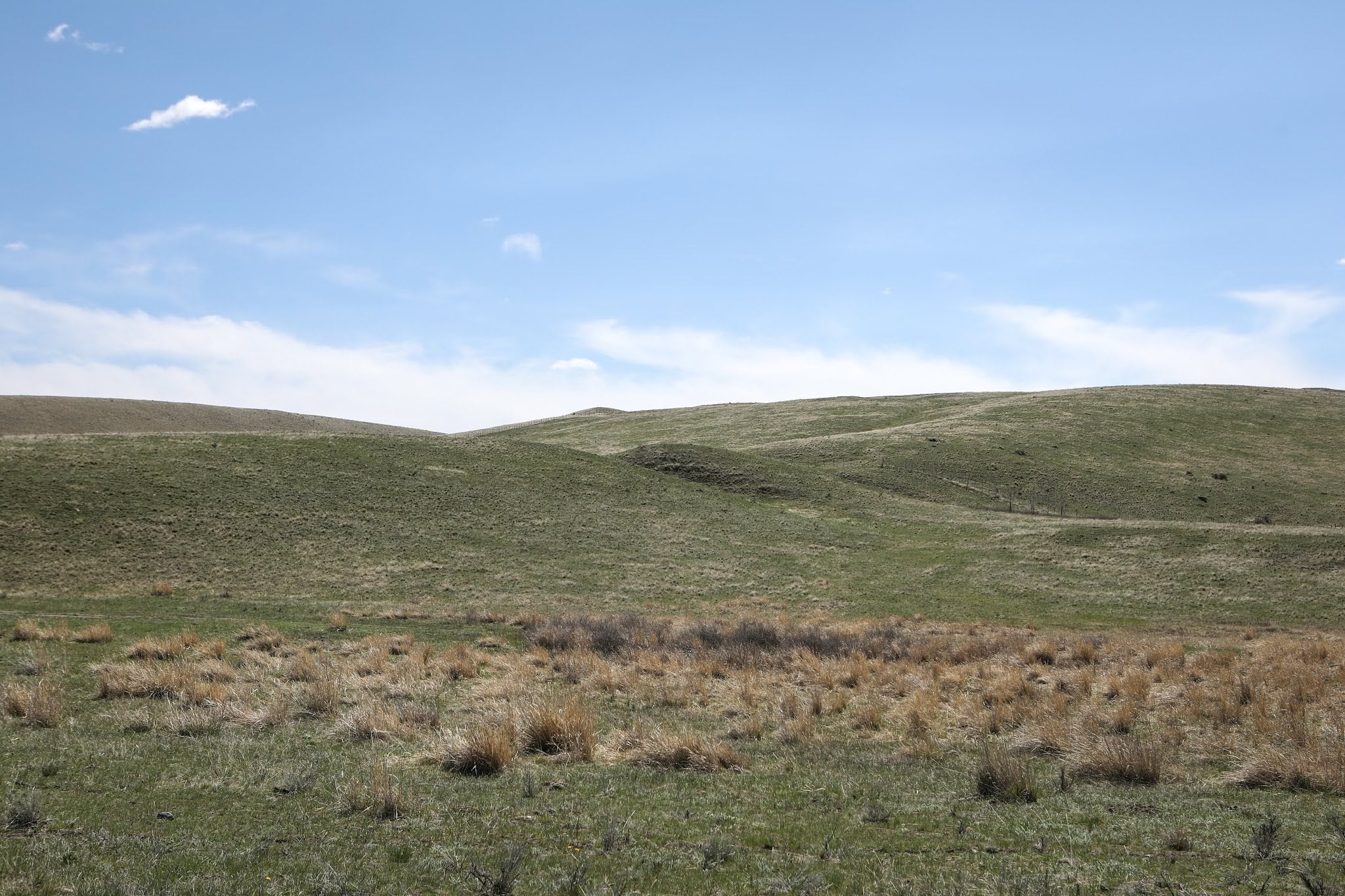
The grassland ecosystem landscape above the Upper Nicola Band community is the site of their burrowing owl restoration program. Grassland ecosystems are critically endangered, covering only around one per cent of B.C. — and only a small fraction of those are protected.
The birds traditionally nested in the underground burrows that were dug and abandoned by different animals, from badgers to marmots and coyotes, he said.
But because of a lack of badgers, there weren’t any natural burrows out on the land.
“That’s why the Upper Nicola Band put in these artificial burrows,” he said.
“There are actually badgers on that reserve, but there are very few — and far in-between — so we can’t rely on a burrowing owl finding a badger burrow.”
According to the province, “several small” burrowing owl nesting sites were identified in the Okanagan and Thompson valleys from 1900 to 1928.
Historical nesting areas include Osoyoos, Oliver, Penticton, White Lake, Lower Similkameen Valley, Vernon, Kamloops and Douglas Lake.
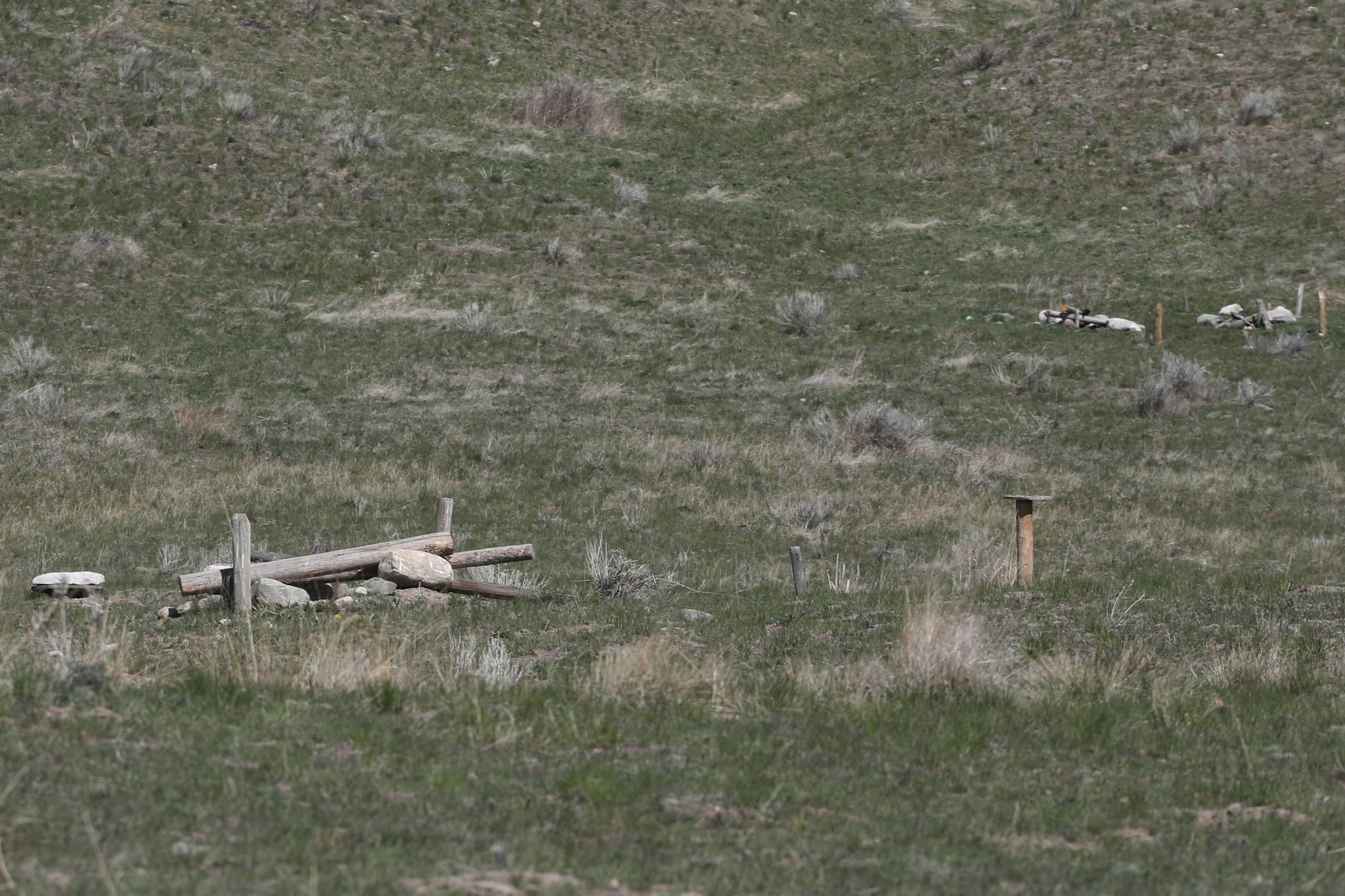
Artificial nesting burrows are scattered throughout the grassland hills above Upper Nicola Band.
But between 1928 and 1980, only four nesting sites were recorded.
The federal government attributed the “conversion of grassland to cropland” as the “ultimate factor responsible for the decline in burrowing owls.” It estimates that the species experienced a 90 per cent population decline from 1990 to 2000.
Also contributing to the owl’s population decline is the “gauntlet” of issues they face on their migration route, Holmes said.
This includes fatalities occurring from collisions with wind turbine farms and motor vehicles. Pesticides targeting insects and rodents that the birds feed upon indirectly poison them as well.
In 2004, the estimated population of burrowing owls in Canada was recorded at 795 mature individuals. In 2015, it had plunged to approximately 270.
Burrowing owl populations are “in a nose dive,” Gill said.
He called the burrowing owl “a canary in a coal mine” in measuring the state of ecosystem health.
“A badger, a burrowing owl — those species are the indicator species. If they’re not doing well, then that’s a sign of something bigger that’s not doing well,” he said.
Upper Nicola Band’s grassland ecosystem is “incredibly resilient,” but grasslands across Canada are critically endangered
Along with Holmes and Brodie, Gill helped initiate the burrowing owl reintroduction program 10 years ago. He called the two women “the work horses” of the program.
“We monitor the owls, and write really good data collection on it,” said Brodie, a veterinary technician who supports the program as a burrowing owl consultant.
The program has been a success, Gill said, not just because of the region’s “great grasslands.”
“But it’s also the stewardship that’s going on with these owls,” he said.
“It’s one of the most productive sites in B.C. for releasing our fledging owls.”
In the wild, burrowing owls can live anywhere from four to six years, according to Lauren Meads, the executive director of the Burrowing Owl Conservation Society of BC.
Meads, who was joined at the release event by the society’s 11-year-old educational burrowing owl, Pluto, added that in captivity they can live up to 15 years.
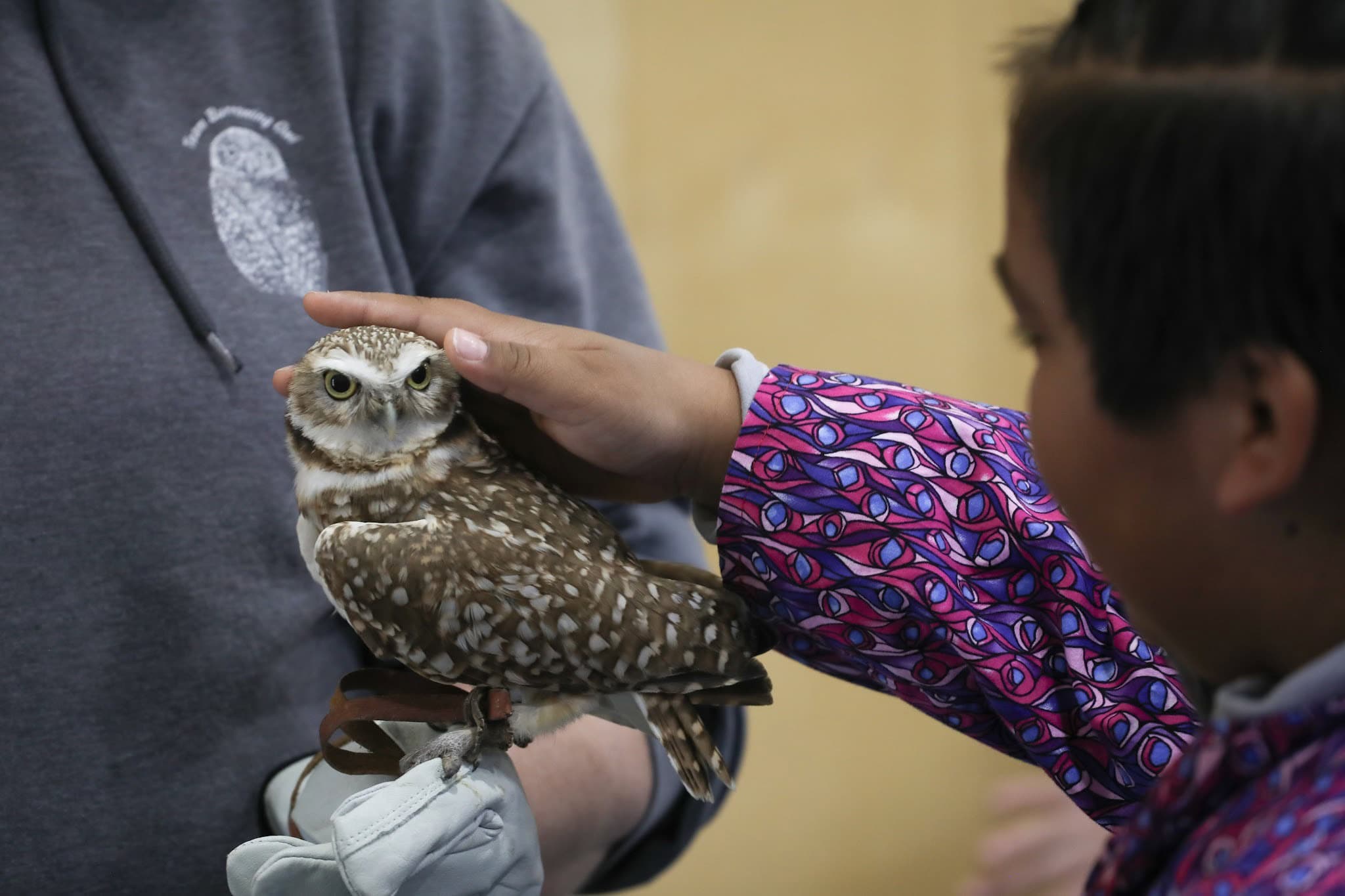
A student from N’kwala School in spax̌mn (Douglas Lake), B.C., pets Pluto, an 11-year-old educational burrowing owl with the Burrowing Owl Conservation Society of BC, at the school gym. In captivity, burrowing owls can live up to 15 years.
According to the Government of B.C., grasslands made up less than one percent of the province’s land area in 2004, adding that “only a small percentage of our grasslands are protected.”
But grasslands surrounding the Upper Nicola landscape are “some of the most intact and incredibly resilient grasslands” Gill has observed, he said.
“Grasslands are one of the most endangered ecosystems in Canada. … They’re very, very rare. It looks like we have a lot, but this is one little spot,” he said.
Holmes added that protecting grasslands also protects the burrowing owls.
“That’s their home. It works hand-in-hand,” she said.
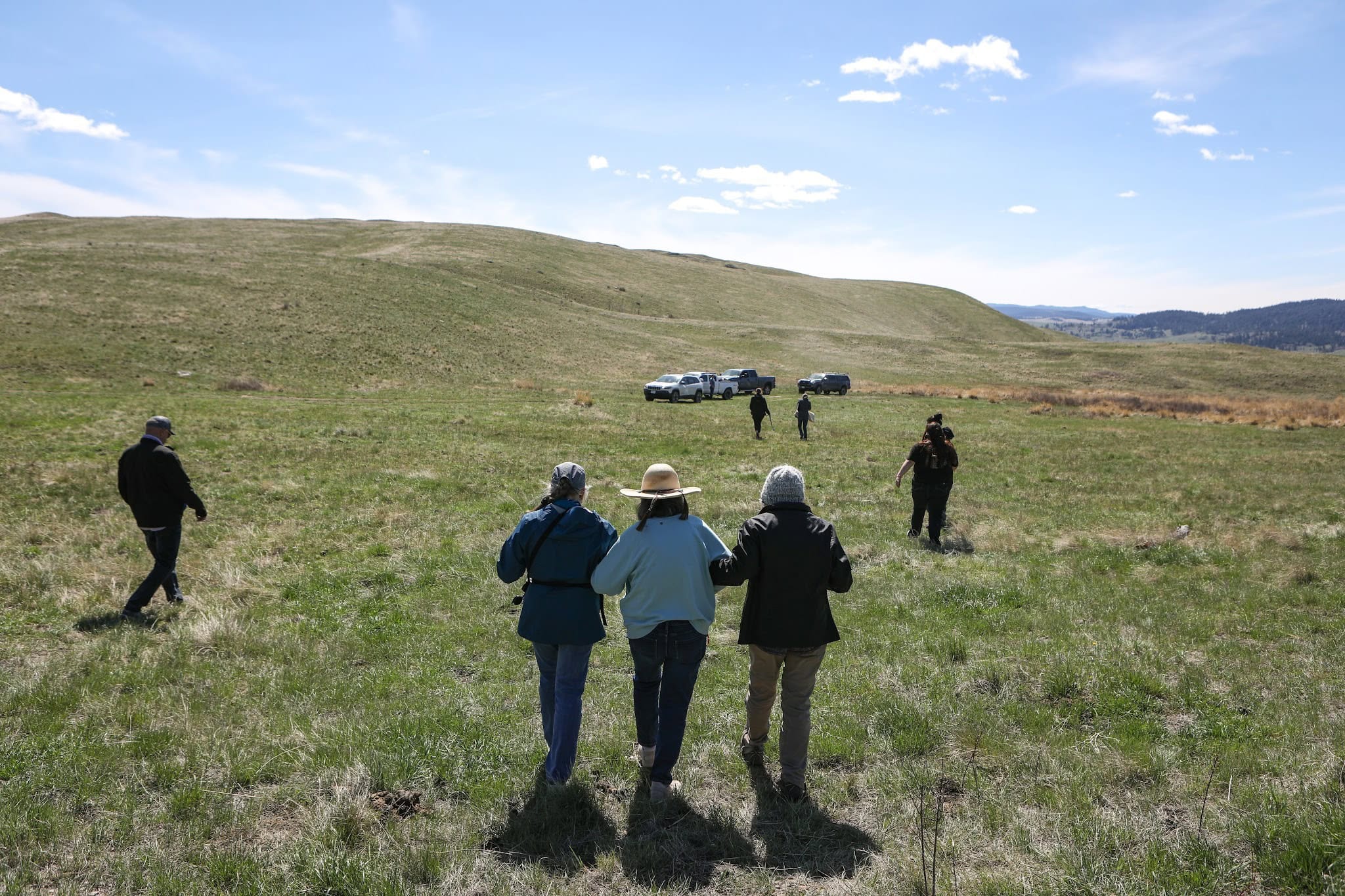
Community members walk toward an artificial nesting burrow at the Upper Nicola Band’s burrowing owl restoration site. The release event drew community members of all ages to celebrate the tiny owls and their release.
Owl conservation, protection is a cultural responsibility
Holmes said that the burrowing owl’s population decline and status as an endangered species is not just an ecological matter, but a cultural issue as well.
sq̓əq̓axʷ are a “symbol of our cultural identity,” she said.
“Owls can be messengers, teachers or indicators in an Indigenous knowledge system. They’re often associated with observation, protections and indicators of change.”
The loss of burrowing owls “erodes the stories, the teachings and our ways of understanding the land that has been passed down through generations,” she added.
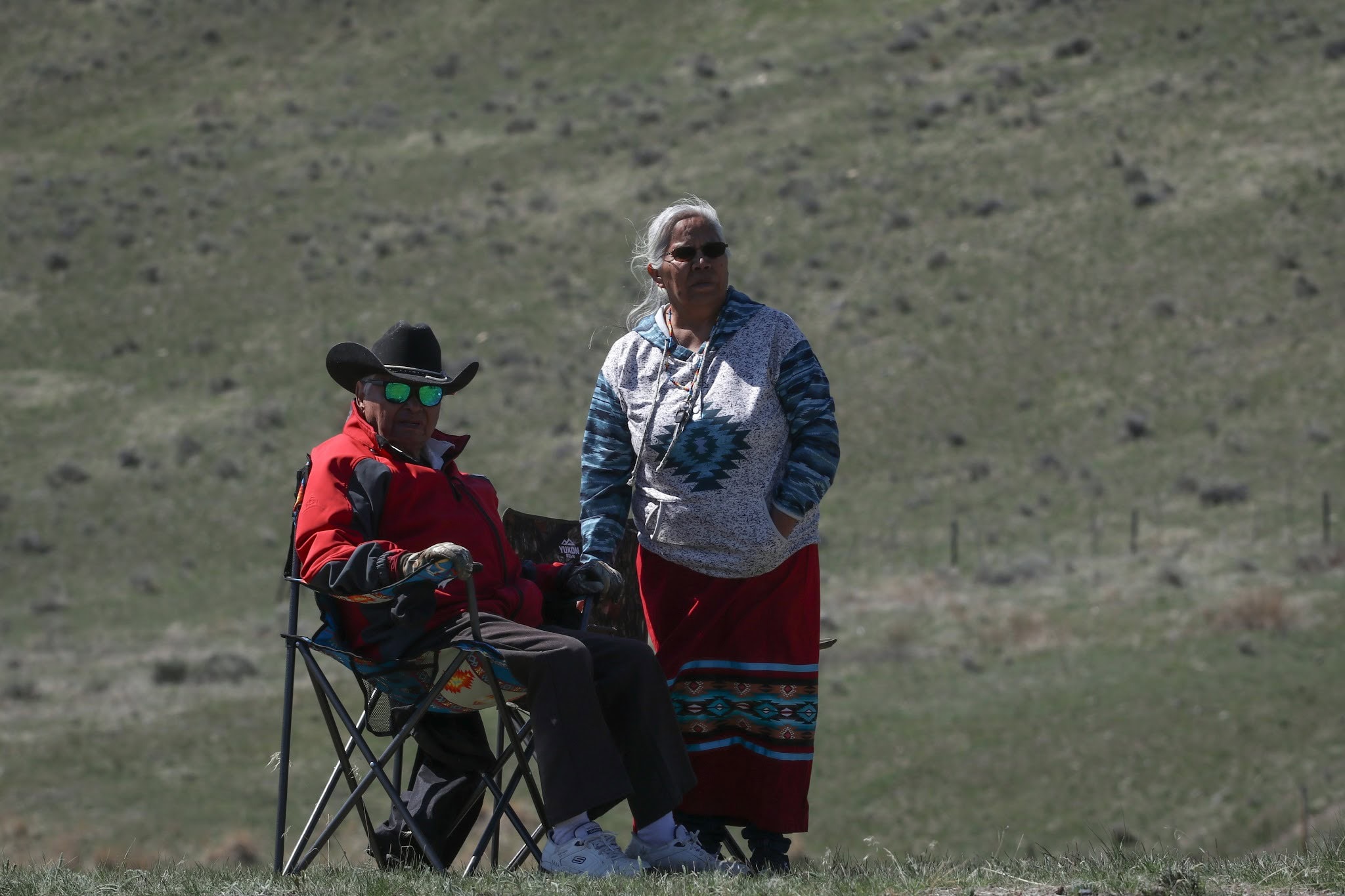
Upper Nicola Band Elders Howard (Howie) Holmes, pictured here with Linda Intalin Holmes, released one of the 11 captive-born owls.
Upper Nicola Chief Dan Manuel said in a statement that burrowing owls are deeply woven into syilx culture.
“For our people, the cultural, spiritual and environmental importance of sq̓əq̓axʷ are one,” Manuel said.
“Our culture is rooted in co-existence with the world around us. We have a responsibility to care for the land and the beings on it. We must help rebuild what has been lost, and it will continue to support us.”
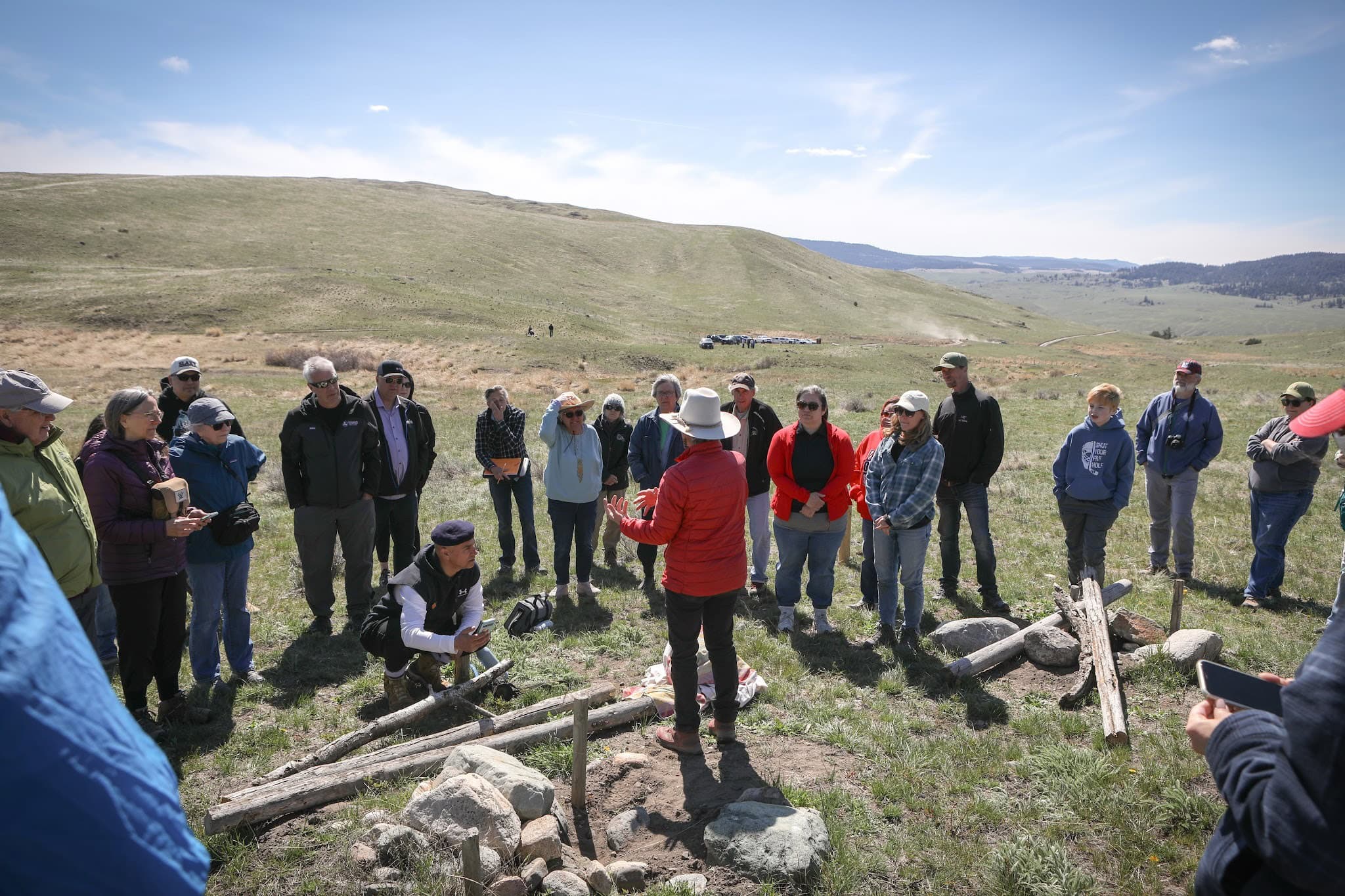
Dawn Brodie, one of the main field technicians who has been involved in Upper Nicola Band’s burrowing owl restoration program since its inception, leads the release event of 11 captive-born owls.
Holmes said that having a dedicated conservation program fulfills those duties that are owed to the land and to all living beings.
“It treats our relatives with respect,” she said.
“The land, the animals, the plants — everything that’s there — provides us with sustenance. So it’s our responsibility to take care of them as well. We see all those things as our relatives.”
She emphasized that Indigenous Peoples have inherent responsibilities as stewards of their territories — responsibilities that originate in syilx laws, teachings and oral traditions, also known as captikʷł.
“That predates colonial conservation frameworks,” she said.
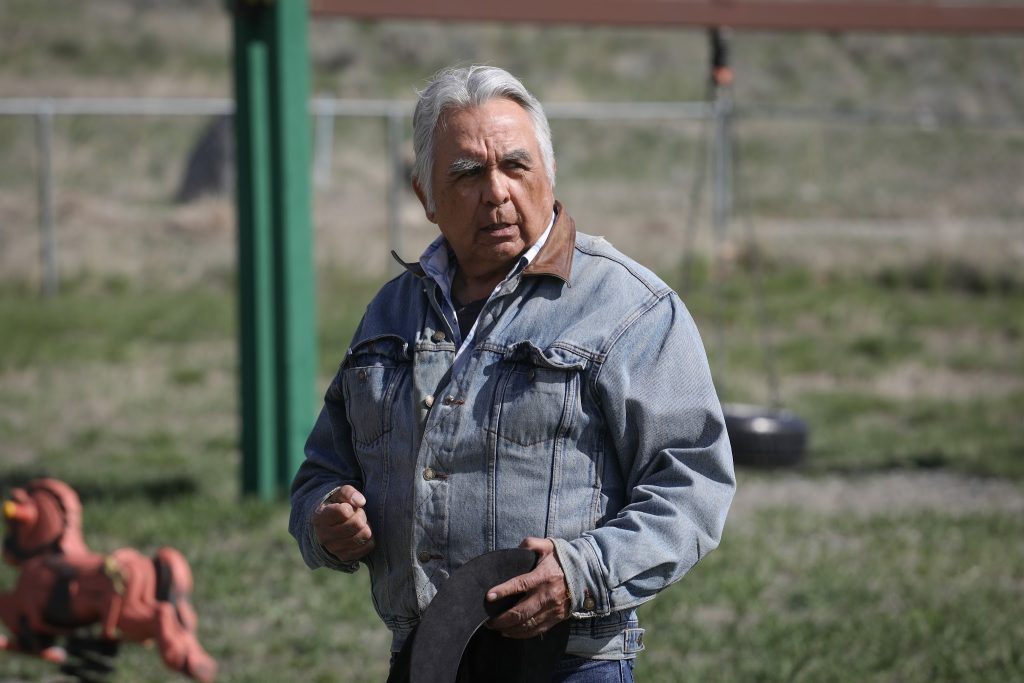
Upper Nicola Band Elder Casey Holmes speaks at the playground of N’kwala School, prior to the release event for 11 captive-born owls into the community’s burrowing owl restoration site in spax̌mn (Douglas Lake) on April 22, 2026.
Upper Nicola Band Elder Casey Holmes thanked all the staff and volunteers involved in the community’s stewardship program, especially for their work in supporting the restoration of the burrowing owl population.
“People are making a difference. Even if it doesn’t look like a difference, they made a difference today, to make this a success – to make this a part of history that we’re not losing,” said Casey.
When the community loses a tmixʷ (all living things) relative, Casey said that “we lose a part of history.”
“Bringing back this, is regaining back that history,” he said.
The Narwhal’s reporters are telling environment stories you won’t read about anywhere else. Stay in the loop by signing up for our free weekly dose of independent journalism.
From The Narwhal | News on Climate Change, Environmental Issues in Canada via This RSS Feed.