

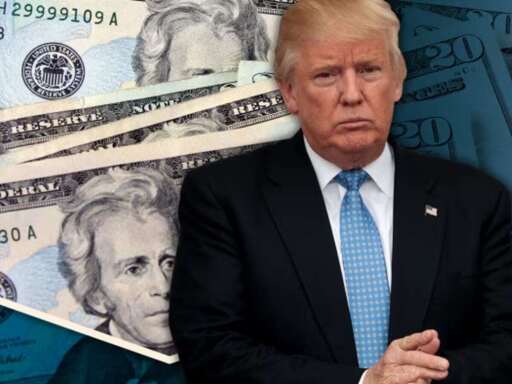

Recent UAE developments, including the US dollar swap request, exit from OPEC, and expulsion of 15,000 Pakistani Shias, can be read as interlocking signs of the Gulf state’s increased subservience to the US.
Fully hitching its wagon to the USA, like far-right President Javier Milei, who recently visited Israel and voted with the USA against addressing historical slavery in the UN General Assembly, the UAE is following the same playbook.
Dollar swap lines
Treasury Secretary Scott Bessent wrote on X on 24 April that the US Treasury was holding discussions with the US’s Gulf and Asian allies about US dollar swap lines, framing these as routine conversations that demonstrate the US dollar’s primacy and the strength of America’s economic shield.
Discussions with countries, including our Gulf and Asian allies, about U.S. dollar swap lines are part of ongoing, routine conversations that @USTreasury has been having with our partners over a number of years. They are a testament to the U.S. dollar’s primacy and the strength…
— Treasury Secretary Scott Bessent (@SecScottBessent) April 24, 2026
According to the Atlantic Council, the proposed swap would use the Treasury’s Exchange Stabilization Fund rather than the Federal Reserve – a mechanism that bypasses Congressional approval, but has a limited capacity of just over $40 billion; a tool already used for Argentina in 2025.
As geopolitical economists Radhika Desai and Michael Hudson argue, these dollar swap lines, using the US Treasury and not the Federal Reserve – an institution with which Trump is quarreling – represent the same dynamic as in Argentina: the weaponization of dollar liquidity to enforce political subservience.
Since Iran’s retaliatory attacks on GCC (Gulf Cooperation Council) countries like the UAE have damaged their oil production and export revenues, the Gulf states that parked their oil profits in US real estate, private capital, and tech firms can now threaten to withdraw this money and damage the US economy in return.
The US response, obviously not magnanimous, uses currency swaps to ease this crisis. This pacifies the GCC states’ immediate needs but also ties them even deeper into the US economy. It is effectively quantitative easing for the Gulf, the two argue.
Gulf states questioning US commitments
Yanis Varoufakis similarly, on his podcast, said that the swap line is not a bailout for the Gulf states but a bailout for the United States government and Wall Street banks.
Varoufakis argues that the Gulf countries, which promised more than a trillion dollars in investment in the USA, including in Trump’s real estate, are now questioning that commitment.
In the face of Iran’s retaliatory strikes, Trump offers swap lines that appear to bail them out. But the real beneficiary, Varoufakis insists, is not the Gulf but the United States itself, which needs to protect the recycling of oil profits into Wall Street, Treasuries, and the military-industrial complex to sustain dollar hegemony.
He says:
In recent months, Saudi Arabia and the Gulf states promised Donald Trump $1.4 trillion in investments in American semiconductors, quantum computing, biotech, energy, and AI infrastructure. That $1.4 trillion was meant to flow from the Gulf to the United States as part of this recycling.
The dollar payment system and the hegemony of the dollar depend on this recycling of other people’s dollars into Wall Street, into Treasuries, and into the military-industrial complex. That is what is at stake. The moment you have an impediment, something stopping this recycling mechanism from working the way it has since the early 1970s, the entire edifice is threatened.
Israelification of the UAE
Think tanks like the Foundation for Defense of Democracies (FDD), which has backed Trump’s war on Iran, are welcoming this “Israelification” of the Gulf.
On X, FDD’s Max Meizlish and Mark Dubowitz celebrated the UAE’s departure from OPEC, describing it as the “Israelification” of the UAE and praising its alignment with American and Israeli partners.
The Israelification of the Gulf is the process of Gulf countries hardening their defenses — military and economic — and taking more active roles in combating Iranian aggression.
It is the result of Tehran targeting Gulf infrastructure and Gulf citizens. And also U.S. military… https://t.co/3kKNRNl0IU
— Max Meizlish (@maxmeizlish) April 30, 2026
US’s magazine Foreign Policy argued that the UAE’s exit from OPEC is not a single grievance but the convergence of three forces: the Iran war, a deepening rivalry with Saudi Arabia, and a strategic realignment with Washington years in the making.
The UAE’s departure from OPEC signals a geopolitical realignment that goes much deeper than just oil markets. https://t.co/K20lX63WTa
— Foreign Policy (@ForeignPolicy) May 2, 2026
Weakening labour power to stop war
The ruling elite of the GCC states have deliberately employed South Asian workers, instead of Arab workers, as a means of discouraging workers from forming bonds of cultural belonging. The recent expulsion of the “tens of thousands of Pakistani Shia citizens” represents a pattern of this practice.
In doing so, the UAE is avoiding organised labour against the war on Iran.
South Asian Shias in India and Pakistan have been strong in their solidarity with Iran against Trump’s unhinged war of aggression on Iran.
The US-led order’s attempts to block anti-war labour movements can be seen everywhere from the UAE to the UK, where US-backed Starmer is leading the calls for banning pro-Palestine marches. Keeping the dollar as the reserve currency of the world requires the quashing of the sovereignty of states using non-dollar currencies like Iran.
Milei, who deregulated labour and environmental rights at home following the US Treasury bailout, shows what the USA will expect from the UAE.
From Treasury swap lines to the Israelification of the UAE and the expulsion of anti-war Shia workers, the pattern followed by the US-led financial order is clear: political repression, alignment with US and Israeli power, and the silencing of opposition.
Featured image via
By Nandita Lal
From Canary via This RSS Feed.