

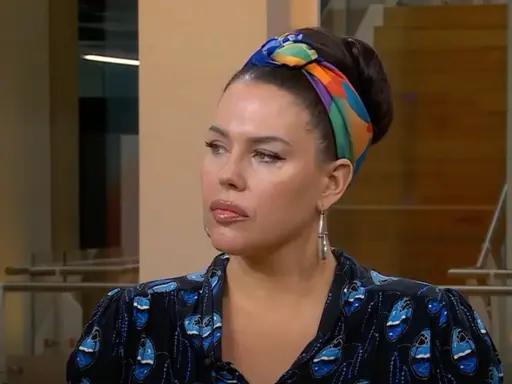

Author and broadcaster Natasha Devon made a powerful intervention on the hierarchy of racism during a Sky News segment. Devon pointed to the recent stabbing attack in Golders Green, noting how it prompted widespread media coverage and swift, sustained political commentary. Devon argued that attacks on other minoritised groups do not receive nearly the same level of attention or concern.
Speaking about racial attacks on Muslim and Sikh women, and the targeting of 50 mosques in 2025, Devon further exposed the hierarchy of racism and subsequent lack of concern in British society towards non-Jewish groups. According to the British Muslim Trust, there were 27 attacks on 25 mosques just in the period between July and October 2025.
This intervention is crucial as it draws focus on how public empathy and political urgency are not afforded equally across different communities. It also underscores how racism experienced by Black and Brown communities is not as readily recognised or validated as we see towards antisemitism.
https://www.thecanary.co/wp-content/uploads/2026/05/Natasha-Devon-Sky-Racism-Response-hb.mp4
Hierarchy of public concern to racism in the UK
First, Sky News presenter Leah Boleto raised recent comments made by Sarah Sackman, Labour MP for Golders Green, in which she accused anti-racist groups of not being very vocal following the double stabbing of two Jewish men.
Needless to say, however, Boleto inadvertently proved Devon’s point in how she chose to ignore the third victim, a Muslim man called Ishmael Hussein, on the very same day. His stabbing preceded the two attacks in Golders Green.
Devon responded to the ire now directed at anti-racism groups, saying:
I hear this accusation all the time that anti-racism groups don’t do enough to be inclusive of Jewish people. So I just want to try and pour some clarity on that if I can. When that appalling stabbing happened, Keir Starmer called a Cobra meeting. He got together some leading thinkers to ask what more can be done to tackle antisemitism. The Met Police called for more funding to protect Jewish communities. The media gave it pretty much its undiverted attention for days. That is the correct response.
That response did not happen when a Muslim woman was targeted by a hit-and-run, which happened… just the other month, when a woman who was Sikh was targeted by a racial attack because the perpetrator, a sexual attack, thought that she was a Muslim, when 50 mosques were targeted between June and October of 2025, we don’t see the same response.
Anti-racism campaigners are looking at where the need is. When these appalling attacks happen to the Jewish community, we have the correct response. When it happens to other communities, whether that’s women, whether that’s LGBTQ people, whether it’s black people, whether it’s Muslims, not the same urgency is applied.
This discrepancy shows how certain narratives gain traction in the media and amongst MPs far more easily when they align with existing priorities in the political establishment. The British government has long supported Israel, regardless of the party of the day, with Starmer’s Labour receiving lucrative donations from pro-Israel groups and individuals.
In turn, suggesting allegiance is contingent on these lofty political donations, we have all witnessed unqualified support from Starmer’s government with ample diplomatic cover afforded to Zionist Israel as it continues to brutally murder innocent civilians across the Middle East. As a result, we have been actively complicit in the genocide on Gaza and going further, refrain from any public condemnation towards Zionist Israel in any of its illegal wars of aggression.
Why don’t all victims of racism matter?
We have written extensively about nefarious Zionist influences on British politics and exposed the absence of the one Muslim victim in the narrative pushed out by the mainstream media and opportunistic politicians.
Our own Cameron Bailey wrote following the attack in Golders Green:
Not only has the sole Muslim victim been ignored, but politicians and media pundits are overlooking his mental health episode and instead, once again, are weaponising the incident.
The media’s attention on two of Suleiman’s victims and not the other one can only really be explained either one of two ways, it seems.
They either genuinely care less about the attempted murder of Muslim men compared with that of Jewish men — which is far from impossible, given British media’s documented anti-Muslim biases. (Note: an anti-war Iranian was stabbed at a peaceful protest last week and received next to no outrage.)
Otherwise, they’re deliberately ignoring it for the sake of a preformed narrative and political agenda. That is, one designed to terrify British Jews, crack down on our speech and protest rights, and favour Zionism.
Genuine concern or a political football?
This raises an urgent question as to the integrity of British politicians and our mainstream media. More specifically, in how these institutions show concern for all victims of racial violence and hate. As opposed to just those who may then feed into the agenda of the political establishment. Devon argued that, while the fear within Jewish communities is real and warrants serious attention, media responses have been markedly disproportionate, with far less sustained or proportional coverage given to more widespread attacks affecting other minoritised groups.
This dynamic further erodes public trust in whether the British public receives a full and honest account, particularly given the stark lack of sustained condemnation from UK institutions toward Israel’s genocide in Gaza and the West Bank, which intensified after October 7.
As a result, we must bring this debate more forcefully into the public sphere and directly challenge the failure of political and media institutions to treat violent, racialised attacks against all communities with equal seriousness.
Going further, we must interrogate the motives and incentives that sustain this cycle, in which we see a repeated failure to respond to racism evenly and fail to afford equal urgency and protection to all minoritised communities.
Featured image via the Canary
From Canary via This RSS Feed.