

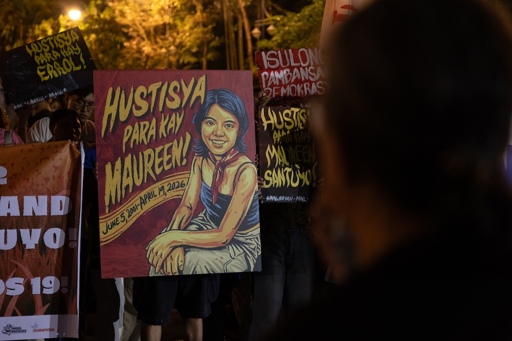
BACOLOD CITY – In the morning of April 22, Fiel, 52 (name withheld upon request), along with the quick reaction team from Manila arrived in Bacolod City to identify and retrieve the bodies of some of those reportedly killed in what the Philippine military claimed was an encounter between the New People’s Army (NPA) and the military in Toboso, Negros Occidental.
Toboso is a two-hour drive from Bacolod. The road is smooth and not bumpy. Across its vast lands are sugarcane plantations where the sacadas work. Also noticeable are the solar panels in Manapla municipality which the quick reaction team passed by on the way to Toboso — a second-class, coastal municipality in northeastern Negros.
“My knees were shaking an hour before we landed,” Fiel told Bulatlat in an interview. Her close relative Maureen Kiel Santuyo, 24, was among the 19 who died in a military operation on that fateful day of April 19.
Santuyo was a member of the National Network of Agrarian Reform Advocates Youth (NNARA Youth) and a peasant organizer. She was described by Fiel as someone who was intelligent, self-reliant, and selfless.
For Fiel, Santuyo’s killing is not a win for the military.
“I understand what she was doing. She was working for the oppressed people. I don’t blame anybody. I know she is happy because people here are doing what they can to take her home,” Fiel told Bulatlat.
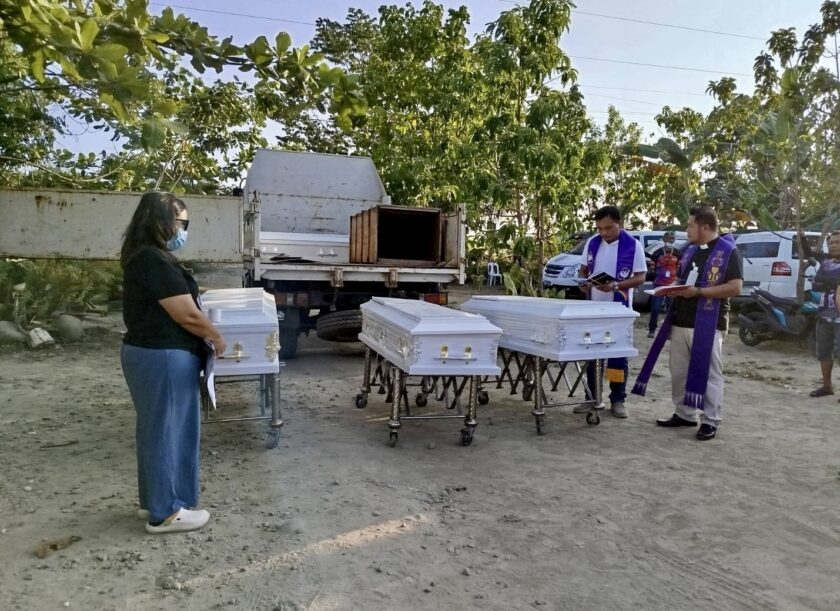
Priests blessing some of the identified remains of those who were killed in Toboso, Negros Occidenta on April 19. (Photo by Anne Marxze D. Umil/Bulatlat)
Loving daughter
Fiel said Santuyo was a loving kid who thought of others before herself. “She loves to draw. She always drew us, including her sister. One time while buying a cake, I asked what flavor she wanted, she said chocolate because that’s what her sister wanted.”
“When she left the house and lived on her own, she would still call me. She was my comfort zone. I would confide in her. One time I asked who would take care of me now that she was not living with me, she said, ‘Ako. Hindi nga lang kasama ang shopping,’” Fiel said.
Santuyo lived a modest life. She would not buy anything expensive. She was also self reliant, Fiel said. “She never asked for an allowance. She would find ways to have funds on her own. She had a sideline, she would take some research work for law students who needed assistance on research,” she said.
She was also a writer. When she was in elementary school, Fiel said her teacher would just call her to tell her that Santuyo would be joining an interschool contest on journalism and she would win. She was also among the students who were tasked to help other students to catch up on their lessons.
Fiel witnessed how Santuyo became dedicated to developmental work. She would raise funds for the school of supplies of the marginalized children of the community and would engage in discussions among her organization.
“They would come by the house and I would listen to them sometimes. That is why I know all of her friends and the members of their organization,” Fiel said.
When Santuyo became a full-time activist, she would often go to far-flung areas to look into the situation of the peasants. According to Fiel, she knew of Santuyo’s engagements and where she went. “I have to know and she will tell me because I have to feel reassured and she never fails to do that.”
“She was happy with what she did and we cannot stop her from doing something that gives her happiness. We have to respect that,” Fiel said.
Justice
Meanwhile in a press conference last April 30, families and friends of Santuyo, Alyssa Alano, community journalist, RJ Ledesma, Filipino Americans Lyle Prijoles and Kai Sorem along with rights groups demanded justice for their loved ones.

Lily Prijoles sister of Lyle in a press conference last April 30. (Photo courtesy of Altermidya)
Lily, Prijoles’s sister, said her brother had made several trips to the Philippines to learn more about his roots and his homeland.
“He made several trips here before, falling more in love with his homeland. And with the communities he met. With every trip, he was not yabang (boastful), he was not this American expecting to be waited on. He was humble and kind to everyone he met,” Lily said.
She added that her brother learned to plant rice and to wash his own clothes in his immersion to different communities in the Philippines.
“He wanted to go on an immersion trip not to just go on vacation to the resorts and the casinos. He wanted to learn about his homeland beyond our barangay (village). He wanted to learn for himself what he couldn’t learn from books or videos. He wanted to learn where he came from,” Lily said.
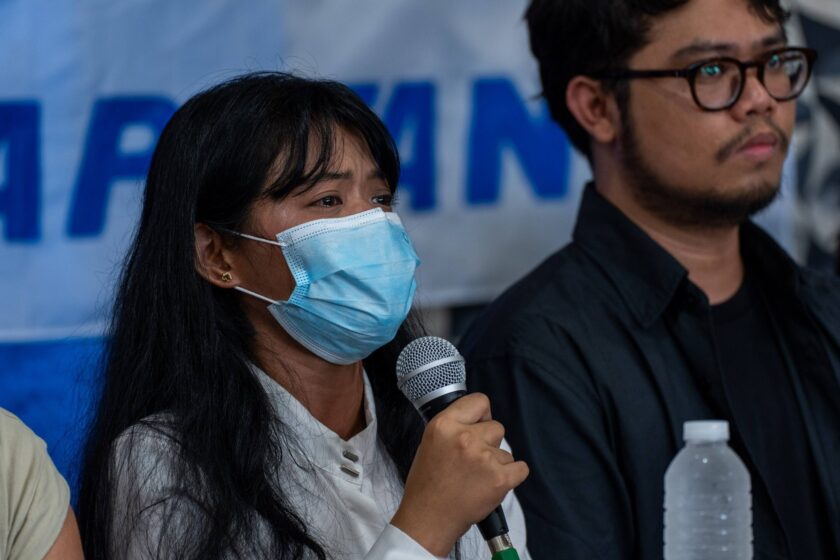
Relative of Maureen Santuyo in a press conference last April 30. (Photo courtesy of Altermidya)
“So we know why he was here. What we want to know is why did this happen? He had been here before and always came back. Why was the military involved in his death? Why are people calling the 19 victims corned beef?” Lily said, adding that those who were killed did not deserve such name-calling.
She added that her brother could have stayed in the US in the comforts of his middle class life. But Prijoles chose to spend weeks living with peasant communities, learning about their lives and their struggles. “He was not a naive child being manipulated to be in Negros. He was 40 years old.”
“With so many questions and no honest answers, we demand an independent investigation. We want justice for Lyle. We want justice for the 19 victims of the Toboso massacre. And lastly, I want you to tell us why Lyle and Kai, visiting their home country, ended like this,” Lily said.
PJ, Sorem’s only sibling, said that she was in the Philippines in 2025 and came back because she wanted to learn and connect to her roots as a Filipino-American. “Our family migrated abroad many, many generations ago, but Kai still wanted to learn more about our ancestry,” PJ said. “Kai was such a gentle soul, always caring for others through working as a home care aid in the United States to helping in high schools with Filipino clubs from bringing me home at 3:00 in the morning when I needed it.”
Santuyo’s sister also said that it is painful for their family that her sister and others are being mocked and reduced to being called “corned beef.” “It is painful for us to see our mother crying. Who would want to bury their own child? We demand justice,” she said. (DAA, RVO)
The post Humanizing the victims: Toboso massacre not a win for the Philippine military appeared first on Bulatlat.
From Bulatlat via This RSS Feed.