

By CRIS FERNAN BAYAGA
CEBU CITY – Cebu Province is considering the establishment of waste-to-energy (WTE) facilities as a long-term solution against waste issues, drawing inspiration from cities such as Yokohama and Tokyo.
As early as 2018, the construction of waste-to-energy (WTE) facilities had been included in Cebu City’s 10-year Solid Waste Management Plan, one of which is a joint venture agreement with New Energy Sky, Inc. in 2022. However, the proposal was eventually withdrawn following opposition from residents of Barangay Guba in 2025.
In 2024, the Regional Development Council (RDC) of Region 7 backed the House Bill No. 5714 or the WTE Bill considering it as “solution to improve solid waste management and augment power supply” across the country.
This year, the House of Representatives approved the said WTE bill and is on its third and final reading, proposing a minimum annual allocation budget for the waste facilities to be built.
Experts, progressive groups, and environmental organizations, however, believe that WTE is not the correct solution.
Read: Binaliw landfill reopens amid unresolved issues after landslide
In a forum at the University of the Philippines Cebu, April 10, on the recent Binaliw landfill landslide, Jorge Emmanuel, a chemical engineer and one of the co-authors of World Health Organization’s guidebook on health care waste, cautioned that all WTE technologies emit toxic substances, making them a questionable solution.
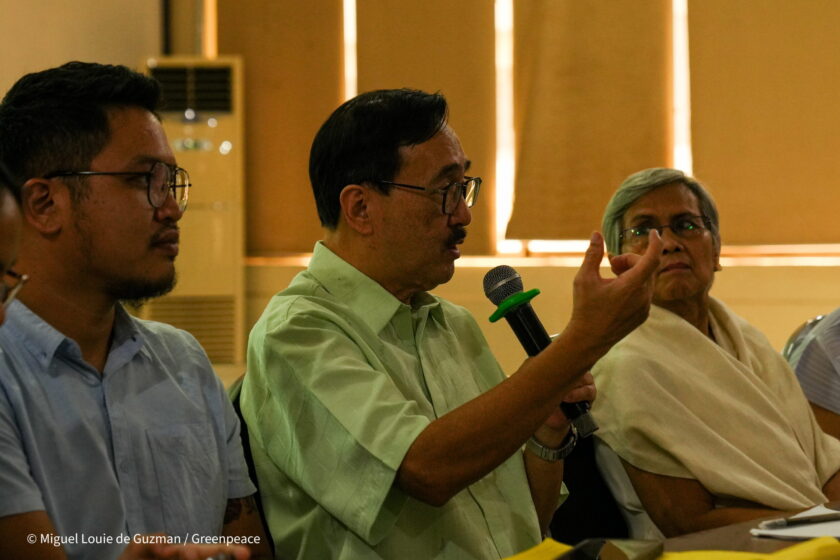
Dr. Jorge Emmanuel shares during the open forum that there is a need to reconnect with traditional practices of waste reduction such as recycling at home. (Photo courtesy of Greenpeace)
He explained that WTE facilities release dioxins; highly toxic compounds that can spread through air, soil, water, and eventually enter the food chain.
“Dioxins are released from the chimneys or the stacks of WTEs into the air, they are carried by the wind and eventually deposit on the soil and vegetation, in the water, and then they are picked up by chickens, cows, pigs, fish, and other animals,” he said.
Emmanuel warned that these toxins can accumulate in food sources, posing long-term risks to human health; for him, managing waste should not involve another health crisis.
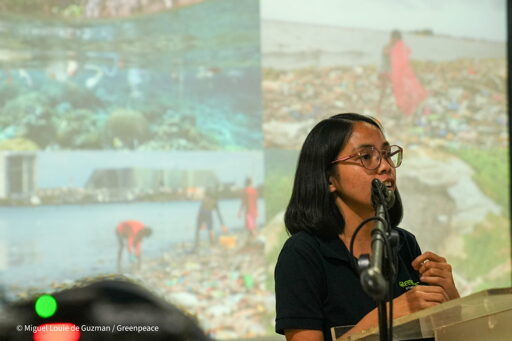
Marian Ledesma, Greenpeace Southeast Asia Zero Waste Campaigner, said waste management must shift from a traditional approach to a resource management framework guided by a zero-waste agenda.
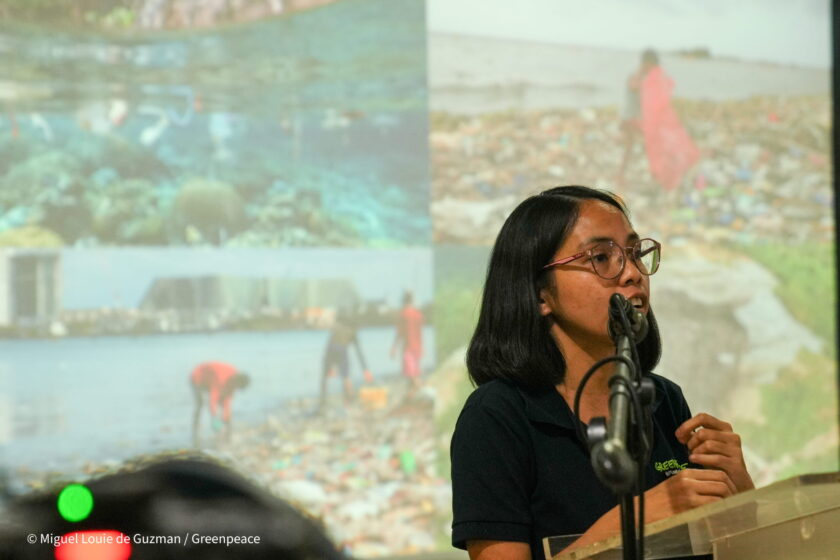
Marian Ledesma discusses how solutions must begin with reducing waste production at the source before it reaches the public (Photo by Miguel Louie de Guzman/Greenpeace)
She emphasized that such a shift must center affected communities, as waste management impacts extend beyond materials on the lives of those in surrounding areas.
“The truth is when you look at waste and pollution, you’re going to see different impacts, some of which are lost lives and health harms…” she said.
She stressed that the goal should be to prevent waste generation at the source and to push companies to redesign products to reduce disposal burdens.
“We need policies that will ban single-use plastics, that will restrict the use of different plastic products, especially in government procurement, as well as bans or policies that will look at encouraging reusable alternatives instead of disposable formats,” she said.
She added that fundamental practices taught as early as being in primary schools such as reuse and recycling remain underutilized despite being widely taught, and emphasized the need for proper implementation of policies.
Ledesma also called for data-driven waste management planning, including the use of Waste Analysis and Characterization Studies (WACS), as well as the widespread establishment of Materials Recovery Facilities (MRFs) to support proper segregation.
She noted that over half of the Philippines’ waste, over 52 percent, is organic and could be managed through composting at the household or barangay level, if sufficient support and funding are available.
“The challenge with the Philippines is that we don’t have the industrial composting facilities,” she said.
She emphasized that organic waste should not end up in landfills, as it contributes to leachate formation when mixed with other waste types.
Melona Pan, a resident of Barangay Binaliw, echoed the call for accessible composting facilities and emphasized the need for community-based training and support systems, including incentives for recycling and strict enforcement of segregation rules.
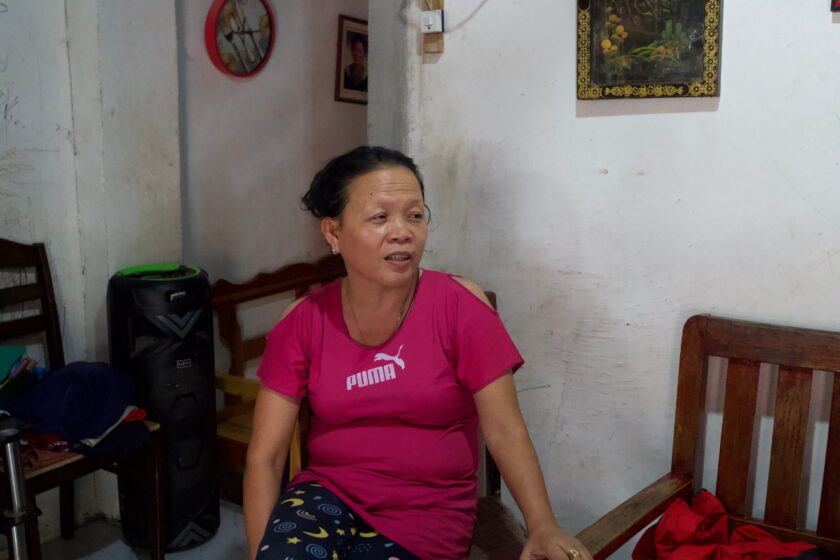
Melon Pan discusses household practices such as in-home composting, which can produce organic fertilizer, as a potential solution to reduce organic waste generation (Photo by Cris Fernan Bayaga/Bulatlat)
“Campaigns should be brought to grassroots communities in every barangay to ensure their successful implementation and to involve the people in the process of enacting effective solid waste management,” she said.
In an article published by Greenpeace International on waste-to-energy initiatives in New Zealand, the organization argued that WTE projects are often used to “greenwash” cities and should be rejected because their disadvantages outweigh their supposed benefits.
Since 2022, Ledesma has opposed waste-to-energy (WTE) plans in Cebu, citing their environmental impacts on air quality and the safety of residents, and has instead advocated for zero-waste campaigns as a safer approach for the city.
She also noted that WTE facilities are often associated with high maintenance costs that can place financial strain on cities, while potentially encouraging increased waste generation once operational. (RVO)
The post Cebu’s waste crisis needs zero-waste solutions, not waste-to-energy, advocates say appeared first on Bulatlat.
From Bulatlat via This RSS Feed.