

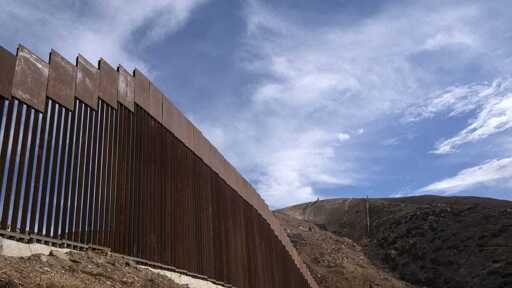
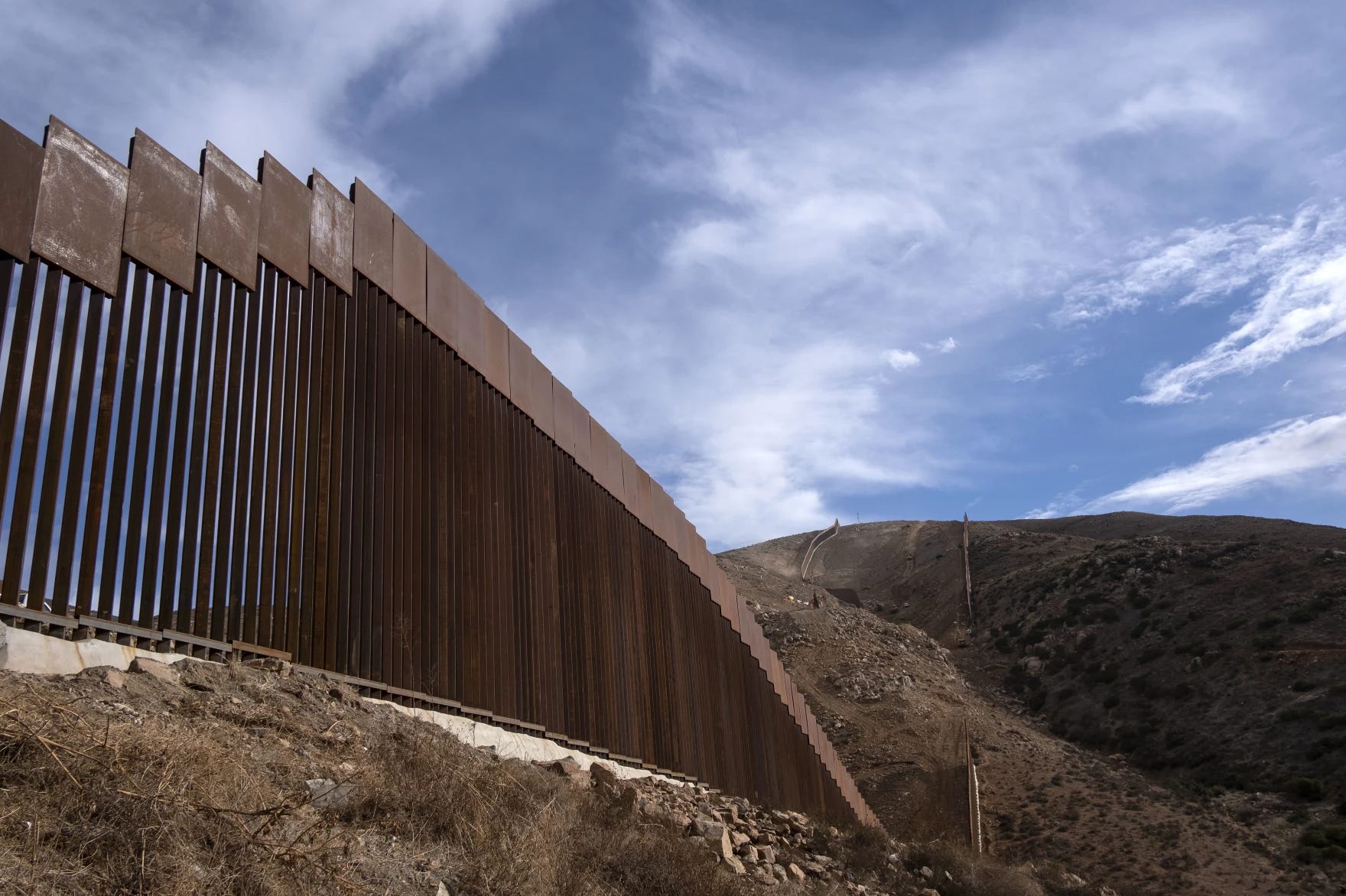
Guillermo Arias / AFP via Getty Images
By: Teri Mattson
The modern border is no longer a line.
It does not begin at the Rio Grande, nor does it end at a wall. It is not confined to checkpoints, fences, or even national territory. Instead, it stretches—quietly but forcefully—across continents, embedding itself in foreign security forces, domestic policing, and global surveillance systems.
This is what journalist and author Todd Miller calls the age of “elastic borders.” First articulated in his book Empire of Borders, the concept describes how U.S. border enforcement has expanded both inward and outward, forming a multilayered system that increasingly resembles a global architecture of control.
CODEPINK Substack is a reader-supported publication. To receive new posts and support our work, consider becoming a free or paid subscriber.
Today, that architecture is becoming more explicit. Recent political rhetoric about a hemispheric security zone—defined on March 29, 2026 by Secretary of Defense Pete Hegseth as “Greater North America” stretching from the Arctic to the equator—has brought into the open what has long been under construction.
To understand what is unfolding, one must look beyond immigration policy. The story of elastic borders is also a story about militarization, economic inequality, climate crisis, and geopolitical competition. It is, in many ways, a story about how power is reorganizing itself in an era of instability.
And as Colombian President Gustavo Petro has warned, it may signal the rise of something even more systemic: “Fortress Capitalism.”
From Border Line to Border System
The militarization of the U.S.-Mexico border did not emerge overnight. Its foundations were laid decades ago, shaped by Cold War strategies and foreign interventions.
In his book The Militarization of the U.S.-Mexico Border, 1978-1992: Low-Intensity Conflict Doctrine Comes Home, sociologist Timothy Dunn traced how U.S. military doctrine—particularly “low-intensity conflict” tactics used in Central America during the 1970s and 1980s—was gradually repurposed for domestic border enforcement. Equipment, training, and strategic thinking migrated from war zones abroad to the U.S. frontier.
By the 1990s, this transformation accelerated. Under President Bill Clinton, operations like Operation Gatekeeper reshaped enforcement strategy. Instead of attempting to stop migration everywhere, authorities concentrated infrastructure in urban crossing zones, erecting walls and deploying agents in cities such as San Diego and El Paso.
The goal was not simply interdiction—it was deterrence.
Migrants were funneled away from populated areas into harsh environments like the Sonoran Desert, where the journey itself became a barrier. The logic was stark: if crossing became dangerous enough, fewer people would try.
This doctrine—“prevention through deterrence”—remains central to U.S. border policy today.
The Post-9/11 Transformation
The attacks of September 11 marked a turning point. Border enforcement was rebranded as a matter of national security, and immigration became intertwined with counterterrorism.
The creation of the Department of Homeland Security in 2003 consolidated this shift. Agencies such as U.S. Immigration and Customs Enforcement and U.S. Customs and Border Protection were expanded and empowered, receiving massive increases in funding.
Although no terrorist threats materialized via the southern border, the narrative proved durable. It justified sweeping investments in physical barriers, surveillance systems, and personnel. Legislation like the Secure Fence Act of 2006 authorized hundreds of miles of fencing, while new technologies promised a “virtual wall” of sensors and data.
Many of these technologies originated in foreign conflicts. Surveillance tools and drone systems tested in places such as the Gaza Strip were adapted for border enforcement, blurring the line between military operations and civilian policing.
At the same time, rhetoric evolved. Border agents were increasingly described as operating on the “front lines,” reinforcing a war-like mentality that continues to shape policy and practice.
The Layered Border Comes Home
If the border once existed at the edge of the nation, it now exists throughout it.
U.S. Customs and Border Protection operates within a 100-mile zone extending from all external boundaries—a region that includes major metropolitan areas such as New York, Los Angeles, and Chicago. Approximately 200 million people live within this zone.
Within this space, enforcement increasingly resembles border operations. Joint actions between ICE and Border Patrol have introduced militarized tactics into urban environments, including helicopter deployments and coordinated raids.
The result is what Miller describes as a “layered border”—a system in which the boundary is not a single line, but a series of overlapping enforcement zones.
This internal expansion raises fundamental questions about civil liberties and the normalization of militarized policing. Practices once associated with remote borderlands are now part of everyday life in cities far removed from the frontier.
Exporting the Border
At the same time that the border has moved inward, it has also been pushed outward.
Through training programs, funding, and equipment transfers, the United States has effectively extended its border enforcement into other countries. Security forces across Latin America increasingly participate in migration control efforts aligned with U.S. priorities.
Former Homeland Security Secretary John F. Kelly once suggested that the U.S. border should begin thousands of miles from its physical boundary. In practice, this has translated into a focus on migration routes in Central America, particularly along the Mexico–Guatemala corridor.
Some officials have gone further. A former CBP commissioner stated explicitly that the functional southern border of the United States lies not at the Rio Grande, but at the boundary between southern Mexico and Guatemala.
This is the essence of border externalization: enforcement occurs long before migrants reach U.S. territory.
It also reflects a broader geopolitical strategy. By projecting enforcement outward, the United States shapes migration patterns, influences regional security policies, and extends its operational reach without formal territorial expansion.
Geopolitics: Resources, Rivalries, and Regional Control
The expansion of elastic borders cannot be separated from global power dynamics.
Latin America and the Caribbean occupy a strategic position in the 21st century. The region is rich in critical resources—lithium, rare earth minerals, freshwater, and biodiversity—while also serving as a key corridor for global trade.
At the same time, geopolitical competition is intensifying. The rise of China as a global economic power has deepened its engagement across the Americas through infrastructure projects, trade agreements, and investment.
For Washington, maintaining influence in the hemisphere has become a priority.
Border expansion and security integration offer one mechanism for doing so. By embedding U.S. priorities into regional security frameworks—through military cooperation, intelligence sharing, and migration control—the United States reinforces its presence without overtly framing it as geopolitical competition.
Migration, in this context, becomes both a justification and a tool.
At the same time, countries that resist alignment—such as Cuba or Nicaragua—often face increased political and economic pressure, further illustrating how border policy intersects with broader foreign policy goals.
Fortress Capitalism: A System Under Pressure
For Colombian President Gustavo Petro, these developments are part of a larger transformation.
He describes the emerging system as “Fortress Capitalism”—a model in which wealthy nations fortify themselves against the consequences of global inequality and environmental collapse, rather than addressing their root causes.
In this framework, borders are not just about controlling movement. They are about preserving a global order in which wealth remains concentrated and mobility is restricted.
As climate change accelerates, this dynamic becomes more pronounced. Rising sea levels, desertification, and extreme weather events are expected to displace millions of people in the coming decades. The U.S. Department of Defense (DoD) formally identifies climate change as a critical national security threat and a “threat multiplier,” as it exacerbates existing stresses like poverty, political instability, and resource scarcity. It endangers military readiness by damaging infrastructure, disrupting supply chains, and increasing demand for humanitarian missions
Yet instead of prioritizing adaptation, mitigation, or equitable development, governments increasingly invest in containment.
Walls rise. Surveillance expands. Military involvement deepens.
The result is a world in which mobility—once a fundamental aspect of human survival—is increasingly criminalized.
Climate Migration and the Security Paradigm
U.S. military doctrine has long identified climate change as a “threat multiplier.” But the focus is often less on environmental impacts themselves than on their social consequences.
Migration, in particular, is framed as a source of instability.
Policy documents frequently link population movement to security risks, reinforcing the idea that migrants are not just individuals seeking safety or opportunity, but potential threats to be managed.
This framing shapes responses.
Rather than addressing the underlying drivers of displacement—including economic policies, historical emissions, and geopolitical interventions—resources are directed toward enforcement.
In effect, the system treats symptoms while reinforcing the conditions that produce them.
An Invisible War
Unlike conventional conflicts, the expansion of elastic borders does not produce dramatic battlefields or clear front lines.
Instead, it operates in deserts, detention centers, transit routes, and data systems. It is often invisible to those not directly affected.
Yet its consequences are profound.
Migrants are pushed into increasingly dangerous journeys. Families are separated. Entire regions are reshaped by enforcement policies. And within the United States, the normalization of militarized policing raises enduring questions about democracy and rights.
Miller suggests that this system functions as a form of undeclared war—one that maintains global inequalities while minimizing visibility.
“It’s a war without end,” he argues, “and without a clear battlefield.”
Where Does the Border End?
As the concept of a hemispheric security zone gains traction, the implications of elastic borders become harder to ignore.
If the border can exist thousands of miles beyond national territory—and hundreds of miles within it—then what defines its limits?
Is it geography? Policy? Power?
Or is the border becoming something else entirely: a flexible instrument for managing a world marked by inequality, displacement, and ecological crisis?
The answer may determine not only the future of migration, but the future of global order itself.
In an era of rising instability, nations face a choice.
They can build walls—physical, digital, and geopolitical—or they can address the forces driving people to move.
For now, the trend is clear.
The border is expanding.
And the fortress is rising.
Take on the war machine locally TODAY!
Teri Mattson currently works with the Venezuela Solidarity Network. She is an activist with the SanctionsKill coalition and CODEPINK’s Latin America team. Her writing can be found at Anti-War.com, CommonDreams, Jacobin, and LAProgressive. Additionally, Teri hosts and produces the YouTube program and podcast WTF is Going on in Latin America & the Caribbean.
From CODEPINK Substack via This RSS Feed.