

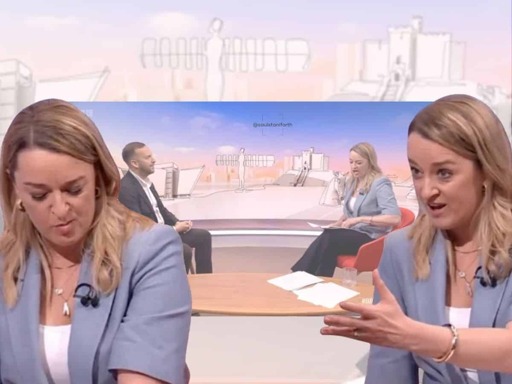

If you’re unfamiliar with the British media, it’s a platform for rich people to explain to poor people why their continued poverty is inevitable. The latest example of this occurred on Sunday 3 May when the BBC’sLaura Kuenssberg leaped to the defence of businesses:
Kuenssberg asks, how can we afford to pay people £15/hour
LK, who earns around £400,000/year, doesn’t ask, how can people afford to live on less than £15/hour? Neither does she ask, should we be subsidising the profits of businesses by topping up the poverty wages they pay? pic.twitter.com/95c26hp3ZY
— Saul Staniforth (@SaulStaniforth) May 3, 2026
The Business Broadcasting Corporation
In the clip above, a bemused Laura Kuenssberg asks:
One of the policies that you are putting forward, though, is saying the minimum wage should be increased to £15 an hour. How is a small business who might have already had to lay people off, who’s already struggling with a higher minimum wage and national insurance payments, or even a cash-strapped council, how are they supposed to pay for that?
Any time there’s a suggestion ordinary people could have more money, a thousand media figures ask this question. What they never ask is: how are small businesses supposed to exist when no one in this country has any disposable income?
If you run a small business, the one thing you should want above all else is for the population to have money to burn. Unless your ‘small business’ is luxury cigars or classic cars, obviously, in which case you’re fortunate enough to serve a clientele who already have money.
Polanski answered:
Well, when I announced the policy, I said this has to be a holistic policy. So we have to look and make sure we’re providing support for small businesses.
By the way, on the last point, small businesses are critical to tackling the climate crisis. If you shop locally and make sure that the transport is local, that’s a really good way of reducing emissions.
Kuenssberg — enforced poverty
Clearly unhappy with the above response, Kuenssberg asked:
A small business who maybe supports a few people, how on Earth are they going to suddenly afford to put their wages up? 12.71 at the moment, for anyone over 21, you’re going to say to them you’d have to now pay everybody £15, including young people who right now could be paid less. How are they meant to afford that?
Good point, Laura, yeah – the millions of people on minimum wage should all have to live below the poverty line for the sake of protecting this ultra-small business you just invented – a business which is already struggling to stay afloat as it is, from the sounds of it.
Polanski answered:
Well I really think it’s important that we support young people as well as everyone, because they’re struggling really right now.
£400k-a-year Kuenssberg cut in to ask:
But where’s the money going to come from?
Polanski hit back:
More businesses that I speak to say that they’ve got issues with things like business rates, and I think where businesses – small businesses – are providing service to the community – good social good – it’s important we reduce business rates.
Also, national insurance. So many businesses say to me, the national insurance hike on employees has been devastating. I don’t think that’s the right way to do things. And I think we should be taxing wealth fairly and make sure we’re taxing multi-millionaires and billionaires, as well as bringing capital gains tax in line with income tax, which would raise about £12bn we could be putting straight back into the economy.
Kuenssberg clearly wasn’t happy that Polanski brought up wealth distribution, responding:
OK, and we’ve discussed that with you before. People can look back on iPlayer if they want to see more. We have had a long discussion about your economic policies on a different occasion.
This is it, though, isn’t it.
By using targeted taxation, we can ensure the big business everyone hates pay more so the smaller businesses we all love can thrive.
“Where’s the money going to come from?”, she asks.
She knows exactly where the money needs to come from; she just doesn’t like it – hence the change of subject.
Linking left economic policy to helping SMEs is a political open goal that Zack is very good at taking
https://t.co/S1sVK0TItZ
— Daniel Gerke (@drgerke1) May 3, 2026
Making Work Fair
For those who are interested, the Green Party provide further detail on its ‘Making Work Fair’ policy online:
Millions of people have seen their pay seriously eroded by inflation for well over a decade, including many who work in vital public services. Green MPs will defend and extend workers’ rights to organise in the workplace, pushing for:
- Repeal of current anti-union legislation and its replacement with a positive Charter of Workers’ Rights, with the right to strike at its heart along with a legal obligation for all employers to recognise trade unions.
- A maximum 10:1 pay ratio for all private- and public-sector organisations.
- An increase in the minimum wage to £15 an hour, no matter your age, with the costs to small businesses offset by reducing their National Insurance payments.
- Equal employment rights for all workers from their first day of employment, including those working in the ‘gig economy’ and on zero-hours contracts. Gig employers that repeatedly break employment, data protection or tax law will be denied licences to operate.
- A move to a four-day working week.
Featured image via BBC
By Willem Moore
From Canary via This RSS Feed.