

Cuba Is Not Alone
As Trump’s popularity plummets, besieged by the fiasco in Iran and his bizarre attempts to deify himself, instead of reassuring the nation, he threatens to squander more taxpayer money on another senseless war.
At a meeting of the far-right Christian nationalist organization Turning Point USA, held in Phoenix on April 17, Trump made false claims about the thwarted war launched by Israel and the United States against Iran, and then declared: “And very soon, this great force will also bring a day that has been awaited for 70 years. It is called A New Dawn for Cuba.” He added ominously: “Now watch what happens.”
After the speech, when the press cited reports indicating that the Pentagon was preparing for military action in Cuba and asked, “Are those reports true? Is Cuba next?” Trump repeated several times: “It depends on what your definition of military action is.” He then told the reporter she probably hadn’t understood, before changing the subject.
The latest threat comes as no surprise, given the mounting pressure on the Cuban government and Trump’s desperate need to divert attention from the Epstein files and public opposition to his terrible decision to attack Iran. However, a military attack on Cuba would further erode Trump’s core support and alienate the growing group of independent Americans seeking improvements in their lives. It would initiate a prolonged and costly conflict, further isolate the United States from its allies and international law, and dash hopes of negotiating economic reforms—something the Cuban government has shown itself willing to do.
Most importantly, by Trump’s own calculations, it would also amount to political suicide for the Republican Party just months before the midterm elections.
With so much at stake, how is it possible that this administration has dragged us to the brink of another illegal war with enormous human and economic costs, this time just 90 miles from the U.S. mainland?
Strangling Cuba: Another War Crime by Trump
The U.S. embargo and economic sanctions have caused a humanitarian crisis in Cuba for decades. Mark Weisbrot, of the Center for Economic and Policy Research, recently wrote that U.S. sanctions against Cuba constitute collective punishment of the civilian population and, as such, a violation of the Fourth Geneva Convention and a war crime. While the United States and Israel continue to bomb hospitals and schools in Iran, Lebanon, and Gaza during ceasefires, babies in intensive care are dying in Cuban hospitals without electricity or medicine. The Cuban public health system, which drastically reduced infant mortality and achieved human development indices that would put much wealthier countries to shame, has been forced to suspend surgeries and other vital care. Just as in the wars in the Middle East, it is women, children, and the elderly who suffer the worst consequences of the sanctions.
In January, Marco Rubio’s obsession with regime change in Cuba overrode common sense, and Trump intensified the suffering of the Cuban people. On January 29, 2026, he issued an executive order announcing tariffs on U.S. imports from any country that “sold or supplied oil to Cuba, directly or indirectly.” Relying once again on the International Emergency Economic Powers Act of 1977, the order designates Cuba as a threat to U.S. national security, listing a series of Cold War-era slogans and fabricated claims to argue that a small, impoverished island that has never attacked the United States poses a grave security risk.
Foreign leaders, including Mexico’s Claudia Sheinbaum, immediately condemned the measure against Cuba and the abuse of extraterritorial power. United Nations human rights experts demanded the lifting of the U.S. blockade in a strong statement: “The U.S. executive order imposing a fuel blockade on Cuba constitutes a grave violation of international law and a serious threat to a democratic and equitable international order… International law does not grant the right to impose economic sanctions on third States for engaging in lawful trade with another sovereign country.”
No act of aggression or threatening move by Cuba triggered the order. Trump’s threat of tariffs exploits the U.S. economy—built and sustained by millions of workers and consumers—for the agenda of his administration’s bourgeoisie and the far-right’s strategy of global hegemony. The Supreme Court’s February 20, 2026, decision, which struck down the use of the International Emergency Economic Powers Act of 1977 to employ tariffs for political purposes without congressional approval, failed to ease the pressure. The Trump administration dusted off another false justification, the Trade Act of 1974, to continue with the tariff threats. Mexico, a key supplier of fuel to Cuba, has so far been unwilling to risk a trade or military confrontation with the United States to resume shipping oil to the island, which is suffering from shortages. However, Trump backed down in his confrontation with Russia, and a Russian oil tanker delivered 780,000 barrels of crude oil to the island in March. The Russian government recently announced that another oil tanker is on its way.
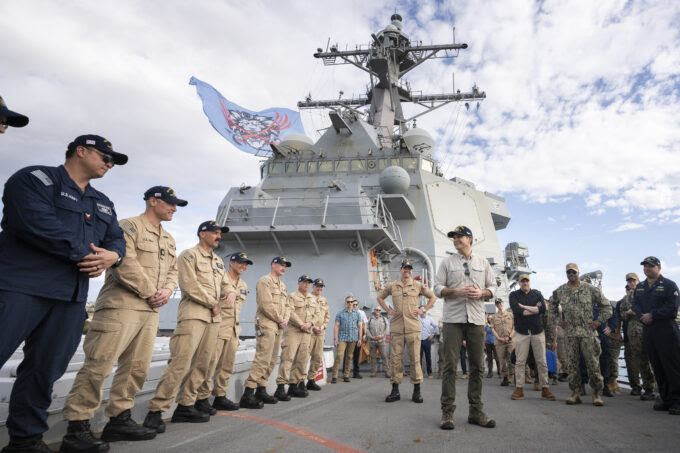
Defense Secretary Pete Hegseth aboard the guided-missile destroyer USS Hudner (DDG 116) during his visit to the Guantanamo Bay Naval Base, Cuba. Photo: Petty Officer First Class Alexander C. Kubitza, U.S. Navy.
The regime-change faction against…
Setting aside the bluster, there are differences within the Trump administration on how to approach the Cuba issue. The regime-change agenda is driven by three forces: appeasing the personal vendetta of Marco Rubio and the anti-Castro faction in Florida by overthrowing the current government; eliminating regional leftist leaders who openly oppose Trump’s renewed Monroe Doctrine on hegemony in the Americas; and promoting the far-right’s plan to create a capitalist resource reserve in Latin America by imposing puppet governments that obey their orders.
Rubio’s positions are well known: regime change or nothing. This camp hoped to convince Trump that economic suffocation would pave the way for an easy military victory and that Trump would go down in history as the president who ended the longest resistance against U.S. imperialism. Some advocates of regime change, most of whom have spent decades publicly exaggerating the strength of the Cuban opposition, argued that inflicting intense suffering on the Cuban people would trigger an insurrection—the same false premise that was made in Iran. Anyone who knows anything about Cuba and Cubans outside the Miami bubble knows that things would not play out that way.
But as the White House sends mixed messages through various channels of communication, it is unclear whether Rubio is the one making the decisions. While Rubio and the South Florida lobby advocate for the total elimination of the communist government, another group prefers economic reforms that allow for U.S. investment.
In a recent interview, a reporter asked the Secretary of State directly: “Are you still in favor of regime change, or would you agree to an economic deal?” and he flew into a rage. “What do you mean by an economic deal?” he snapped. “No, Cuba’s economy needs to change, and it cannot change unless the system of government changes… Who is going to invest millions of dollars in a communist country?”
U.S. foreign direct investment in China in 2024 was $122.9 billion. Just saying.
At least in the long term, the far right also prefers regime change in Cuba as part of its vision to eradicate the left, starting with Latin America. Cuba represents a stain on this vision. With Argentina, Chile, Paraguay, Bolivia, Ecuador, Panama, Honduras, Costa Rica, and El Salvador already under its control, the international right is concentrating its economic resources and efforts on the countries in the region that still resist, especially the weakest ones. (In this regard, we can expect intense intervention in the Peruvian elections, where the leftist Roberto Sánchez is leading the far right to a runoff.)
Ernesto Domínguez, of the Center for Studies on Hemispheric and U.S. Affairs at the University of Havana, emphasizes that the regional context is particularly important now, given the attempt to rebuild U.S. hegemony in the Western Hemisphere as a foundation for building global hegemony.
“Cuba has been an example of resistance, rejecting U.S. control and surviving despite all the pressure from the United States, with all that this implies—not only as an example but also in terms of collaboration with other leftist forces in the region,” Domínguez notes. He also highlights that labeling Cuba as a threat to national security serves Trump’s dual objective: to increase pressure on Cuba and to acquire new tariff powers to pressure other nations, especially Mexico.
In a recent debate on Made in America, Iramis Rosique, also from the University of Havana, added the importance of Cuba in the right-wing’s culture wars.
Among the international far right, there is enormous interest in destroying the Cuban project. Why? Because it is a symbolic, historical, ideological, and communicational bastion, a point of reference in the region and in the world… We are the last remaining soldiers of the Cold War.
The pragmatic capitalist faction
Fortunately for the people of the United States and Cuba, the faction advocating for regime change appears to be losing ground in Washington. Personal enrichment is almost always Trump’s primary interest. Investment groups and international funds are pushing for negotiations to pave the way toward a market economy in Cuba. According to an investment fund, Cuba has untapped nickel reserves and underutilized tourism potential that attracts international investors, and the best way to increase access is through negotiations.
“We believe that the pragmatic tone and approach are consistent with what we know about Trump’s preferences and instincts, and we believe that any agreement will likely be positive for investors like us,” they stated in a letter to investors, citing as factors the talks with the acting Venezuelan government, the successful cooperation between the United States and Cuba in the fight against drug trafficking, Energy Secretary Chris Wright’s statement on January 12 that the United States seeks “a transition away from communism rather than a total collapse,” and the desire to avoid a quagmire like that of Iraq or Afghanistan.
In fact, there may be reasons to negotiate. Trump himself has reportedly stated that he does not want a total collapse that would increase immigration and create instability so close to the United States. What his administration definitely does not need is a new Bay of Pigs. A humiliating defeat would not only damage Trump’s fragile ego—characterized by his motto “I always win, even when I lose”—but would also intensify animosity toward the United States in the region and increase respect for the defense of Cuban sovereignty. The Cuban government and people, like the Iranians, will not surrender to the threat of a U.S. takeover. A regime change in Cuba, in addition to being a flagrant violation of international law and human rights, would require direct military action that would cost lives, followed by a prolonged occupation.
In a sign that pragmatic capitalists may be gaining the upper hand over Cold War ideologues, a State Department delegation met with Cuban government representatives last week to negotiate demands, according to Axios, though there has been no official statement from the State Department. The Mexican government confirmed the meeting, stating: “Lifting the energy blockade against the country was our delegation’s priority. This act of economic coercion is an unjustified punishment for the entire Cuban population. It is also blackmail on a global scale against sovereign states, which have every right to export fuel to Cuba under free trade rules.”
Reportedly, U.S. demands include the release of alleged political prisoners (the Cuban government pardoned 2,010 prisoners on April 2, many of whom have already been released), a nearly forgotten demand to compensate U.S. companies for assets confiscated after the 1959 revolution, greater openness to U.S. investment, and the acquisition of the Cuban communications market by Elon Musk’s Starlink satellite network as part of the commission the business elite secured in the deal.
The United States has also demanded the closure of foreign military bases on the island, but the only one still in operation is Guantánamo, which, of course, is run by the United States.
Although Cubans and millions of people around the world for whom Cuba has been a source of inspiration do not wish to see a mini-Miami on the island, some kind of agreement is far preferable to a war of annihilation or the end of self-determination.
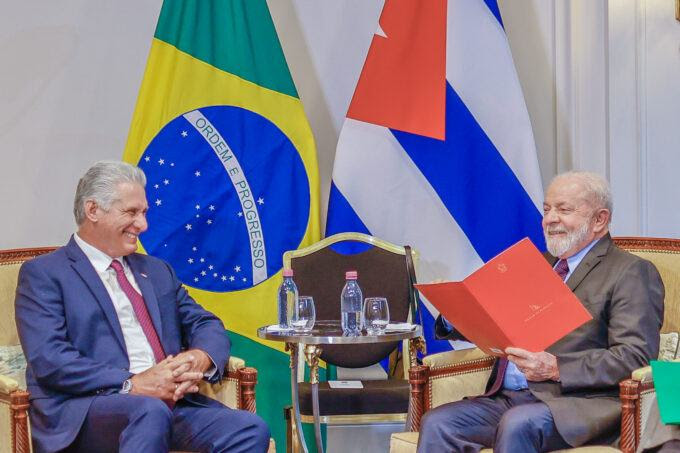
Miguel Díaz-Canel Bermúdez meets with Brazilian President Luiz Inácio Lula da Silva in Paris. Photo: Office of the President of Brazil.
Popular Defense and Solidarity
There is a fundamental consideration that neither the ideologues of regime change nor the capitalist pragmatists will ever understand: the power of popular mobilization in defense of the homeland and international solidarity.
These factors defy the dictates of maximum profit or even self-preservation, and are the reason why Donald Trump and the rest of the warmongers like Hegseth and General Dan “Razin” Caine keep making the same mistake over and over again. They believe that military might and bluster will instantly break a people’s will to defend their homeland. But even after the genocide in Gaza and the massive bombings of Iran and Lebanon, the people have not surrendered, and Cuba will be no exception. It is not about risking one’s life for a leader or a government. It is about the right to a national identity and history, and to live and make decisions about one’s own life on one’s own land.
Within these parameters, the Cuban government has expressed its willingness to negotiate, even as it prepares for a possible invasion. President Miguel Díaz-Canel reiterated on April 16: “This is an extremely challenging time, and it demands that we be ready to face serious threats, including military aggression. This is not what we want, but it is our duty to prepare to prevent it and, if it is inevitable, to defeat it.” The government is mobilizing forces and conducting extensive military exercises. Days earlier, Díaz-Canel told NBC News: “If we have to die, we will die.”
Around the world, but especially in Latin America, people have responded with demonstrations in defense of Cuba’s right to self-determination, humanitarian aid campaigns, petitions, and delegations to the island. Tamara Barra, of the Mexican Movement in Solidarity with Cuba, explained that her organization issued a call to action, urging people to take to the streets. She praised the Mexican government’s stance, while urging it to adopt an even firmer position. Mayor Claudia Sheinbaum recently reaffirmed Mexico’s solidarity and denounced the blockade in a joint statement with Brazil and Spain during the recent “Defense of Democracy” forum of progressive governments, held in Barcelona.
The statement reads in part:
“We express our deep concern over the grave humanitarian crisis affecting the Cuban people and urge the adoption of necessary measures to alleviate this situation and prevent actions that worsen the living conditions of the population or violate international law. We commit to working together to intensify our humanitarian response in order to alleviate the suffering of the Cuban people.”
In the United States, Democrats introduced a bill in the House of Representatives and the Senate titled “Joint Resolution to Order the Withdrawal of U.S. Armed Forces from Hostilities Within or Against the Republic of Cuba That Have Not Been Authorized by Congress.” The bill defines hostilities as the oil embargo, among other acts. Codepink and other organizations have been organizing forums, collecting humanitarian aid, and engaging with Congress to stop any plans for a military attack.
An illegal and reckless military action against Cuba will not be the Caribbean “excursion” that regime-change fanatics are trying to sell to the president and the public. Cuba will defend itself and has powerful allies. These include not only U.S. geopolitical adversaries such as China and Russia, but also allies like Germany, which has just warned that there is no basis for U.S. intervention in Cuba; Latin American countries that see in Cuba a reflection of their own defense of national sovereignty—both historical and current—against U.S. intervention and pressure; and millions of people who view Cuba as proof that, if even a small island nation can withstand decades of U.S. persecution, there is hope for the rest of the world.
***This article was originally published in Counterpunch on April 26, 2026.
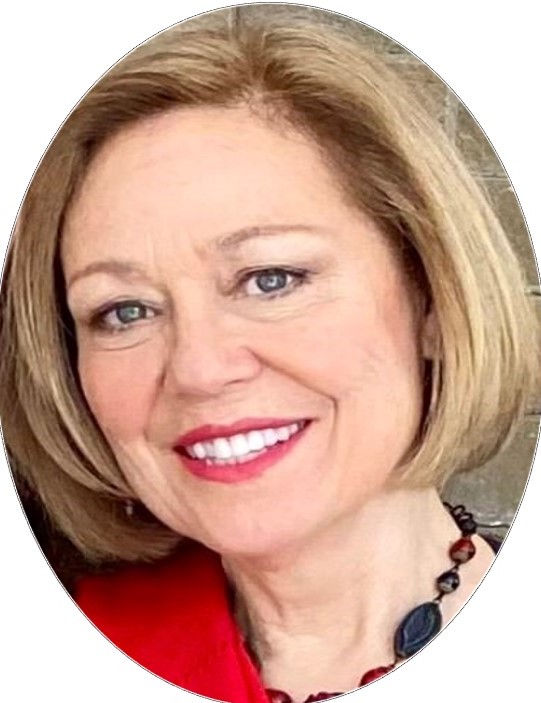
Laura Carlsen es directora del centro de estudios feminista sobre relaciones internacionales Mira Feminismos y Democracias, con sede en la Ciudad de México. Es analista política, comentarista y periodista especializada en relaciones regionales, política estadounidense, movimientos sociales y justicia de género. Una versión de este artículo se publicó originalmente en alemán en la edición de diciembre de 2025 de la revista Südlink.
From MIRA via This RSS Feed.