

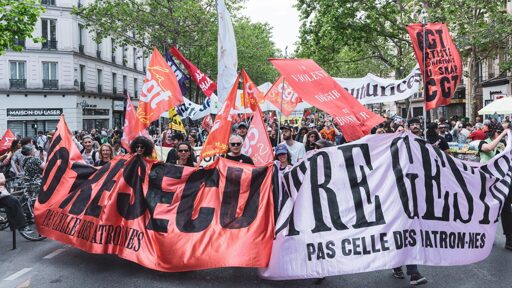
Hundreds of thousands of people participated in May 1 mobilizations across Europe, amid ongoing rearmament and governments’ unwillingness to respond to workers’ demands for better working conditions and investment in public services.
Read more: Workers and left parties in South Asia mark May Day, preparing for bigger fights
Marches and demonstrations took place in most countries of the region, with trade unions emphasizing that deteriorating living standards and armament are intrinsically linked, insisting on an agenda of solidarity, peace and social justice. “USB recognizes a direct connection between war and material conditions,” the Italian grassroots union Unione Sindacale di Base (USB) stated, echoing remarks from other parts of Europe. “Without breaking from the war economy, there will be no real improvement for workers.”
“We draw inspiration from the great class struggles of the past and make a pledge to the struggles of the future: to do everything in our power so that the working class stands at the height of its historical mission,” the Greek All-Workers’ Militant Front (PAME) wrote. “To strengthen the struggle, to clash with the power of capital, to break once and for all the chains of exploitation of man by man, and to open the road for a society without poverty, wars, injustice, and oppression.”
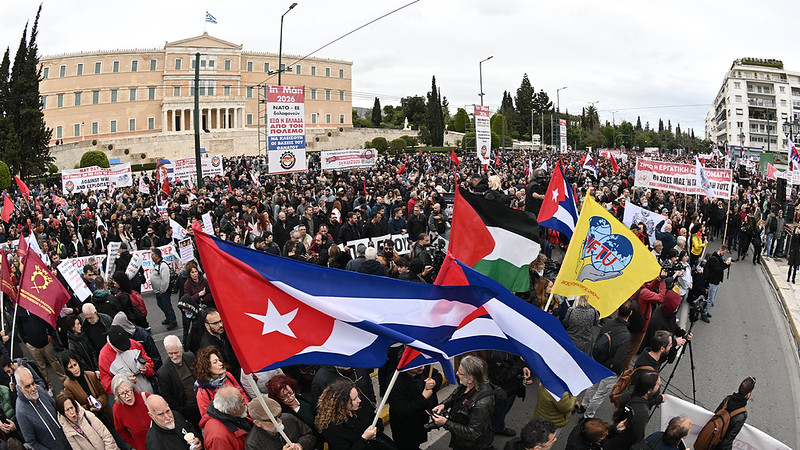
Demonstrators in Athens, Greece, expressed solidarity with Cuba and Palestine during May 1 protests. Source: PAME
In France, May 1 was marked in the context of a recent government attempt to erode the day’s holiday status, which would impact tens of thousands of workers. While trade unions announced they had been partially successful at countering the reform, they remain alert about further endeavors and continue pushing for improvements to workers’ rights. “While energy prices skyrocket, our salaries still haven’t returned to 2020 levels, and gender inequalities remain as significant as ever,” the union organization Solidaires stated. “Inflation is surging again, reaching 2.5% in March, while wages remain frozen and government support is directed exclusively toward companies that already receive over €211 billion in public subsidies every year.”
“We demand immediate wage increases to ensure a decent standard of living, wage indexing to inflation, and a cap on fuel prices,” the organization added. Similar remarks were raised by other workers’ organizations, including the General Confederation of Labor (CGT), which pointed out that because of wars and militarization, “energy prices are skyrocketing, and our public services are being starved of funds to make way for increased military budgets.”
“We must urgently end this arms race,” CGT added ahead of the day itself. “France and Europe must take a firm stand to promote a peace and disarmament agenda, and to defend the UN and international law.”
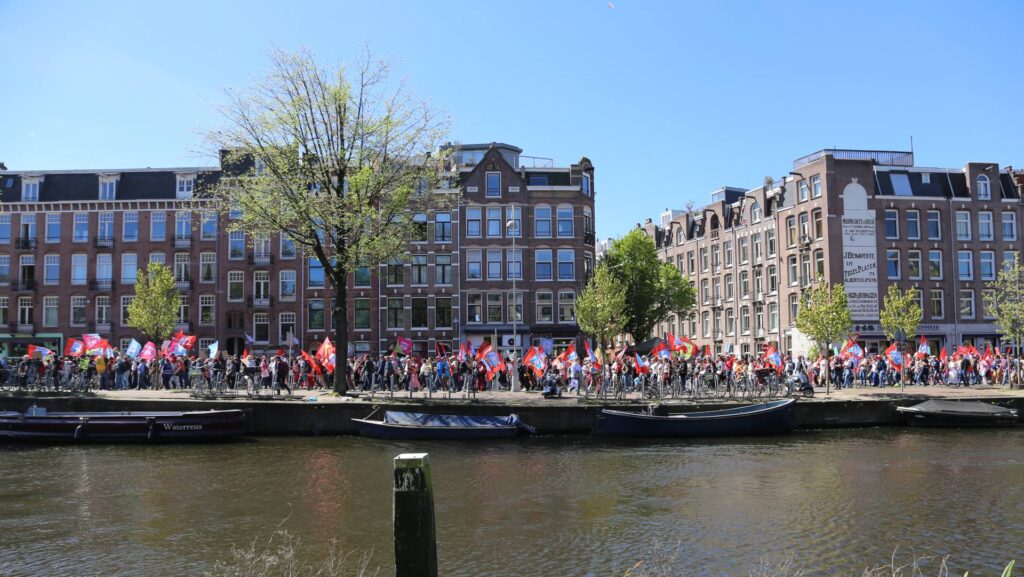
May 1, 2026, marked in Amsterdam. Source: EPSU/Facebook
The Meloni government’s inadequate response to rising costs of living in Italy and unsafe, exploitative workplaces was at the heart of demonstrations in several cities, with grassroots trade unions and progressive parties demanding a far more radical response to the crisis. Giuliano Granato from the left party Potere al Popolo emphasized that government measures continued to benefit employers and large enterprises, without providing any additional protections for workers. “There isn’t a single euro for those workers who are now paying an even heavier price for the crisis due to rising prices, starting with fuel prices,” he said during the mobilizations.
“The current crisis demonstrates how the energy market has become a vehicle for transferring wealth to a select few,” USB stated. “That’s why USB strongly advocates for the nationalization of [oil and gas giant] ENI and other large corporations profiting from price hikes, thereby bringing this strategic sector back under public control.”
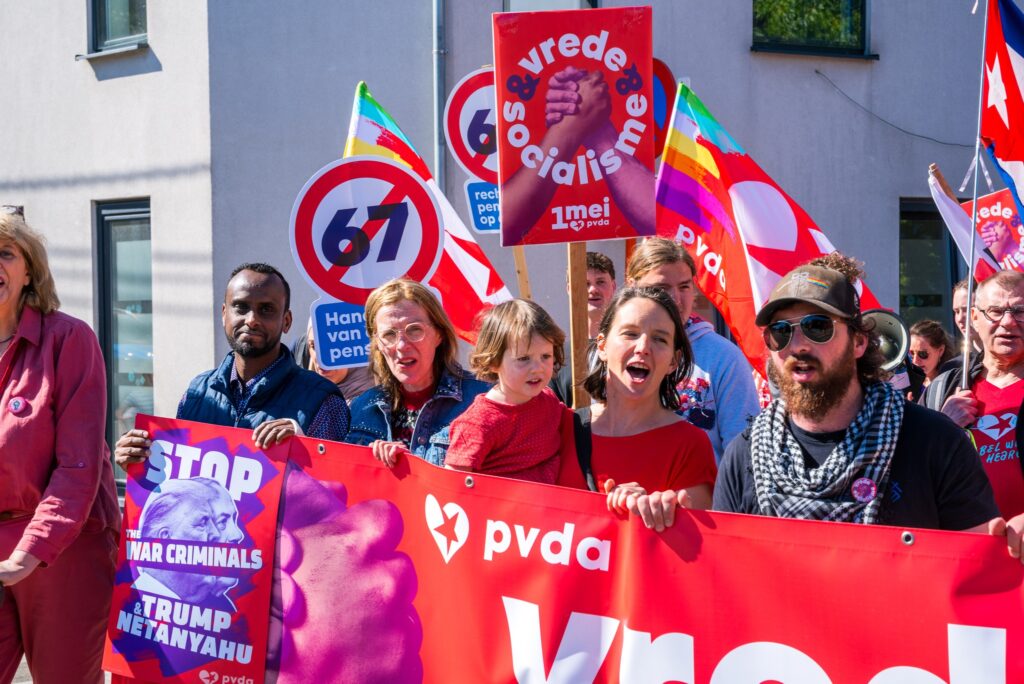
Mobilizations in Belgium included the slogan “Peace and socialism”. Source: PTB-PVDA/Facebook
In Belgium, people marched in several cities, building on a wave of continuous mobilization lasting over one year and restating calls for the upcoming national mobilization on May 12. Over a dozen demonstrations took place in response to the government’s plans to attack the pension system and workers’ incomes over the past 16 months.
This ongoing resistance to the government’s agenda has already forced the current administration to backtrack, General Secretary of the Workers’ Party of Belgium (PTB-PVDA) Peter Mertens told local media on May 1. The government has had to alter its plans because it lacks support, Mertens pointed out. “People didn’t vote for pension theft. They didn’t vote for wage freezes. They didn’t vote for higher energy bills. They didn’t vote for dismantling social programs to buy more weapons.”
“This government promised that work would pay better. But what is it actually doing? It’s undermining the purchasing power of working people.”
The concessions won by workers’ and union struggles across the region, including Belgium, leave room for optimism, Mertens and PTB-PVDA President Raoul Hedebouw both suggested in their May 1 statements – emphasizing the potential of people fighting together for a more just society. “A different kind of society – socialism – is not only possible but more necessary than ever,” Hedebouw said. “A society that prioritizes workers’ needs, respects nature, centers values like humanity, solidarity, and justice, and offers a concrete response to the contradictions that capitalism is suffocating under – a capitalism that offers nothing but militarization, authoritarianism, and social breakdown as our future.”
The post May Day demonstrations in Europe: hundreds of thousands call for peace and social justice appeared first on Peoples Dispatch.
From Peoples Dispatch via This RSS Feed.