

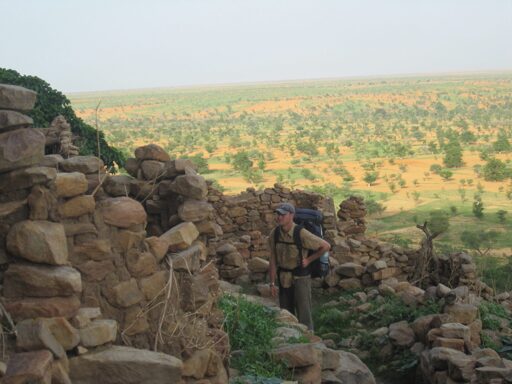
Environmental reporting often begins with a simple proposition: that facts still matter. At a time when climate change and biodiversity loss have become fixtures of public debate, the work of journalism can appear both urgent and increasingly difficult. Scientific evidence accumulates, while political responses lag. Between the two sits a kind of reporting that tries to translate research, policy and lived experience into something readers can grasp. Much of that work is incremental. A story may start with a field biologist’s findings, a community confronting a development project, or a government decision that reshapes the fate of a forest or fishery. The reporting rarely resolves the underlying problem. Its purpose is more modest: to document what is happening and explain why it matters. For John Cannon, a staff features writer at Mongabay, that principle guides nearly every assignment. “Evidence-based reporting [is] at the heart of what we do at Mongabay,” he says. “I believe it’s perhaps the most profound way we can contribute to making things better.” Cannon’s route into journalism began with an academic interest in the natural world. He studied biology at Ohio State University and later earned a graduate degree in science writing from the University of California, Santa Cruz. Along the way, he served as a Peace Corps volunteer in Niger, an experience that introduced him to the economic and social pressures shaping conservation in parts of the Sahel. He began contributing to Mongabay in 2014 and joined the organization full-time two years later. Since then,…This article was originally published on Mongabay
From Conservation news via This RSS Feed.