

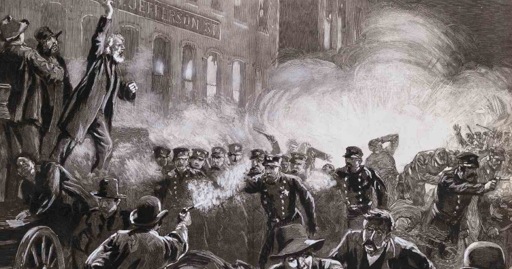

This year marks 140 years since the Haymarket Affair, a pivotal episode in the struggle for the eight-hour working day and the development of the modern labor movement.
In the late 19th century, industrial workers in the United States typically worked 12 to 14 hours a day under demanding and often dangerous conditions. The demand for an eight-hour day gradually became a central objective of organized labor.
In the weeks leading up to the nationwide strike of May 1, 1886, major newspapers warned that such a reform would bring wage cuts, poverty and social disorder, frequently describing the movement as “un-American” and driven by foreign agitators.
Despite this pressure, participation in the strike was substantial. On May 1, around 340,000 workers took part in strikes and demonstrations across the country. Chicago was at the center of events, with more than 80,000 workers marching in what was one of the largest labor mobilizations of the time.
Tensions rose sharply on May 3, when police opened fire on striking workers outside the McCormick Reaper Works, killing at least four and injuring several others. The following day, May 4, a protest rally was held in Haymarket Square. As the gathering was drawing to a close, a bomb was thrown by an unidentified individual, killing one policeman and injuring many others. Police then fired into the crowd, causing further casualties among workers and bystanders.
In the days that followed, authorities arrested eight labor activists, several of whom had no direct connection to the bombing. The trial that followed was widely criticized for serious procedural flaws and a lack of credible evidence. Four—Albert Parsons, August Spies, Adolph Fischer and George Engel—were executed in November 1887. Louis Lingg died in prison, while the remaining three defendants received long sentences.
Although the events at Haymarket were followed by repression, the campaign for shorter working hours continued. As a result of the 1886 mobilizations, around 185,000 workers secured the eight-hour day, while approximately 200,000 others achieved reductions to 10 or 9 hours.
In 1889, the Second International established May 1 as International Workers’ Day, in recognition of the struggle for the eight-hour day and the events in Chicago.
From In Defense of Communism via This RSS Feed.