

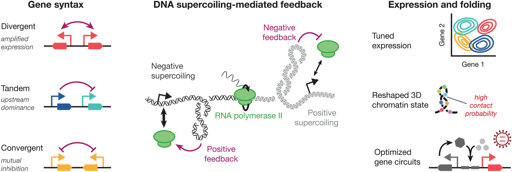
When a gene is turned on in a cell, it creates a ripple effect along the DNA strand, changing the physical structure of the strand. A new study by MIT researchers, appearing in Science, shows that these ripples can stimulate or suppress neighboring genes. These effects, which result from the winding or unwinding of neighboring DNA, are determined by the order of genes along a strand of DNA. Genes upstream of the active gene are usually turned up, while those downstream are inhibited.
From Biology News - Evolution, Cell theory, Gene theory, Microbiology, Biotechnology via This RSS Feed.
Interesting. From the basic summary it sounds like spaghetti code from the IT perspective, possibly with each type of cell running their own ripple along the DNA strand.
It’ll be interesting to see if they can map ripples and find out where different cells intersect their instructions.