

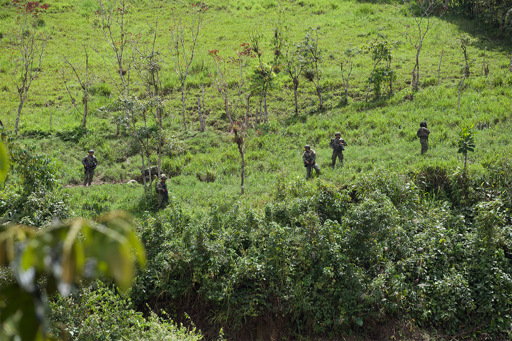
Crime and militarization pose an existential threat to Indigenous territories across the Amazon Basin, a new report warns. Published ahead of the United Nations Permanent Forum on Indigenous Issues (UNPFII) taking place this week in New York, the report finds Indigenous groups are being harmed by restricted access to crucial natural resources, and are suffering health consequences from mining pollution. They’re also being impacted by compromised state and community governance systems, according to the report published by Amazon Watch, a U.S.-based Indigenous rights advocacy group. Criminal organizations such as Comando Vermelho (CV) and Primeiro Comando da Capital (PCC) in Brazil, and the National Liberation Army (ELN) in Colombia, have replaced or weakened state governance across the region, the report notes. In at least two-thirds of municipalities across the Pan-Amazon, such criminal actors “impose systems of social and economic control over communities,” the report says. Criminal presence in Indigenous territories has led to displacement, environmental degradation, mercury contamination from mining, food insecurity and other threats. Such criminal groups are frequently involved with several interconnected illicit crimes at once, such as illegal gold mining and drug trafficking. The report says these activities are directly tied to lucrative global markets and cause generational harm locally. In Brazil’s Munduruku Indigenous Territory, for instance, mercury contamination linked to illegal gold mining has polluted rivers and fish. Locals say the contamination has led to severe and long-lasting health issues, including diarrhea, childhood paralysis and developmental problems. “These activities reshape local ways of living completely around the…This article was originally published on Mongabay
From Conservation news via This RSS Feed.