

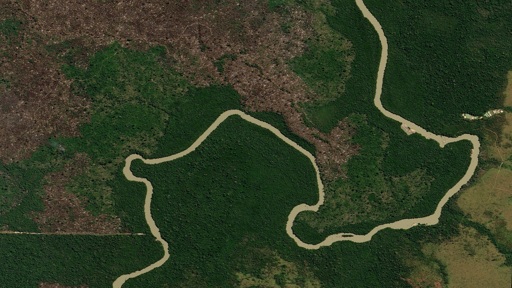
In May 2025, a delegation of angry politicians and agribusinessmen from the Brazilian state of Pará traveled to the national capital to protest against the actions of the federal environmental agency, IBAMA. Their frustration stemmed from embargoes imposed by IBAMA on 544 rural properties in the municipality of Altamira, one of the Amazon’s deforestation hotspots. In each case, satellite imagery had detected illegal forest clearing, prompting authorities to block the areas from further production activities. “Everyone came here to present their concerns and ask for solutions regarding productive areas in the state of Pará,” Pará Governor Helder Barbalho said at the time. Almost a year later, their resentment has been distilled into a new bill proposing a ban on the so-called remote embargoes. Today, IBAMA uses satellite imagery to identify where illegal deforestation is occurring. Once they detect a recently deforested area, environmental agents verify whether there’s an environmental license authorizing that clearance — in the Amazon, around 90% of forest felling is illegal. If there’s no authorization, the agency issues an embargo as a preventive measure from behind its computers. The system is one of the tools that helped the administration of President Luiz Inácio Lula da Silva halve deforestation numbers in the Amazon since taking office at the start of 2023. “Today we have a wealth of ultra-high-resolution satellite imagery, and we can cross-reference information from various databases,” Wallace Lopes, a representative of the federal environmental agents association, ASCEMA, told Mongabay. Jair Schmitt, director of environmental protection and…This article was originally published on Mongabay
From Conservation news via This RSS Feed.